Armed Anti-Hamas Militia Emerges in Northern Gaza With Drone Capability, Sources Say
A militia operating under Ashraf al-Mansi in northern Gaza has acquired significant firepower, including drones capable of carrying tens of kilograms, raising questions about the fragmenting security landscape as Israeli operations continue.
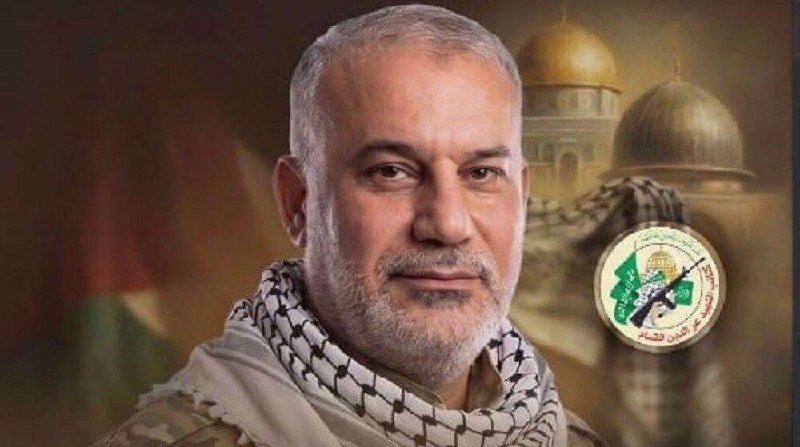
A militia operating under Ashraf al-Mansi in northern Gaza has acquired significant firepower, including drones capable of carrying tens of kilograms, alongside RPG cannons, according to open-source reports published on 27 May 2026. The Popular Forces, described by sources as the most active armed group in the northern Strip in recent weeks, have become a visible presence in areas where Hamas previously maintained operational dominance.
The IDF has spent years conducting operations to collect weapons and explosives from Hamas caches throughout Gaza. Israeli forces continue operations in the Strip as they systematically clear militant infrastructure. The emergence of an armed third actor in areas previously dominated by a single militant group represents a notable shift in the security landscape, one that complicates the tactical environment and raises questions about post-conflict governance arrangements.
The Militia and Its Arsenal
The sources describe a structured armed organisation operating under a named commander, Ashraf al-Mansi, in the northern Gaza Strip. Reports from 27 May 2026 document the Popular Forces possessing a drone capable of carrying dozens of kilograms of payload, alongside RPG cannons. The drone capability is described as substantial — not a crude improvised device, but a platform with meaningful lift capacity. That equipment profile places the Popular Forces above the level of a neighbourhood watch or civilian defence group.
What distinguishes this faction from other armed actors in Gaza is its visibility. Rather than operating covertly, Popular Forces fighters have been documented standing guard openly in the northern Strip. That open posture is itself a signal: either the group feels secure enough to operate publicly, or it is operating with a level of tolerance from Israeli forces that most Gaza-based armed actors have not received. The sources do not clarify which interpretation applies, and the IDF has not publicly addressed any relationship with the Popular Forces.
The weapons profile is consistent with an organisation seeking to project meaningful force. Drones capable of carrying payloads in the tens-of-kilograms range can be used for reconnaissance, ordnance delivery, or supply runs — functions that would be militarily significant in an urban operating environment. RPG cannons provide a direct-fire capability against vehicles or fortified positions.
IDF Operations and Weapons Recovery
The IDF has spent years conducting systematic operations to collect weapons and explosives from Hamas caches throughout Gaza. Open-source reporting from 27 May 2026 confirms that Israeli forces continue weapons recovery missions across the Strip as part of ongoing counterterrorism operations. The scope of material already collected suggests a decades-long stockpile accumulation by Hamas, the scale of which has required sustained and repeated clearance operations.
The IDF has not commented publicly on the Popular Forces or on any potential relationship with Ashraf al-Mansi's organisation. Military spokespeople have described operations in general terms — degrading militant infrastructure, recovering weapons, securing areas — without acknowledging non-Hamas armed groups as partners or recognised counterparts.
The coexistence of ongoing IDF operations with a visible armed faction in the same geographic area raises operational questions. Israeli forces conducting weapons clearance in an area where an armed militia is active must factor that presence into tactical planning, Rules of Engagement, and intelligence assessment. Whether the Popular Forces have been formally integrated into Israeli operational concepts or are simply operating in parallel without interference is not answered by the available sources.
Ambiguity About Intentions and Connections
The Popular Forces have publicly positioned themselves as anti-Hamas. That framing has attracted attention from analysts tracking the fragmenting power structures in northern Gaza. But public positioning and operational reality are distinct things. The sources do not establish whether the anti-Hamas framing reflects genuine ideological opposition, a pragmatic alliance of convenience, or a cover for a more ambiguous relationship with Israeli security planning.
The ambiguity is structural. Israeli strategy has an obvious interest in a northern Gaza that is not controlled by Hamas. A non-Hamas armed faction, if it could serve as a security buffer or local enforcement mechanism, might align with Israeli objectives. But arming, tolerating, or coordinating with such a faction also means creating a new armed actor whose long-term intentions cannot be guaranteed. History in other conflict zones offers cautionary examples of armed groups that served one purpose in one phase of a conflict and became problems in the next.
What the sources do not address: the command structure of the Popular Forces, their funding and resupply chains, their relationship to any political formation, or the demographics of their fighters. Without that information, assessing their trajectory — whether they are building toward something durable or occupying a temporary vacuum — is speculative.
For Hamas, the emergence of a rival armed faction in territory it previously dominated is a direct challenge. For Gazan civilians in the north, the calculus is more immediate: any armed group willing to confront Hamas may be viewed as a potential ally against a group responsible for significant civilian harm. The Popular Forces have not, in the available reporting, been accused of harming civilians — but neither has a civilian protection record been established.
Stakes and Forward View
The emergence of the Popular Forces adds a variable to an already complex situation. Israeli military planners must now consider not only Hamas remnant cells but also a non-state armed faction operating with its own equipment, command structure, and agenda. The drone capability is the most significant concern from a strictly military standpoint: it changes the surveillance and strike options available to an actor that is neither IDF nor Hamas.
The political stakes are harder to assess. Any future governance arrangement for Gaza — whether under PA auspices, some international mechanism, or some other configuration — will have to account for armed groups that exist outside the formal security architecture. The Popular Forces, if they persist, would be among those groups. Whether they can be integrated, co-opted, or neutralised would depend on factors the current sources do not address.
The IDF continues operations in northern Gaza. The Popular Forces continue to operate visibly. Between those two facts lies a relationship that remains uncharacterised — and that uncharacterised relationship is itself the story.
This publication's coverage prioritises reporting from Israeli and Western-wire sources on operational details, while open-source intelligence and regional reporting channels are used to document the presence and capabilities of armed non-state actors in the Strip.
Wire provenance
This editorial synthesis draws on the following public wire/social posts:
- https://t.me/englishabuali
- https://t.me/osintlive
- https://t.me/abualiexpress