Arsenal's Continental Reckoning: The Price of Domestic Supremacy
Gary Neville says Arsenal must win the Champions League to validate their Premier League triumph. PSG stand in the way. The analysis is not wrong — but it places an unfair burden on a squad still learning what sustained excellence requires.
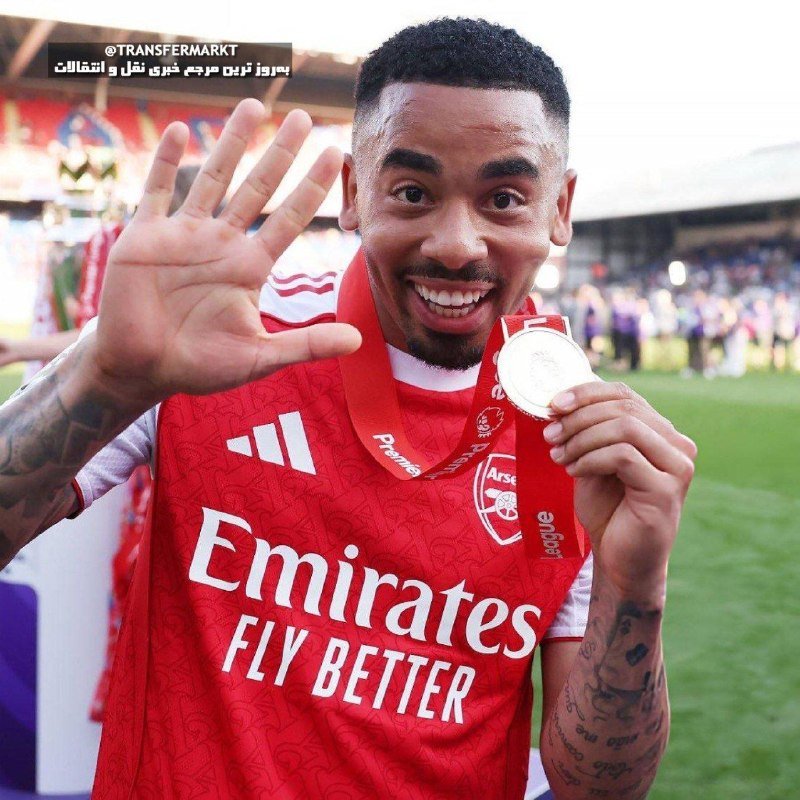
Gary Neville has a habit of arriving early to conclusions others reach later. On 26 May 2026, the Sky Sports pundit and former Manchester United captain named what he believes must be Arsenal's next objective: a Champions League trophy. The domestic work is done, Neville argued. Now comes the harder question — whether a club built for consistency can become a club built for conquest.
The instinct behind the observation is sound. Arsenal have assembled a squad capable of dominating the Premier League's physical and tactical demands. They have a manager whose methods are rigorous, whose squad rotation is precise, and whose public language rarely outpaces what the performances deliver. Winning the league once invites admiration. Winning it twice in a row — if that is indeed what has happened — invites a different kind of scrutiny entirely. The scrutiny asks: what else can you do?
PSG await. Neville called them "special" and named them the side Arsenal must overcome if the season is to be considered a success by the highest available measure. That framing — Arsenal as underdogs against a PSG side that represents the summit of European football — is not merely punditry. It reflects a genuine hierarchy in which Qatar-backed Paris Saint-Germain have spent the better part of a decade accumulating the kind of knockout-stage experience that a north London club rebuilding its continental identity cannot yet match.
The Weight of a Domestic Crown
England's top flight has produced seventeen different champions since the league's rebranding in 1992. Of those, only Manchester United, Manchester City, Chelsea, and Leicester City have lifted the trophy since 2000. The pattern is instructive: domestic dominance is almost never the product of a single exceptional campaign. It is the product of infrastructure — scouting networks, training facility investments, analytical departments, and manager continuity — that compound over years into competitive advantage.
Arsenal's re-emergence under their current manager has followed that logic. The squad is younger than its principal rivals, more defensively coherent than at any point in the post-Wenger era, and increasingly comfortable controlling games rather than chasing them. The Premier League title — if confirmed — did not arrive by luck or a rival's collapse. It arrived because a long-term project reached the point where accumulation became championship.
That success creates its own pressure. The question is no longer whether Arsenal belong in elite European conversations. The question is what they intend to do with that standing.
PSG as the Measuring Stick
Paris Saint-Germain's trajectory under Qatar Sports Investments has been defined by a single, unresolved ambition: winning the Champions League. They have reached the final once, in 2020, losing to Bayern Munich. They have reached the semi-finals three times. In 2026, the club has assembled a squad whose midfield creativity and defensive solidity represent something closer to a complete team than at any previous point in their Qatari-era history.
Neville's characterisation of PSG as "special" and "the best in Europe" is, at minimum, arguable. The French league does not provide the weekly tactical resistance that the Premier League demands. But PSG's investment in European-calibre talent — drawn from South America, Africa, and the continent's best domestic leagues — has produced a side whose ceiling in two-legged knockout format is genuinely difficult to assess because it has rarely been fully tested under pressure.
Arsenal, by contrast, have not reached a European semi-final since 2017. Their most recent Champions League campaign ended in a quarter-final defeat. The gap between domestic excellence and continental success is not merely a matter of quality. It is a matter of experience — of knowing how to manage energy across three competitions, how to absorb pressure from opponents who study your weaknesses with weeks of analytical preparation, how to execute in a single decisive match when the margins are measured in individual errors.
The Framing Problem
Neville's insistence that Arsenal must "win the Champions League" to complete their season exposes a rhetorical tendency in British football commentary: the tendency to treat domestic and European success as sequential requirements rather than distinct achievements. This framing does a disservice to what it means to build a club capable of competing on multiple fronts simultaneously.
Arsenal's project has been built on patience. The recruitment model, the wage structure, the commitment to developing young talent — none of these things is designed to produce a single-season supernova. They are designed to produce sustained competitiveness. A Champions League triumph would be the most significant trophy in the club's modern history. Its absence would not invalidate the structural progress that a Premier League title represents.
The pressure to "complete" a season with European silverware is a pressure that clubs like Real Madrid and Bayern Munich can absorb because their institutional DNA is oriented around continental success. Arsenal's DNA, for the past two decades, has been oriented around survival, rebuilding, and gradual improvement. Asking whether that project is complete after a single domestic crown imposes a standard the club has not yet had time to earn.
What the Stakes Actually Are
The honest assessment of Arsenal's position is this: they are good enough to beat PSG over two legs. They are also young enough, and occasionally inconsistent enough in high-stakes situations, to lose. The margin between those outcomes is not tactical. It is psychological. It is the difference between a squad that knows what it takes to win and a squad that believes it knows but has not yet been tested.
Neville is not wrong to name the Champions League as the next frontier. He is wrong to frame it as an obligation rather than an aspiration. The distinction matters because the way a club processes expectation shapes how it performs under it. An Arsenal side told they must win will play differently from an Arsenal side told they have earned the right to try. One of those framings is more likely to produce the result Neville wants.
PSG represent the most serious test Arsenal have faced since the project began. Whether they pass it will tell us more about what this club is capable of becoming than any domestic result could.
This article was filed after the Premier League season's conclusion. Monexus noted that UK broadcast coverage led with Neville's assessment rather than the structural factors that make European success genuinely difficult to engineer within a single cycle.
Wire provenance
This editorial synthesis draws on the following public wire/social posts:
- https://t.me/Premier_League/8923
- https://t.me/SkySports/12447