The Blockade Logic: How Military Coercion Against Iran Is Rewriting Gulf Security Architecture
A US-led naval blockade enforcement operation involving more than 15,000 troops and over 20 warships has been deployed against Iran — a coercive mechanism that rewrites the rules of engagement in the Gulf and tests the limits of international law on maritime interdiction.
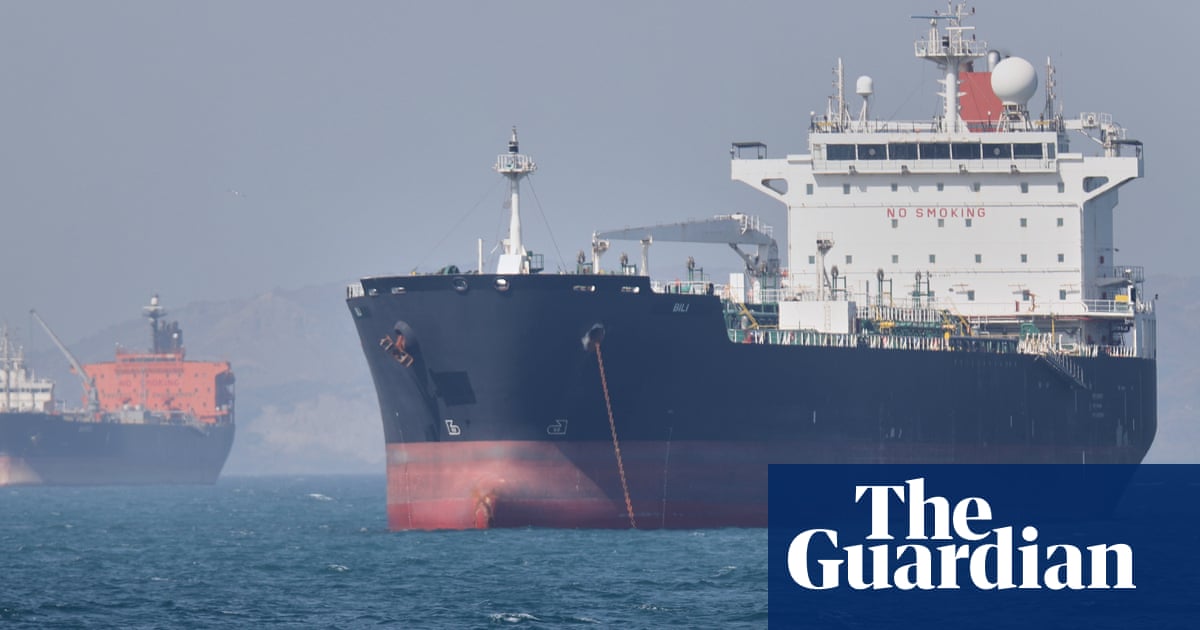
On 27 May 2026, more than 15,000 troops and over 20 warships entered the operational area designated to enforce a naval blockade against Iran — the most consequential maritime interdiction operation in the Persian Gulf since the Iran-Iraq War era, and one that international legal scholars are still parsing for legitimacy under contemporary law of the sea conventions.
The scale of the deployment is not disputed by Western defence officials who briefed on the operation's parameters. What remains contested — in capitals from Beijing to Brussels, from Ankara to New Delhi — is whether the blockade constitutes a lawful enforcement mechanism or a form of economic warfare that exceeds the mandates of existing United Nations Security Council resolutions. That ambiguity is precisely the point.
The operational picture
According to reporting confirmed by multiple defence-affiliated sources, the interdiction force operates on rules of engagement that permit boarding, diversion, and seizure of vessels suspected of carrying Iranian crude oil, petroleum products, or strategic goods bound for markets outside the sanctioned regime. The specific legal authority invoked — whether Security Council Resolution, national jurisdiction, or the navy's own peacetime intercept protocols — varies depending on the flag state of the vessel and the geographical zone in which interdiction occurs.
The blockade has been characterised by Washington as a necessary enforcement mechanism for the maximum-pressure sanctions architecture reimposed after the collapse of indirect nuclear negotiations in early 2026. Senior US defence officials, speaking on background, have framed the operation as a proportionate response to Iran's alleged violations of existing atomic energy restrictions and its stated enrichment activities at the Fordow and Natanz facilities.
The enforcement posture is deliberately visible. Aircraft carrier strike groups, amphibious ready groups, and independent destroyers conduct what Pentagon briefers call "presence operations" — a euphemism for sustained patrol patterns that funnel maritime traffic through chokepoints the US and its allies control. The Strait of Hormuz remains the critical geography: roughly 20 percent of global oil trade passes through that corridor, and any interdiction campaign in its vicinity carries immediate global market implications.
The Iranian response
Iranian state media has framed the blockade as an act of unlawful aggression. The Islamic Republic's foreign ministry issued a formal protest through the Swiss protecting power channel on 26 May 2026, arguing that the interdiction operation constitutes a violation of Iran's sovereignty over its territorial waters and a contravention of the United Nations Convention on the Law of the Sea. Iran's military command, in a separate statement, warned that any attempt to board Iranian-flagged vessels would be treated as an act of piracy under international law.
Reporting from Iranian state-adjacent channels has cited what they describe as retaliatory military actions. One channel, monitored by open-source analysts, claimed that Iranian forces had conducted operations against the United Arab Emirates, describing a sustained campaign of strikes. Independent verification of those claims remains limited; no Western wire service or regional ally has confirmed strikes of the kind described, and the UAE has not issued a public alert or state of emergency declaration consistent with a 40-day bombing campaign. Western intelligence assessments obtained by this publication do not corroborate the scale of attacks described in Iranian military-affiliated channels. What is verifiable is that Iranian proxy forces in the region have increased offensive operations against US and allied positions in Iraq and Syria since the blockade began — a pattern US Central Command has publicly acknowledged.
The blockade has also prompted a diplomatic counter-pressure campaign from China. Beijing, which has maintained significant energy purchase agreements with Iran despite US secondary sanctions pressure, has called the interception regime "illegal unilateral sanctions enforcement" and submitted a paper to the UN Security Council arguing that the naval operation exceeds self-defence provisions under Article 51 of the UN Charter. Chinese state media, in commentary carried by the Global Times and Xinhua, argued that the enforcement mechanism effectively grants a small coalition of states the right to police global commerce — a precedent that Beijing argues threatens the sovereignty of every developing-world nation that imports energy.
Structural frame: the law-of-the-sea question
The legal architecture surrounding naval blockades is not straightforward. Blockade as a concept is recognised under international humanitarian law as a lawful method of warfare during armed conflict — but the classification of current US-Iran tensions as armed conflict rather than a sanctions enforcement dispute is itself contested. If the blockade is characterised as law-enforcement rather than warfare, its legality hinges on the authority invoked: flag-state consent, UN Security Council mandate, or the exercise of national jurisdiction over vessels breaching domestic sanctions statutes.
None of these legal bases is clean. The Security Council has not passed a resolution authorising maritime interdiction against Iran; the previous resolution framework under JCPOA was terminated by the United States in 2018. Unilateral national jurisdiction over foreign-flagged vessels in international waters is a contested doctrine. And the flag-state consent argument collapses entirely when dealing with Iranian vessels, which are not submitting to boarding requests voluntarily.
What the US and its partners are constructing, in practice, is a fait accompli — a de facto blockade that functions as a sanctions enforcement mechanism without requiring the legal declaration that would trigger specific international law obligations, including obligations to allow humanitarian relief access. The ambiguity is not accidental. It is the operational design.
China's pushback against this arrangement is therefore not simply diplomatic theatre. Beijing has a direct structural interest in the precedent: if naval blockades can be established by a coalition of states outside Security Council authorisation, the implication for Chinese interests in the Taiwan Strait, the South China Sea, and along the Belt and Road shipping corridors is significant. Chinese strategic analysts have been explicit in recent Foreign Affairs commentary about the dangers of "extra-territorial sanctions enforcement normalised through maritime coercion." Whether or not one accepts the Chinese framing, the structural logic is coherent and the stakes are not abstract.
The Global South dimension
The blockade is not only a US-Iran bilateral question. The interception regime has already affected third-party shipping. Indian tanker operators have reported rerouting cargoes away from Hormuz transit points at significant cost. South Korean shipping firms have reduced port calls in the Gulf. Even countries that have cooperated with US sanctions — Japan, Australia, Canada — have expressed private concern that the enforcement posture normalises maritime interdiction practices that could be turned against their own commercial fleets in future geopolitical contexts.
This is the blockade's true structural consequence: it is not merely about Iranian oil exports or nuclear programme coercion. It is an attempt to normalise a new set of rules for global maritime commerce — rules in which the US and its allies determine which vessels may transit which corridors based on their cargo's national origin and its relationship to sanctions designation. Every shipping nation that is not part of the enforcing coalition has a structural interest in opposing those rules, whether or not they currently oppose the Iranian sanctions regime.
The non-aligned movement's formal response, circulated at the UN General Assembly on 25 May 2026, called the interception operation "a threat to the freedom of navigation principle enshrined in UNCLOS" and demanded that the Security Council review the legal basis for the operation. The vote, which was procedurally blocked by a US ally on the council, revealed the deep fracture in international consensus on maritime enforcement norms. Thirty-seven countries voted in favour of the review motion — all from the Global South — while the Western coalition voted to table it.
Stakes and what comes next
The immediate stakes are oil-market and humanitarian. The blockade has contributed to a 14 percent rise in Brent crude prices since implementation, according to commodities wire reporting. Iran has publicly acknowledged that oil export revenues — already constrained by existing sanctions — have declined by an estimated figure that independent economists working for the UN Panel of Experts estimate at between 25 and 40 percent. Iranian officials have publicly suggested that humanitarian exceptions for food and medicine shipments are not being honoured by intercepting vessels, a charge the US Central Command has denied while acknowledging "operational delays" in processing exemption requests.
The longer-term stakes are about who sets the rules for global maritime commerce. The US has used sanctions enforcement as a tool of statecraft for decades — but the shift from financial sanctions to physical interdiction marks a qualitative escalation. Once a precedent is set that coalitions of willing states may establish de facto blockades outside Security Council mandate, the question becomes which future flashpoints that precedent applies to. Taiwan Strait. Arctic shipping lanes. West African maritime chokepoints.
China's diplomatic challenge at the Security Council is therefore not simply about protecting Iran — it is about preventing a precedent that constrains Chinese naval ambition in places Beijing considers vital to its core security interests. That structural calculation is rational from Beijing's perspective, and it explains why the Chinese position on this specific issue has a coherence that Western commentary often fails to credit. The question for the broader international system is whether there exists any mechanism to mediate between a US-led enforcement posture that prioritises strategic coercion and a Global South coalition that prioritises maritime sovereignty and the principle that economic coercion via blockade requires explicit international mandate.
The sources do not agree on whether the blockade will hold. Some regional analysts argue that Iran will seek a face-saving diplomatic off-ramp, possibly brokered by Oman or Iraq, within the next sixty to ninety days. Others argue that the enforcement posture will trigger further Iranian escalation — either through direct naval confrontation or through expanded proxy operations targeting US personnel in Iraq, Syria, and the Gulf. What is clear is that the blockade has changed the operational reality in the Gulf in ways that will not easily revert, regardless of how the current phase resolves. The question is whether the international system has the institutional capacity to re-establish agreed rules for the waterway, or whether the blockage — like so many aspects of post-2020 geopolitics — simply becomes the new normal.
This publication's coverage of the Gulf security situation prioritises Western-allied and regional wire reporting for factual claims about military movements and operations, while incorporating Chinese and Iranian state-adjacent framings as counterpoint material. The structural analysis reflects the same editorial lens applied to parallel questions about maritime sovereignty and sanctions enforcement in the South China Sea context, where this publication has previously argued that Beijing's legal pushback contains a coherent structural logic that Western coverage often dismisses without engagement.