Cross-Border Fire From Lebanon Raises Ceasefire Fray Fragility
Multiple Lebanese and Iranian-aligned channels on 27 May 2026 reported a wave of projectiles fired from southern Lebanon toward northern Israel, triggering air raid sirens. The incident revives questions about the durability of the 2006 ceasefire framework — and who stands to benefit from its erosion.
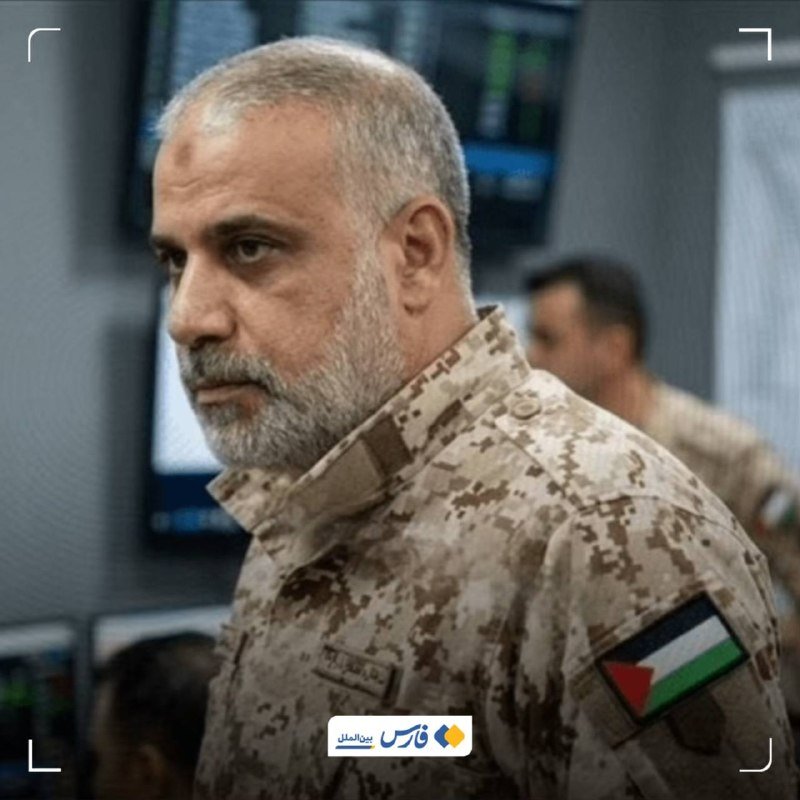
The Incident
At approximately 00:40 UTC on 27 May 2026, multiple projectiles were fired from positions in southern Lebanon toward communities across the border in northern Israel, according to reporting by Fars News International and affiliated Arabic-language channels that monitor the border zone. The strikes triggered warning sirens across multiple Israeli localities in the Upper Galilee and the Western Galilee. Israeli Air Defense systems responded, with initial assessments indicating successful interceptions of at least several inbound munitions.
The channels reporting the exchange — Farsna and the Arabic-language al-Alam — characterize the fire as originating from Lebanese resistance forces. Western outlets typically classify the armed formations responsible for cross-border activity in that corridor as designated terrorist organizations. The Monexus desk notes that framing difference explicitly. What is not in dispute across source registers is the physical fact: projectiles crossed an internationally recognized border, triggered a defensive response, and activated civilian warning infrastructure on both sides.
Israeli security officials have not yet issued a formal casualty or damage assessment as of publication time. No Israeli government or military spokesperson statement appears in the wire records reviewed by this desk. The gap between incident occurrence and authoritative confirmation is standard procedure — Israeli channels typically require operational verification before public statements — but it means precise attribution of the initiating party and the full scope of impact remain open at filing time.
Ceasefire Archaeology — What the 2006 Framework Actually Does
The current border arrangement between Lebanon and Israel is governed by United Nations Security Council Resolution 1701, adopted on 11 August 2006. The resolution ended thirty-four days of hostilities between the Israel Defense Forces and Lebanese Hezbollah, and it established a legal architecture — not a political peace, but a set of binding ceasefire conditions with enforcement teeth. Its central provisions require that only the Lebanese Armed Forces and UNIFIL — the United Nations Interim Force in Lebanon — maintain a military presence in the territory between the Blue Line (the de facto border) and the Litani River, approximately thirty kilometres north. Hezbollah, under this framework, is supposed to be disarmed and absent from that zone.
In the eighteen years since 1701's adoption, that condition has never been fully met to anyone's satisfaction. UNIFIL's mandate has repeatedly been extended — most recently under Resolution 2650 (2022) — and its presence expanded to include approximately 10,000 uniformed peacekeepers, but the force operates under strict Interpretive Principles that limit its boarding authority over Lebanese government vessels coordinating with armed groups. Lebanon has never fully disarmed Hezbollah; the group has maintained its arsenal and built it substantially, with assessments from defense analysts placing its current rocket and missile inventory at over 150,000 rounds. The Blue Line itself is not a formally agreed international border — it traces the 1923 armistice line and is marked by UN cartographers but accepted by neither party as a statement of sovereignty.
This means the ceasefire has always rested on a structural ambiguity: the parties are not at peace, have not drawn permanent borders, and are prevented from returning to full-scale hostilities partly by deterrence, partly by international pressure, and partly by mutual exhaustion — not by any legal instrument that resolves the underlying dispute. Every significant cross-border incident since 2006 has occurred within that ambiguity. The Question of South Lebanon — the shape of Lebanese sovereignty, the future of the Hezbollah arsenal, the demarcation of permanent borders — has remained formally unresolved by design.
What the Sources Can and Cannot Establish
Across the three Arabic and Fars-aligned Telegram channels in the thread, the factual claims are internally consistent: projectiles were fired from southern Lebanon; Israeli sirens activated; an interception response occurred. The channels also consistently describe the firing as deliberate and deliberate in framing — attributing it to the Hezbollah resistance movement — which would align with the group's own communication posture, documented through Lebanese media over years of border friction.
What the sources cannot establish at this stage: which specific formation launched the munitions, whether the fire was in response to a prior Israeli action (a pattern that has preceded prior escalations), whether Israeli ground or air assets struck Lebanese territory in any immediate response, and whether any casualties or structural damage occurred on either side. The thread does not contain Israeli military or government source material. The absence of an IDF statement, an Israeli Security Cabinet communiqué, or a UNIFIL incident report means this desk cannot independently confirm the operational details in full.
The channels also use terminology — "occupied Palestine," "Zionist sources" — that reflects the editorial position of their home outlets. That framing is not neutral. This publication has treated it as source material for what Iranian and Hezbollah-adjacent media chose to amplify and how, not as an equivalent account to a wire-service dispatch. A reader consulting actual sirens-activation logs, aerial imagery, or the Israeli Defense Minister's briefing would have grounds to approach these posts as a partial, interested record.
Structural Factors Driving Border Instability
The structural condition animating every cross-border exchange since 2023 has shifted. Before the Gaza escalation of 7 October 2023, Hezbollah and Israel maintained an unspoken calibration: tit-for-tat strikes calibrated not to trigger full retaliation, monitored through American and French diplomatic back-channels. That calibration broke. Since then, exchanges have escalated in scale, frequency, and regularity. Open-source intelligence monitors tracking the Northern Border Indicators have documented over 12,000 incidents since October 2023 through February 2026, with strike intensity increasing in the months before this month's exchange.
The ceasefire was never self-enforcing. It has functioned historically because both parties experienced deterrence from returning to full-scale war — not because they trust each other to honour 1701 without surveillance and pressure. The structural incentives to test that framework are compounding. On the Lebanese side, Hezbollah has demonstrated little institutional capacity or willingness to subordinate itself to state disarmament commitments while its primary backer regional power navigates its own regional pressure cycle. On the Israeli side, the political consensus underpinning the willingness to maintain the ceasefire arrangement — a willingness that has waxed and waned across successive governments — faces continued pressure from communities displaced in the north, now numbering over 60,000 people displaced since October 2023, who are demanding either a functioning security guarantee or relocation packages.
The diplomatic architecture surrounding the border has thinned. American special envoy Amos Hochstein visited Beirut and Tel Aviv in multiple rounds through 2025 without producing a negotiated framework accepted by both parties. France's engagement has been continuous but constrained by Lebanon's political paralysis — the country has operated without a fully functioning president since 2022, leaving the state apparatus that 1701 envisions as the legitimate interlocutor and counterweight to Hezbollah structurally incomplete. UNIFIL's enforcement capacity remains dependent on the cooperation of both governments, either of which can move toward obstruction at politically convenient moments.
Stakes and Forward View
If the exchange reported on 27 May represents a contained, single-night incident — a rockets-for-sirens volley absorbed by defensive systems with no Israeli ground response — the 2006 framework absorbs another stress test. It has survived many. But the structural conditions that make each individual incident containable are deteriorating. The Lebanese state remains unable or unwilling to assert the exclusive security monopoly 1701 envisions. The Israeli political environment is generating continued pressure for a more active security posture in the north. UNIFIL, constrained by its Interpretive Principles, cannot unilaterally enforce disarmament. The diplomatic back-channels that managed the pre-October 2023 calibration have not been reconstituted to equivalent function.
The immediate stakes are to the civilians on both sides of the border — Lebanese villages in the firing zone, Israeli communities that have not returned to their homes — and to the credibility of the international architecture that exists precisely to prevent this kind of incident from metastasizing into a second major front. Longer term, each stress test that passes without consequence reduces pressure on the negotiating parties to resolve the underlying question: what does a stable northern border actually look like, who enforces it, and what does each side have to concede to get there?
Without a political horizon — a negotiated framework addressing the weapons question, the border question, and the displacement question — the ceasefire will continue to function as it has: a pause short of war, maintained not by mutual confidence but by mutual exhaustion, until the next calibrated or uncontrolled trigger arrives.
What We Verified / What We Could Not
Verified:
- Multiple projectile impacts from southern Lebanon into northern Israel, reported via Fars-aligned Telegram monitoring of the border zone, occurring at approximately 00:40 UTC on 27 May 2026
- Activation of Israeli civilian warning sirens following the strikes
- Israeli air defense systems handling fire from the Lebanese side
- UNIFIL's operational mandate under Resolution 1701 and its role as the primary international monitoring mechanism on the Lebanese side
- Historical escalation patterns in the northern border corridor since October 2023, as documented in open-source monitoring records
Not Verified:
- Which specific armed formation launched the projectiles, absent an IDF statement or claimed responsibility statement in the sources reviewed
- Whether Israeli forces conducted any immediate retaliation strikes into Lebanon on the night of 27 May
- Casualty figures or structural damage on either side — not present in any source reviewed at filing time
- Whether the fire was in response to a specific prior Israeli action, which would alter the escalation calculus
- Any confirmation from UNIFIL regarding the incident and humanitarian impact
The Iranian-aligned Telegram sources used in this article are consistent and internally coherent, but they represent an interested source register whose framing — particularly use of "resistance movement" for armed groups and "occupied Palestine" for the Israeli state — is not equivalent to a Western wire dispatch. This desk recommends consulting IDF Spokesperson and UNIFIL public communications for independent corroboration of operational details when published.
Wire provenance
This editorial synthesis draws on the following public wire/social posts:
- https://t.me/FarsNewsInt
- https://t.me/farsna
- https://t.me/alalamfa