Diplomacy Collapses as Ukraine Pushes the Fuel Line: Russia's Refinery Strikes, a Denied Visa, and the Fractured Path to Peace
As Ukraine extends its campaign of strikes against Russian refinery infrastructure, Moscow signals a diesel-export restriction — while simultaneously accusing Washington of blocking a senior official's entry to New York and the EU scrambles to find a credible intermediary in any peace negotiation.
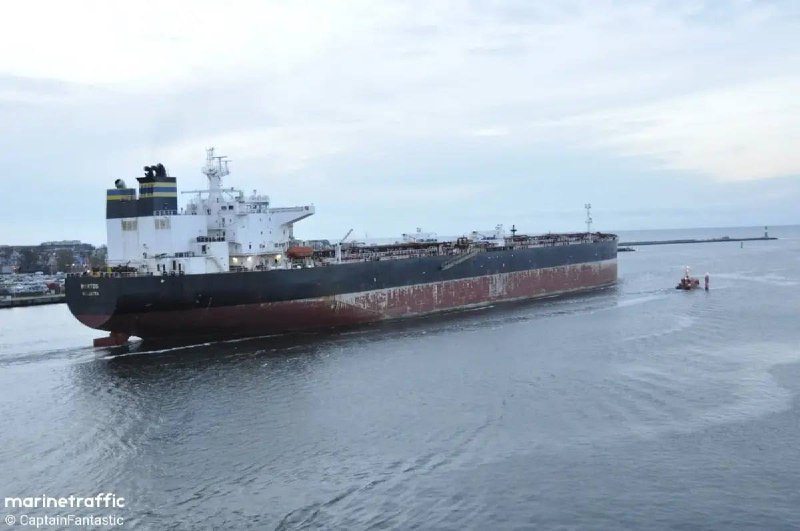
On the morning of 26 May 2026, smoke rose from a refining complex in Russia's Samara region for the second time in as many weeks. Ukrainian drones had struck again — part of a campaign that has degraded processing capacity at multiple facilities across western and southern Russia. By 03:14 UTC on 27 May, Russian state-adjacent Telegram channel TSN_ua was reporting that Moscow was considering formal restrictions on diesel exports, a move that would ripple through global energy markets already contending with disrupted supply chains. Hours later, a very different kind of disruption was unfolding at the United Nations, where Russia said the United States had refused to grant a visa to Foreign Minister Sergei Lavrov's deputy — Vasily Nebenzya — blocking him from addressing a scheduled Security Council session. Washington did not publicly contest the account. The episode underscored a diplomatic architecture growing increasingly hostile to normal channels of communication, even as the ground war in Ukraine grinds through its fourth year.
The juxtaposition of these two developments captures the paradox at the heart of the conflict in spring 2026. Ukraine has demonstrated an increasingly sophisticated ability to project force deep into Russian territory, targeting energy infrastructure that underpins both the military's logistics and the broader domestic economy. At the same time, the formal mechanisms for diplomacy — the United Nations as a venue, bilateral negotiation frameworks — are deteriorating under the weight of mutual exclusions and withdrawn invitations. The gap between military pressure and diplomatic contact is widening, and neither side appears willing to bridge it on terms the other can accept.
The Refinery Campaign: Shifting the Calculus
Ukraine's strikes on Russian refinery infrastructure accelerated sharply in the second half of 2025 and have continued into 2026 with increasing frequency and apparent precision. Military analysts tracking the campaign note that Russian forces have responded by deploying new tactics to compensate — a point TSN_ua's reporting on 27 May 2026 highlighted, citing an expert assessment that Moscow has adapted its air defence posture around petroleum storage and processing sites. The strikes have not been aimed at destroying Russian energy capacity entirely — a militarily impossible objective — but at degrading the surplus that funds the Kremlin's war machine and at forcing Russia to divert air defence assets away from front-line positions to protect rear-area installations.
The economic effects are material. Russia's diesel market has tightened measurably since the campaign began, with domestic pump prices rising and export volumes shrinking. Should Moscow formalise the reported export restriction, the impact would extend beyond Russian borders. Russia is one of the world's largest diesel exporters; a sustained reduction in outbound shipments would tighten supply in markets across the Middle East, Africa, and Southeast Asia — regions that have absorbed discounted Russian fuel shipments since Western sanctions effectively redirected Moscow's trade flows eastward. China, which has taken increasing volumes of Russian crude and refined products, would face a less significant disruption than smaller importers with fewer alternative suppliers.
For Kyiv, the calculus is straightforward: every refinery fire is a logistical pressure point. For Moscow, it is an irritant that degrades wartime revenue while simultaneously strengthening the domestic political case for a negotiated settlement that Kyiv has so far refused to accept on terms the Kremlin can stomach. The strikes do not, on their own, produce Ukrainian victory. But they do produce a Russian leadership confronting the prospect of a war that is simultaneously burning through export revenue and failing to translate territorial gains into a durable political outcome.
The Visa Denial: A Symbolic Rupture
The US decision — reported by Reuters via its X (Twitter) account on 27 May 2026 at 01:50 UTC — to deny a visa for Nebenzya to attend a UN Security Council session in New York sits in a different register but is not disconnected from the energy campaign. The UN headquarters sits on American soil, and the United States government controls access. In recent years, Washington has occasionally used that authority to exclude officials from states with which it is in open conflict. Russia's foreign ministry has called the denial an unacceptable violation of the host country agreement governing UN operations — an argument with some legal foundation, though one the United States has contested on national security grounds in analogous cases.
The practical consequence is limited: Nebenzya will not address the Security Council in person. The symbolic consequence is larger. It signals that even multilateral institutions designed to manage interstate conflict are being weaponised by the parties to that conflict. The United States, which controls the UN's physical host state, is using that leverage to exclude a permanent Security Council member's representative from a scheduled meeting. Russia, in turn, cites the denial as evidence that the United Nations cannot function as a neutral venue — an argument it has made before, but which now has a fresh factual basis.
The EU's position, as framed in BBC World Service reporting also circulating on 27 May 2026, is instructive in its contrast. European officials are reportedly searching for a credible intermediary — described in the BBC framing as a "Russia whisperer" — to facilitate contact that Washington is no longer willing to broker directly. The United States has pulled out of the trilateral negotiation framework that briefly held during late 2025, leaving Europe to carry the diplomatic burden of finding an off-ramp. This is not a role Brussels has historically relished or performed well. The EU's leverage over Moscow is constrained by energy interdependencies that, despite years of sanctions and diversification efforts, have not been fully severed — and by the political disunity that has repeatedly surfaced whenever member states with stronger economic ties to Russia are asked to support the toughest negotiating positions.
GCHQ's Assessment: The Hybrid Dimension
The British signals intelligence agency GCHQ, whose director was scheduled to brief on the threat landscape facing the United Kingdom on 27 May 2026, has characterised Russia's approach to the conflict as extending well beyond the battlefield in Ukraine. According to BBC World Service reporting on the briefing, GCHQ's head will set out an assessment that Russia is "relentlessly targeting" the critical infrastructure and democratic processes of the United Kingdom and its allies. The language is deliberately stark, and its public framing serves a deterrence and public-awareness function that intelligence agencies have increasingly embraced in the open. The underlying assessment — that Russian state-directed cyber and influence operations represent a persistent threat to Western infrastructure — is not new, but the specific context of a war in Europe gives it a sharper edge than comparable warnings issued during the preceding decade of relatively stable great-power competition.
The GCHQ framing connects to the refinery campaign in a way that is easy to overlook. Both are manifestations of a conflict that is being conducted on multiple simultaneous axes: kinetic strikes on the battlefield, economic pressure through energy disruption, hybrid operations against Western infrastructure, and diplomatic warfare through the manipulation of multilateral venues. Ukraine's drone campaign is not isolated from the broader pattern of contested infrastructure that the GCHQ assessment describes — it is, in a sense, the kinetic mirror of the same strategic logic: applying pressure across domains rather than concentrating force in a single decisive engagement.
What Kind of Settlement, and for Whom
The structural problem facing any serious peace negotiation remains what it has been since 2022. Ukraine's stated position — territorial integrity within internationally recognised borders, including Crimea — is incompatible with any outcome Russia can present to a domestic audience as anything other than defeat. Russia's stated position — recognition of occupied territories, a prohibition on NATO membership, and constitutional guarantees that Ukraine will remain outside Western security structures — is incompatible with Kyiv's security requirements as Kyiv defines them. These positions have not materially shifted. What has shifted is the relative military and economic cost each side is bearing, and the willingness of external patrons to absorb those costs on Ukraine's behalf.
The United States' withdrawal from trilateral talks does not end diplomacy, but it removes the most powerful external actor from a process that was already struggling to produce terms both sides could accept. Europe's search for a "Russia whisperer" reflects a genuine diplomatic impulse but faces an obvious obstacle: Moscow's willingness to negotiate with European intermediaries depends on whether it believes Europe can deliver something the United States cannot or will not. The diesel-export restriction, if formalised, may be partly aimed at reminding European capitals of that dependency — a signal that Russia's energy leverage, while diminished, has not entirely disappeared.
Ukraine, meanwhile, continues to act on the assumption that military pressure is the only language Moscow respects. The refinery strikes carry real costs, but they do not yet appear to have crossed a threshold that forces the Kremlin to choose between continued prosecution of the war and a political settlement. Whether that threshold exists — whether any amount of pressure applied at this stage of the conflict produces a Russian government willing to abandon occupied territory — is the central unresolved question. The sources circulating on 27 May 2026 do not answer it. They confirm that the war is being conducted on more fronts simultaneously than at any previous point, and that the diplomatic architecture designed to manage such conflicts is under greater strain than at any point since its founding.
Ukraine has demonstrated an increasingly sophisticated ability to project force deep into Russian territory. The formal mechanisms for diplomacy — the United Nations as a venue, bilateral negotiation frameworks — are deteriorating under the weight of mutual exclusions and withdrawn invitations.
This publication's coverage of Ukraine's infrastructure campaign draws on Ukrainian and Western-allied sources. Russian state-adjacent accounts have been used as counter-claim material with sourcing caveats noted. The framing treats Ukraine as the invaded party and proceeds from the established international-law premise that Russia's invasion of Ukrainian territory is a violation of sovereignty and territorial integrity.
Wire provenance
This editorial synthesis draws on the following public wire/social posts:
- https://t.me/TSN_ua/18432
- https://t.me/TSN_ua/18431
- https://twitter.com/Reuters/status/1923487263849349120
- https://t.me/BBCWorldoffl/19841
- https://t.me/BBCWorldoffl/19840
- https://t.me/TSN_ua/18430
- https://t.me/TSN_ua/18428
- https://t.me/BBCWorldoffl/19839