The Dollar Wins Either Way: Why the Iran Deal Is Already Priced In
Even if Washington and Tehran agree to reopen the Hormuz corridor, the financial architecture underpinning American leverage remains intact. Markets know this. Energy consumers should not be fooled into conflating diplomatic relief with structural change.
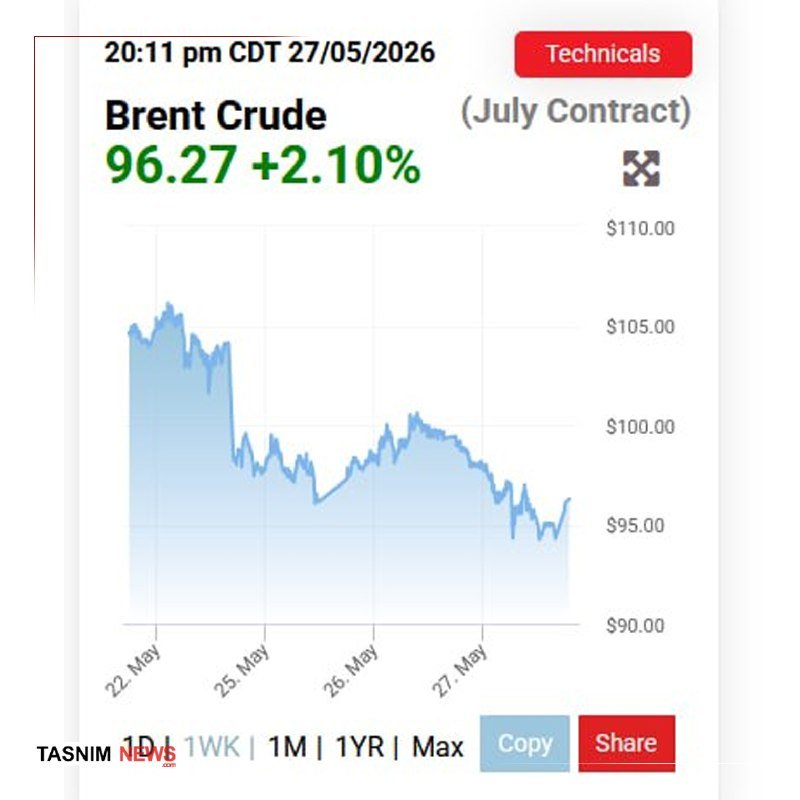
Oil traders do not wait for signatures. The contract is published in price action alone. By 26 May 2026—forty-eight hours before Middle East Eye reported a draft US-Iran framework reportedly including Hormuz reopening language—energy markets had already begun recalibrating. Reuters confirmed that oil prices dropped as traders weighed the possibility of progress toward a US-Iran understanding. By 27 May, the Polymarket odds stood at an even split: fiftyfifty on whether a nuclear deal closes before Washington's self-imposed end-of-June deadline. The market had priced ambiguity precisely because ambiguity is all the architecture allows.
The Hormuz angle is the easiest story to sell and the least important one to understand. Reopening the strait to unrestricted commercial traffic would restore a significant portion of global oil transit—but this is a symptom of leverage, not its source. America's naval dominance of the Persian Gulf has been an instrument of dollar politics for decades, not merely a security arrangement. The moment Iran agrees to terms that include sanctions relief primarily denominated in dollars, the financial architecture endures regardless of whether a patrol boat rides at anchor outside Bandar Abbas. The strait opens; the dollar remains the settlement currency for the oil that moves through it; the leverage does not dissolve.
Diplomatic Win, Structural Status Quo
The framing emerging from Western capitals treats any resumed US-Iran dialogue as a welcome thawing. That framing is not wrong—it is incomplete. A deal that releases frozen Iranian assets, eases secondary sanctions on energy sector transactions, and allows partial oil export resumption is a genuine diplomatic achievement for an administration that came into office with confrontation as its default setting. Barakat Abotaleb and others close to the Ayatollah's negotiating team reportedly view the Hormuz reopening language as the centrepiece draw. This publication contests that framing on structural grounds. The draw is the symptom. The currency is the substance.
Western analysis—particularly from wire services that rely on official briefers for access—tends to treat sanctions regimes as binary: either they bite or they do not. The reality is subtler. Sanctions constrain, they do not strangle; they redirect trade flows, they do not eliminate them; they create friction and premium, not prohibition. Iranian oil has moved—sometimes through third-country intermediaries, sometimes through arrangements that test the edges of secondary sanctions enforcement—throughout the period of maximum pressure. What changes with a deal is not the existence of friction but its cost. Easing that friction helps consumers in the short run and consolidates dollar primacy in the medium one.
The Household Calculus
BBC News reported on 26 May that UK households face approximately two hundred pounds in additional energy costs annually as a direct consequence of regional instability stemming from the Iran situation. That figure is not speculative—it is a projection based on typical consumption and current tariff trajectories. It is also a floor, not a ceiling, in a scenario where diplomatic failure produces renewed Strait tensions.
The household-level impact is the correct place to locate the stakes, and not only because of the obvious humanitarian dimension. Energy cost pressure at the consumer level is where geopolitical volatility translates into domestic political friction. Governments that depend on relative price stability to manage electoral consent find themselves squeezed when container ships reroute, when refinery capacity utilisation drops, when LNG spot prices spike on any escalation signal. The two hundred pound figure is modest compared to what a sustained Hormuz disruption would produce—but it is already being absorbed by households who had no role in designing the policy architecture that produced it.
The asymmetry deserves emphasis. A successful US-Iran deal—one that Polymarket's fifty-fifty odds suggest is far from certain—delivers relief, not reform. The system that produced Iran isolation, financial exclusion, and Straits militarisation remains largely intact. Iranian households continue under economic constraints even as sanctions nomenclature changes. The naval chokepoint is not disestablished—it is de-escalated to a level that makes resumption of commercial transit sustainable. The dollar does not retreat; it simply accommodates a slightly wider trade circuit.
The Case for Sceptical Optimism
The Polymarket odds are honest in a way that official briefers are not required to be. Fifty-fifty captures the genuine difficulty of bridging the gap between what Tehran needs—maximum sanctions relief, restored sovereign asset access, a formal end to the designated-state-sponsor-of-terrorism status—and what Washington can credibly offer without triggering a domestic political backlash that makes the deal unimplementable.
This publication finds that the dominant framing conflates two separate questions. The first is whether an agreement closes before end of June. That is a real diplomatic test, one that Polymarket's market participants are genuinely uncertain about. The second, and more consequential, question is what a closed agreement actually contains. If the Hormuz language is the headline, the dollar architecture is the subtext. Markets are pricing in the headline. Households will eventually learn that they were never reading the fine print.
The deal that looks like a breakthrough may prove to be a managed continuation. That is not a reason to oppose negotiation—diplomatic engagement with adversarial states usually beats the alternative. But it is a reason to resist the reflexive triumphalism that follows photo opportunities at Geneva and the careful staging of joint statement language. The Hormuz Strait reopening would be welcome. The dollar leverage it secures is not.
Monexus covered the Hormuz story through the lens of financial architecture rather than diplomatic theatre, treating the Straits as a dollar chokepoint rather than a military one. Wire coverage from Reuters and BBC led with prices and consumer costs respectively; this analysis foregrounds the currency dimension that neither addressed directly.
Wire provenance
This editorial synthesis draws on the following public wire/social posts:
- http://reut.rs/42YMK4M