Escalation Without Endgame: The Logic of Israel's Southern Lebanon Airstrikes
Israeli airstrikes on Lebanese border towns have become routine occurrences, but the strategic logic behind them remains opaque — and the absence of any stated political objective raises uncomfortable questions about where this leads.
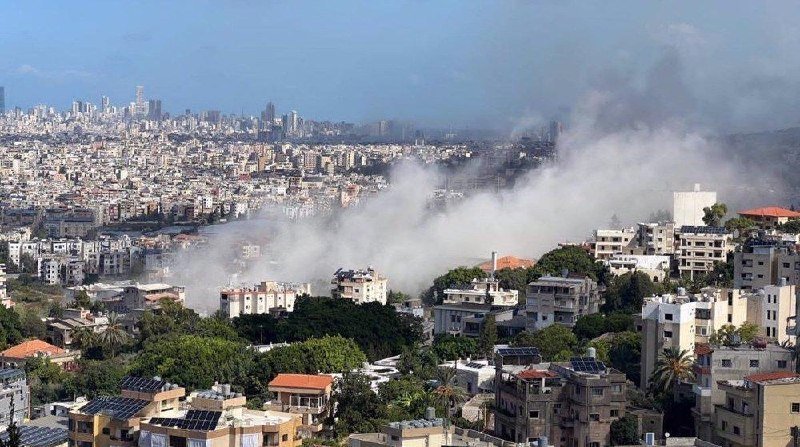
On the evening of 26 May 2026, Israeli airstrikes struck a cluster of Lebanese border towns — Kafr Rumman, Mifdun, and Nabatiyah Al-Fawqa in the south, followed hours later by renewed strikes on Qarnoun in the western Bekaa valley. According to wire reports from the Lebanese ground, the strikes were part of what appeared to be a concentrated wave of operations across southern Lebanon. The targets were non-military: residential towns in a strip of territory that has borne the brunt of cross-border exchanges for over eighteen months.
The strikes are real. The casualties, though still being tallied as this publication went to press, are real. What remains conspicuously absent is any stated endgame.
This is the central problem with Israel's ongoing campaign of strikes inside Lebanon. The operations are not random — intelligence assessments, strike patterns, and the stated justifications from Israeli defence officials suggest a deliberate strategy of attrition against Hezbollah infrastructure and personnel. But attrition as a strategy requires a termination condition. Kill enough fighters, degrade enough capability, and then what? The Israeli government has offered no clear answer. What began as a stated aim of restoring border security after October 2023 has expanded into something far less definable: a perpetual counter-terrorism operation with no political horizon.
The argument in favour of continued strikes runs along predictable lines. Hezbollah has used the post-ceasefire environment to reconsolidate in southern Lebanon, reconstituting command structures and rebuilding weapons caches in violation of the understandings that ended the worst phases of the 2024 conflict. From Tel Aviv's perspective, strikes on towns like Kafr Rumman — which Lebanese sources associate with Hezbollah logistics nodes — are not escalatory but preventive. They degrade a growing threat before it can be fully realised. Israeli defence briefings have repeatedly emphasised that no town in southern Lebanon is free of military significance under current conditions.
This logic is not without weight. A force that fired thousands of rockets into northern Israel across 2023 and 2024 cannot be left to恢复 unchallenged. The Israeli public has endured sixteen months of displacement from border communities; the political pressure on any government to demonstrate a response is considerable.
But the counter-logic is equally serious. The towns being struck — Kafr Rumman, Mifdun, Nabatiyah Al-Fawqa — are not forward operating bases. They are Lebanese towns with Lebanese civilians, who have been displaced, bereaved, and impoverished by a conflict they did not choose and cannot end. Each strike generates a new cohort of mourners, a new neighbourhood in rubble, a new village emptying of its remaining residents. The Lebanese state, already hollowed by economic collapse and political paralysis, has no mechanism to compensate or relocate these communities. The human cost accumulates in a ledger that never closes.
The deeper problem is one of substitution. Strikes that eliminate a specific Hezbollah operative or weapons cache today do not prevent recruitment tomorrow. Hezbollah's social base — the Shia communities of southern Lebanon — has endured Israeli air campaigns since 2006 and before. The organisation's narrative frames each strike as confirmation of Israeli aggression; the civilian toll reinforces it. Each cycle of strikes produces the conditions for the next cycle of recruitment and hardening. This is not a revelation — it is the central paradox that has defined the Israel-Hezbollah dynamic for two decades — yet it does not seem to have prompted a rethink of operational logic.
There is also the matter of audience. Israeli strike communications are calibrated for domestic consumption and for deterrence signalling to Hezbollah's leadership in Beirut. The Lebanese civilian population, the international humanitarian community, the United Nations Interim Force in Lebanon — none of these audiences register on the priority list. The result is a communication strategy that speaks only to the adversary and the home front, leaving the broader legitimacy of Israeli operations increasingly dependent on the goodwill of Western governments who themselves are growing weary.
What would a strategy with an endgame look like? Some analysts — and, reportedly, elements within the Israeli defence establishment — have argued for a return to the table with a genuine diplomatic sequencing: a ceasefire agreement with enforceable verification mechanisms, a commitment to move Hezbollah forces north of the Litani River, and a parallel track addressing the fate of the northern Israeli communities. Whether such an agreement is achievable given the political constraints on both sides is a separate and genuinely difficult question. What is clear is that the current approach — sustained strikes with no political horizon — has no precedent for producing durable security outcomes.
The strikes of 26 May will be followed by strikes of a similar character in the weeks ahead. The towns of southern Lebanon are already known quantities — Kafr Rumman, Qarnoun, Mifdun — struck repeatedly, their names entering the wire dispatches like a grim rotation. That repetition is itself the story. A military operation that must keep repeating itself in the same places against the same population is not making progress. It is marking time, and it is doing so at a cost paid almost entirely by people who have no seat at the table where their fate is decided.
Wire provenance
This editorial synthesis draws on the following public wire/social posts:
- https://t.me/wfwitness/3241
- https://t.me/wfwitness/3242
- https://t.me/wfwitness/3243