Ferrari's Electric Gamble: Why the Luce Could Define the Future of Luxury Performance
Ferrari's first electric vehicle, the Luce, hits the market on 26 May 2026 — arriving in a segment where others have stumbled. The Maranello factory is betting that heritage can survive electrification, but the structural pressures are unlike anything the industry has navigated before.
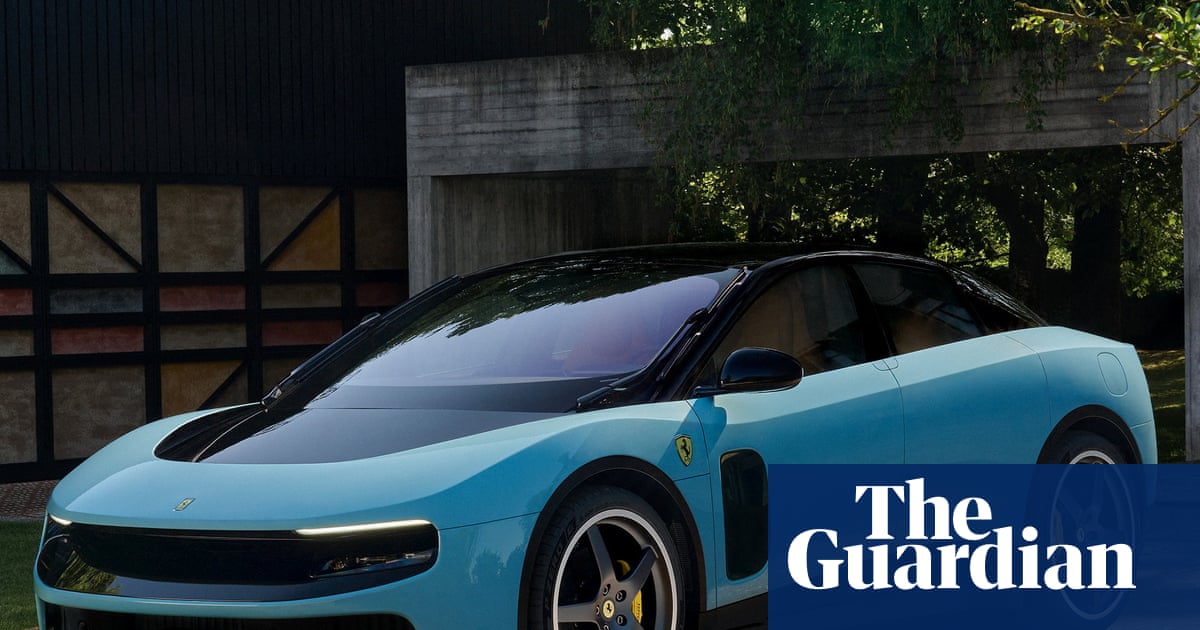
When Ferrari unveiled the Luce on 26 May 2026, it was not merely a new model arriving at showrooms. It was a declaration that the last major holdout in luxury performance had formally joined the electric era. The Maranello factory, which built its identity on screaming V12s and the visceral feedback of a combustion engine pushed to its limits, had released its first battery-electric vehicle — a moment that reshapes what the very concept of a Ferrari can mean in a decarbonising world.
The stakes are not abstract. Ferrari occupies a position in the global luxury hierarchy that no other carmaker quite replicates: a company that sells fewer than 14,000 vehicles annually yet commands profit margins that Apple might envy, a brand whose prancing horse emblem functions as shorthand for a specific Italian conception of speed, beauty, and mechanical purity. To electrify that identity is to alter something that has worked — relentlessly, profitably, globally — for seven decades.
The Telegram post from Nikkei Asia's feed on 26 May frames the arrival with a quiet warning: the luxury EV segment has proven "treacherous" for the manufacturers who entered it before Ferrari. That word is doing real work in the coverage. It suggests not a single misstep but a pattern — a category that has consumed capital, bruised brands, and left even well-resourced incumbents questioning whether the electric future they were promised would ever arrive on their terms.
The Treacherous Path Others Have Walked
The structural problem with luxury electrification is not that the technology fails to perform. By most engineering metrics, the leading luxury EVs exceed their combustion equivalents in acceleration, refinement, and drivetrain smoothness. The problem is that performance — the raw, sensory dimension of it — becomes harder to differentiate once the combustion engine's acoustic and tactile signatures are removed.
A high-revving naturally aspirated V12 communicates with its driver in ways that no software-simulated soundtrack can fully replicate. The vibration through the steering column, the way a chassis loads and unloads through a sequence of corners, the precise relationship between throttle input and turbo lag — these are the languages through whichFerrari has spoken to its customers for decades. Electric motors are, by comparison, eerily quiet and blunt. They deliver torque instantaneously and uniformly, with none of the mechanical theatre that gives performance driving its emotional texture.
This is not a Ferrari-specific dilemma. The industry has watched established luxury marques attempt to navigate this translation problem with mixed results. Brands with century-old identities built around the sound and fury of combustion have found that EV customers — even wealthy ones — respond to their vehicles differently. The driving experience becomes more comparable across marques, not less, once the combustion-specific signatures are stripped away. For luxury brands that have charged premiums partly on the basis of mechanical exclusivity, that convergence is a structural challenge that no amount of software refinement has yet fully resolved.
Ferrari approaches this from a particular position of strength that complicates the standard narrative about luxury EV struggles. The company has historically operated with deliberate supply constraints — waitlists that stretch years, production volumes capped by design philosophy rather than market demand. That scarcity model generates a pricing power that has insulated Ferrari from the volume pressures other manufacturers face when transitioning between powertrain generations. When demand for your vehicles outstrips your ability to produce them, the calculus around EV adoption shifts. Ferrari does not need to sell a high volume of Luce models to make the programme viable; it needs to sell them at a price that reflects the brand's positioning and — critically — to ensure that the electric driving experience it delivers feels worthy of the badge.
What Ferrari Brings That Others Did Not
The Luce's development approach reflects a deliberate effort to sidestep the pitfalls that afflicted earlier luxury EV entrants. Rather than adapting an existing platform or sourcing electric drivetrain components from suppliers whose systems appear across multiple marques, Ferrari invested in developing its own electric motor architecture. The strategic logic is straightforward: if luxury performance differentiation is at risk of erosion through commoditised EV hardware, the company that controls its own electric drivetrain development retains the ability to engineer distinctiveness at the component level.
That distinction matters more than it might appear. When multiple luxury manufacturers source from the same tier-one suppliers, their EVs inherit similar performance characteristics regardless of badge and styling. Acceleration figures converge. Efficiency ratios stabilise around common engineering thresholds. The result is a product category where the emotional language of performance becomes harder to speak fluently — because the instrument through which that language is expressed is shared rather than proprietary.
Ferrari's in-house motor development is an attempt to build a different instrument. Whether the result delivers the experiential distinctiveness the brand requires will be the central question of the Luce's early reception. The May 2026 launch puts that question into the open market rather than behind closed doors at product clinics.
The Cultural Weight Ferrari Carries
The Telegram post from Polymarket surfaced an image of the Luce in a context that would have been unimaginable a decade ago: Pope Leo XIV, photographed with the vehicle. Whether interpreted as an endorsement, a cultural moment, or simply the randomness of papal schedules intersecting with product launches, the image signals something real about Ferrari's position in global iconography.
Ferrari functions in a different register than most luxury manufacturers. It sits at an intersection of Italian industrial heritage, motorsport mythology, and the aspirational imagination of middle-class aspiration worldwide that very few brands achieve. A Ferrari is not merely a car; in many markets it functions as a symbol of an entire aesthetic and economic programme — Italian design, European craftsmanship, the possibility that technical excellence can produce objects of genuine beauty.
That cultural weight cuts both ways in the context of electrification. If the Luce succeeds — if Ferrari manages to produce an electric vehicle that communicates with its driver in ways that feel continuous with the brand's combustion heritage rather than discontinuous with it — the achievement will be taken as evidence that tradition and transition are compatible at the highest levels of automotive ambition. If the Luce fails to land, the failure will be read not merely as a commercial setback for one manufacturer but as a verdict on whether the luxury performance category itself is structurally compatible with the electric transition.
The broader implication extends beyond Ferrari. The luxury automotive sector has for years operated on the assumption that brand equity accumulated over generations will be sufficient to carry customers through a powertrain transition. Ferrari's test is whether that assumption holds when the product category itself — not just the propulsion system — undergoes a fundamental redefinition. Heritage is an asset until it becomes a constraint. The Luce will reveal which it has become for Maranello.
What Comes After May 2026
The immediate period following the launch will be dominated by the professional reception — the verdicts of automotive journalists, the response of Ferrari's existing customer base, the signal that dealer demand provides about whether the market accepts the Luce as a legitimate Ferrari. Those data points will arrive quickly and will be parsed for every indication of whether the vehicle delivers the experiential distinctiveness the brand has promised.
The structural question underneath that reception is less binary. The luxury EV segment is contracting rather than expanding globally, even as the broader EV market grows. That contraction is concentrated in the performance and grand touring categories — the precise segment Ferrari occupies. Buyers in that bracket are, the data suggests, more likely than mass-market EV purchasers to resist the transition, to retain combustion vehicles longer, and to evaluate electric alternatives against a more demanding emotional standard.
Ferrari's position within that resistant cohort is distinctive. The brand's pricing power and waitlist model give it insulation that competitors lack. But insulation is not immunity. If the Luce fails to convert Ferrari's existing combustion customer base to electric, the programme's economics become more dependent on new-to-brand buyers whose relationship with the marque does not carry the emotional weight of a V12 farewell. That is a narrower and less certain commercial foundation than Ferrari has enjoyed with any previous model generation.
The next twelve to eighteen months will provide the first clear indications of whether the gamble is paying off. Ferrari has navigated transitions in propulsion technology before — the introduction of turbocharging in the 1970s, the adoption of hybrid powertrains in the early 2010s — and emerged with its brand identity not merely intact but strengthened. The electric transition is categorically different in its demands, but the company enters it with financial strength, engineering ambition, and a global brand architecture that few rivals can match.
The outcome will matter beyond Maranello. It will shape how the industry thinks about the compatibility of heritage and electrification, about whether luxury performance can be reconceived rather than merely electrified, and about whether the brands that defined the combustion era can remain defining presences in whatever comes after it.
Wire provenance
This editorial synthesis draws on the following public wire/social posts:
- https://t.me/nikkeiasia
- https://t.me/nikkeiasia
- https://x.com/polymarket/status/1909876543210567889