Ferrari's Electric Bet Tests the Limits of Brand Loyalty
Ferrari's first electric car has arrived to shareholder unease, not celebration — a reminder that heritage remains an asset with conditions attached.
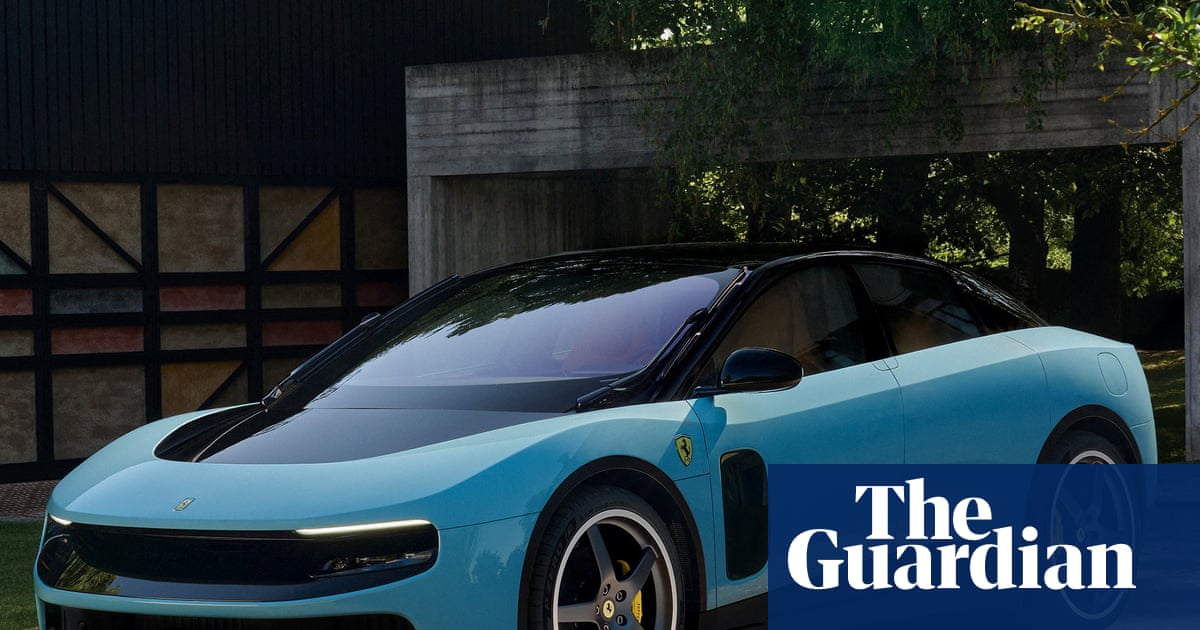
Ferrari's first electric car has arrived to shareholder unease, not celebration — a reminder that heritage remains an asset with conditions attached.
When Ferrari unveiled the Luce on 26 May 2026 from its Maranello headquarters, expecting something resembling a triumphant launch would have been reasonable. Instead, the market delivered a verdict of its own. By close of trading on 27 May, Ferrari shares had shed more than 8 percent — a single-session decline that had not been seen since the early weeks of the COVID-19 pandemic, when the broader auto sector faced outright shutdown. The stock closed at €362.80, down from a pre-reveal level that had positioned Ferrari among Europe's most richly valued automobile manufacturers.
That selloff is not a rounding error. It represents investors absorbing the reality that the most emotionally resonant brand in luxury automotive has chosen to do something its most loyal customers never asked for at a volume that matters to the bottom line. The Luce is not a petrol-electric hybrid dressed as an electric car. It is a clean-sheet electric vehicle, built on a purpose-designed platform with dedicated battery architecture, Ferrari's top executives confirmed in the days following the reveal. And the market, at least on one day, said it was worth less than simply continuing as though this had never happened.
The debate circulating among analysts and fund managers in the days after the launch does not center on whether Ferrari can engineer a compelling electric car — few serious observers seriously doubt the company's technical capability. The question is whether an electric Ferrari can still be a Ferrari in the ways that have justified the multiple the market has assigned to it for more than a decade. Ferrari's brand premium has rested, in substantial part, on the driving experience it has engineered around combustion. The sound of a naturally aspirated V12 at full throttle is not incidental to what Ferrari sells — it is central to what its customers have paid for.
The Heritage Problem Electric Cars Cannot Solve
Ferrari's brand equity has been built over decades on an unmistakable sensory promise. The high-revving V8 and V12 engines — their specific acoustic signatures and the way power builds across the rev range — are not incidental to the ownership experience. They are the experience, or at least a large part of what distinguishes Ferrari from rivals that sell comparable performance without the aural heritage. An electric drivetrain delivers torque and acceleration with an effectiveness that combustion engines mostly cannot match. What it cannot deliver is the acoustic identity that Ferrari's engineers and designers have spent decades perfecting.
This is the tension that Ferrari's critics are pointing to, and it is not an irrational concern. The company has cultivated an aspirational scarcity model — deliberate production constraints, premium price points, and famously long waiting lists — that has no direct analogue in the mass-market car industry. Ferrari's operating margin and brand multiple have been sustained not merely by engineering quality but by the mythology surrounding every vehicle that leaves Maranello. Whether the Luce can generate comparable mythology in the absence of the engine note that is inseparable from the Ferrari soundscape is a question the market has posed by selling the stock.
The Competitive Landscape Ferrari Chose to Enter
The luxury electric vehicle segment has not been kind to the brands that entered it most enthusiastically. Porsche's Taycan was a technical achievement, but its volumes never fully justified the investment in the J1 platform, and the model has cycled through periodic production adjustments as demand from European markets proved more muted than early projections. BMW's i division spent years attempting to position electric models as premium equivalents to the combustion range, with mixed results that required frequent pricing adjustments and dealer incentives. The lesson from those precedents is not that luxury electrification is impossible — it is that the transfer of brand equity from combustion to electric is a process that can fail in ways that damage the flagship identity, even when the electric product is objectively strong.
Ferrari's approach differs meaningfully from those examples in at least one respect. The company has not converted an existing model to electric power or positioned the Luce as the electrified alternative to a petrol range. The Luce is a ground-up electric vehicle, designed from inception as an electric car. This is a significant commitment — both in engineering terms and in the signal it sends about Ferrari's long-term intentions. The company has been clear that electrification is not an experiment but a core platform alongside the combustion range it will not abandon immediately. What is less clear is whether the market is prepared to assign the same multiple to a Ferrari that sells electric vehicles as it has to a Ferrari that sells combustion ones.
What the Market Is Actually Pricing In
The 8.3 percent single-session decline on 27 May deserves contextualization beyond the surface number. Ferrari has spent years cultivating a shareholder base that treats the brand as defensive by design — cars that sell themselves at margins the broader industry cannot approach, sustained by brand equity that is not easily replicated by any competitor at any price point. That base had largely absorbed Ferrari's previous technology pivots, from the introduction of hybrid assistance in theSF90 to the engineering compromises accepted in the name of performance specialization. The Luce represents something different: a technology transition that changes the sensory core of what the brand sells.
The market reaction should be read as a signal, if not a definitive verdict. Investors are telling Ferrari that brand love and brand premium are conditional — that the loyalty the company has spent decades cultivating can be tested, and that the market is willing to reprice the stock while it waits for evidence that the Luce will deliver on the brand promise rather than dilute it.
The Stakes for Ferrari's Next Decade
Ferrari's position heading into the post-combustion transition is more favorable than almost any comparable competitor. The company enters this era with a backlog that in prior years has extended to eighteen months or more for certain configurations, with margins that most luxury conglomerates would regards as exceptional, and with a brand whose global recognition requires little introduction. None of those structural advantages are guarantees that the electric transition will be seamless. The auto industry has seen brands with strong heritage struggle to transfer that equity to electric platforms — and those struggles have cost market share, pricing authority, and in some cases the credibility of the flagship identity itself.
Ferrari's executives have frames this as a century-long project, acknowledging in briefings that the first electric Ferrari will not immediately be the definitive expression of what the brand can achieve in electric form. That framing is honest and probably defensible. It does not, however, alter the fact that the market has now delivered its first formal verdict: shares down, analyst notes skeptical, long-term bulls watching wait-and-see. Ferrari has bet its next chapter on the proposition that an electric Ferrari can still command the premium the market previously assigned to one that burned fuel. The first evidence from the market suggests the proposition has not yet been proven.
The story of the Luce, for now, is the story of a company that chose transformation and a market that has not yet decided whether to reward or punish it. That ambiguity will resolve in the quarters ahead, as deliveries begin and customers register their own verdict — one that ultimately matters more than any single session on the Piazza Affari.
This publication covered the Luce launch and share reaction in a single integrated piece that combined the product story from Nikkei Asia with the market data from the Reuters wire report. Many wire outlets treated these as two separate narratives; merging them here reflects their joint significance for Ferrari's near-term positioning.