Hezbollah Claims Coordinated Strikes on Israeli Military Positions as Lebanon Border Tensions Intensify
Hezbollah announced a pair of coordinated military operations targeting Israeli forces in the Zawtar region of Lebanon on May 27, 2026, describing the strikes as a direct response to Israeli attacks on Lebanese territory. The timing and precision of the operations mark a notable intensification of cross-border hostilities that have strained diplomatic efforts to prevent a wider conflict.
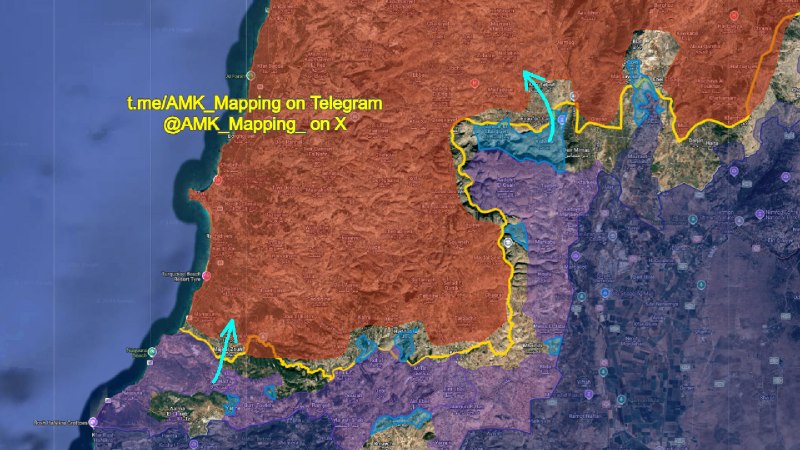
Hezbollah announced two separate military operations targeting Israeli forces in the eastern Lebanese town of Zawtar on the morning of May 27, 2026, according to statements released by the group and reported by regional news outlets including Al-Alam Arabic and The Cradle Media. The strikes, described as responses to Israeli attacks on Lebanese territory, hit positions at the riverbank in Zawtar al-Sharqiya and at Al-Khazzan Hill, involving rocket fire and missile attacks against Israeli military vehicles and personnel.
The operations mark a continuation of sustained hostilities along the Lebanon-Israel border that have persisted since October 2023, with both sides conducting regular strikes of increasing scope and sophistication. What distinguishes the May 27 attacks is not merely their timing but their claimed precision and the explicit reference to specific Israeli armor, including Merkava main battle tanks, at a known orchard position. Whether the strikes achieved their stated effects remains unverifiable from independent sources at time of publication.
What Hezbollah Claims to Have Struck
According to statements attributed to Hezbollah and reported via The Cradle Media, the first operation targeted Israeli forces at approximately 4:00 am at the riverbank in Zawtar al-Sharqiya using rocket fire. A second, simultaneous or closely coordinated operation targeted a gathering of Israeli army vehicles and soldiers at Al-Khazzan Hill, also in Zawtar, using a missile launcher. A third statement, reported by Al-Alam Arabic, described a strike against a Merkava tank positioned at the Zatam orchard in Zawtar, conducted using what Hezbollah described as an Ababil attack—a reference to a class of unguided rockets or loitering munitions in the group's documented arsenal.
Hezbollah characterized all three operations explicitly as responses to Israeli attacks on Lebanon. The group did not specify which Israeli actions triggered the response, nor did the statements contain casualty figures or damage assessments. Israeli military spokespeople had not issued a formal response to the reported strikes at the time of publication of the sources consulted.
The geographic clustering of the attacks—all within the Zawtar area, a known Hezbollah stronghold in the Baalbek-Hermel governorate—suggests coordination and deliberate targeting of a specific Israeli position rather than opportunistic or scattered fire. Cross-border strikes of this specificity have become more common in recent months, according to regional reporting, as both sides shift toward more deliberate engagement patterns after the initial months of the post-October 2023 exchange.
Israeli Military Activity and the Shadow of Escalation
The thread context does not include Israeli military statements or Western wire reporting on the strikes themselves, and the specific Israeli actions that Hezbollah described as provocations remain unconfirmed in the sources available. Israeli military briefings typically reference cross-border incidents through the IDF Spokesperson's office, but no such statements were present in the material reviewed for this article.
Israeli military operations inside Lebanon have intensified significantly over the preceding months, according to reporting from regional and international wire services that have tracked the escalation. Israeli forces have conducted strikes against Hezbollah infrastructure, weapons storage facilities, and, on multiple occasions, individual operatives and command nodes in southern and eastern Lebanon. Hezbollah has responded to each wave of strikes with barrages targeting Israeli military positions along the border, frequently drawing return fire.
The pattern has produced a grinding cycle of escalation in which each side calibrates the intensity of its responses to the perceived intensity of the other's last action. The May 27 operations, with their references to specific armored targets and precision weapons, fit a trend toward more assertive Hezbollah engagement that analysts have noted in recent months: the group appears increasingly willing to employ its more capable systems and to strike deeper into Israeli defensive positions than during earlier phases of the exchange.
The Strategic Logic of Tit-for-Tat
The structural logic of the current exchange is not difficult to identify. Both Hezbollah and the Israeli military benefit, within their respective calculations, from demonstrating resolve and the capacity to impose costs on the other side. Neither side has an obvious interest in permitting the other to claim an uncontested initiative—Israeli strikes on Lebanese territory generate Hezbollah responses; Hezbollah responses generate Israeli retaliation, which generates further Hezbollah responses. The dynamic has its own momentum.
For Hezbollah, responding to Israeli attacks serves multiple functions beyond the tactical. It maintains the appearance of a coherent defensive posture, satisfies an operational logic of retaliation that resonates with the group's base, and signals to regional partners that the resistance axis remains active. The explicit framing of the May 27 operations as responsive rather than initiatory—a framing that appears in the reported statements—reinforces this posture. The group is describing itself as the responding party, which carries implications for how the exchange is understood diplomatically.
For Israel, the challenge is different. Sustained Hezbollah operations along the northern border impose real constraints on the Israeli home front, displace civilian populations from northern communities, and require continuous allocation of military resources to border defense. Israeli military strategy has centered on degrading Hezbollah's strike capability over time, but the group has demonstrated continued capacity to regenerate and to conduct increasingly sophisticated operations. The May 27 strikes, if their claims are accurate, suggest that degradation efforts have not yet reached the threshold that would reduce Hezbollah's ability to contest Israeli activity along the border.
What Remains Unconfirmed
The factual basis for this article rests on statements attributed to Hezbollah and reported by regional news outlets with distinct ideological alignments. Al-Alam Arabic is associated with Iranian state broadcasting, and The Cradle Media operates from a perspective broadly sympathetic to resistance-axis positions. The claims made in Hezbollah's statements—the specific targets hit, the weapons used, the timing and coordination of the operations—have not been independently verified by Western wire services or international monitoring organizations in the sources reviewed.
Israeli casualty figures, if any, are not available from the sources consulted. Whether the Merkava tank strike caused damage or loss of life, whether the rocket attacks at Zawtar al-Sharqiya achieved hits on Israeli forces, and whether the missile launcher attack at Al-Khazzan Hill was successful by Hezbollah's own assessment are all matters that require independent confirmation. The IDF has not commented publicly on the reported strikes as of the latest source timestamps.
The broader context—the specific Israeli operations that Hezbollah described as its provocation—is also absent from the thread sources. A complete account of the May 27 escalation would require Israeli military statements and, ideally, Western wire reporting that could provide independent assessment of the scale and impact of both Israeli and Hezbollah actions.
Stakes and Trajectory
The immediate stakes are measured in military terms: the risk of casualties on both sides, the potential for a miscalculated strike that triggers a response beyond what either party intended, and the constant danger that the cycle of escalation produces a moment at which one or both sides judges a limited exchange no longer sufficient. The deeper stakes are diplomatic. The United States and France have both invested diplomatic capital in negotiations aimed at establishing a durable ceasefire framework along the Lebanon-Israel border, and an intensification of hostilities complicates that process.
Hezbollah has demonstrated a consistent preference for controlled escalation—strikes that impose costs and signal capability without crossing thresholds that would invite overwhelming Israeli retaliation. The May 27 operations, if they reflect deliberate targeting of specific Israeli positions rather than massed barrages, suggest the group is operating within that logic. Whether Israeli decision-makers read the strikes the same way is the central unknown. The next 24 to 48 hours of military statements and diplomatic activity will provide the clearest signal of whether the exchange is contained or whether both sides are moving toward a higher-intensity phase.
This publication reported the May 27 Hezbollah statements as published by regional outlets with explicit attribution. Wire-service confirmation of the strikes and independent casualty assessment were not available in the thread inputs reviewed. Monexus will update this report if Israeli military statements or Western wire reporting provide additional verified detail.
Wire provenance
This editorial synthesis draws on the following public wire/social posts:
- https://t.me/alalamarabic/785432
- https://t.me/thecradlemedia/412891
- https://t.me/TheCradleMedia/412890
- https://t.me/alalamarabic/785431
- https://t.me/thecradlemedia/412889
- https://t.me/TheCradleMedia/412888