Hezbollah escalates Lebanon operations as cross-border exchanges intensify
Hezbollah announced six operations against Israeli targets on May 27, 2026, in what the group described as a response to continued Israeli strikes on Lebanese territory, marking a significant uptick in cross-border hostilities.
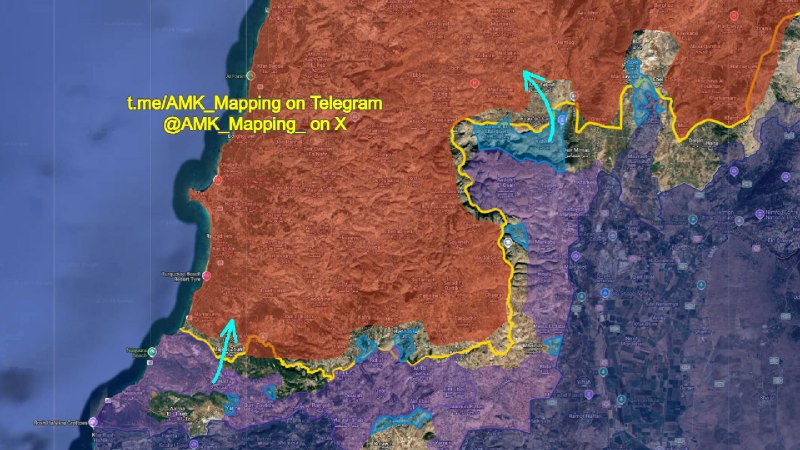
Hezbollah announced two additional operations against Israeli military positions on Wednesday, May 27, 2026, bringing the total number of claimed actions against Israeli targets to six that day alone, according to statements cited by The Cradle Media. The escalation comes amid sustained Israeli aerial and artillery activity targeting what the Israeli military has described as Hezbollah infrastructure inside Lebanon.
The announcement represents one of the most intensive periods of cross-border exchange since the broader regional hostilities began, with Hezbollah framing its operations explicitly as retaliatory. The group stated the actions were undertaken in response to what it termed ongoing Israeli attacks on Lebanese territory.
Israeli military spokespeople have not yet issued a detailed public response to the specific incidents reported on May 27. The Israeli Defense Forces (IDF) have previously stated that their operations in Lebanon target positions and assets linked to Hezbollah's military wing, which Israel classifies as a terrorist organization, and that they act to prevent what it describes as efforts to build precision-guided missile capabilities inside Lebanese territory.
The retaliation calculus
Hezbollah's framing of its operations as responses to Israeli strikes reflects a calculated communications strategy, one that domesticates the group's own offensive actions within a narrative of self-defense. The structure of the announcements — timestamped, specific about targets and methods — suggests an effort to present a coherent operational record rather than isolated incidents.
From the Israeli side, the IDF has consistently characterised its Lebanon operations as preventative, aimed at degrading capabilities that would pose an existential threat if fully operationalised. Western governments have largely backed this framing, while noting concerns about escalation dynamics along the border.
What both sides share is an interest in controlling the narrative of who is the aggressor. Hezbollah announces retaliations; Israel announces preventative operations. Neither framing is neutral, and the gap between them contains most of what matters about the conflict's legal and political character.
Regional exposure
Lebanon itself remains the most exposed party in this dynamic. The country was already experiencing a compounded economic and governance collapse before the current phase of hostilities began. The UN and humanitarian agencies have repeatedly warned that Lebanese civilian infrastructure — hospitals, water systems, and residential areas — cannot sustain the pattern of damage that sustained cross-border conflict produces.
Hezbollah's own civilian constituency in south Lebanon and the Bekaa Valley bears the consequences of any escalation on Lebanese territory, regardless of who initiated a particular exchange. That demographic reality is structurally underreported in coverage that treats the group as a purely military actor with no domestic political base to protect.
The Iranian dimension is structural rather than incidental. Tehran's material support for Hezbollah — the volume, the technical sophistication, the logistics — is the enabling condition for the group's sustained operations. Iranian state media has celebrated Hezbollah's announced actions, framing them as part of a broader front of resistance against Israeli regional behaviour. That framing circulates in Arabic and Farsi-language media with significantly more texture than it receives in English-language coverage, which tends to report Iranian-adjacent statements with disclaimers rather than substance.
Unresolved tensions and open questions
Neither the Israeli operations nor Hezbollah's announced responses have been independently verified in full by third parties. Open-source intelligence analysts have confirmed some strikes and some claimed operations, but the specific casualty figures, equipment losses, and precise locations cited in the announcements have not been independently corroborated across independent sources. The fog of reporting from a conflict zone with restricted access is not a minor caveat — it is the central condition of knowing anything about the ground situation.
What is clear is that the threshold for action has lowered. The six operations announced in a single day — with Hezbollah's own communiques providing timestamps — suggests a rhythm of exchange that has moved from episodic to continuous. Whether that reflects a strategic decision by Hezbollah's command or a more decentralised pattern of unit-level responses remains contested in analysis from regional security researchers.
The diplomatic track, such as it is, shows no evidence of generating binding constraints. The sources reviewed do not indicate active ceasefire negotiations or mediated de-escalation efforts underway as of May 27, 2026. The gap between stated international concern and effective pressure on either party to reduce hostilities is substantial and well-documented in prior phases of this conflict.
What follows from here
The trajectory is not favourable for civilian populations on either side of the border. Israel's stated objective — degrading Hezbollah's precision missile programme — has been pursued through operations that themselves generate civilian harm, which in turn produces recruitment arguments for Hezbollah and political pressure on the Lebanese government to avoid confronting the group. That feedback loop has operated for years, and nothing in the current escalation suggests it has been interrupted.
The immediate risk is not a comprehensive war — both sides have strong disincentives against that outcome — but a normalisation of attrition. Low-intensity, high-frequency exchanges that never cross the threshold of full-scale conflict but exact a continuous human and material cost are, in structural terms, a form of slow-burning warfare that degrades societies without producing decisive outcomes. The history of the Israel-Lebanon border is a ledger of such periods, and they rarely end cleanly.
This desk approached the story through regional Arabic-language sources as the primary wire feed, supplementing with open-source reporting on IDF statements. The dominant English-language framing of the day's events was not available at time of publication.
Wire provenance
This editorial synthesis draws on the following public wire/social posts:
- https://t.me/thecradlemedia/24736
- https://t.me/TheCradleMedia/24736