Hormuz's New Normal: How a Naval Escort Program Shifted the Oil Market's Weight
The U.S. Navy's decision to resume escorting commercial vessels through the Strait of Hormuz has already moved market expectations — but the underlying structural pressures haven't disappeared, only paused.
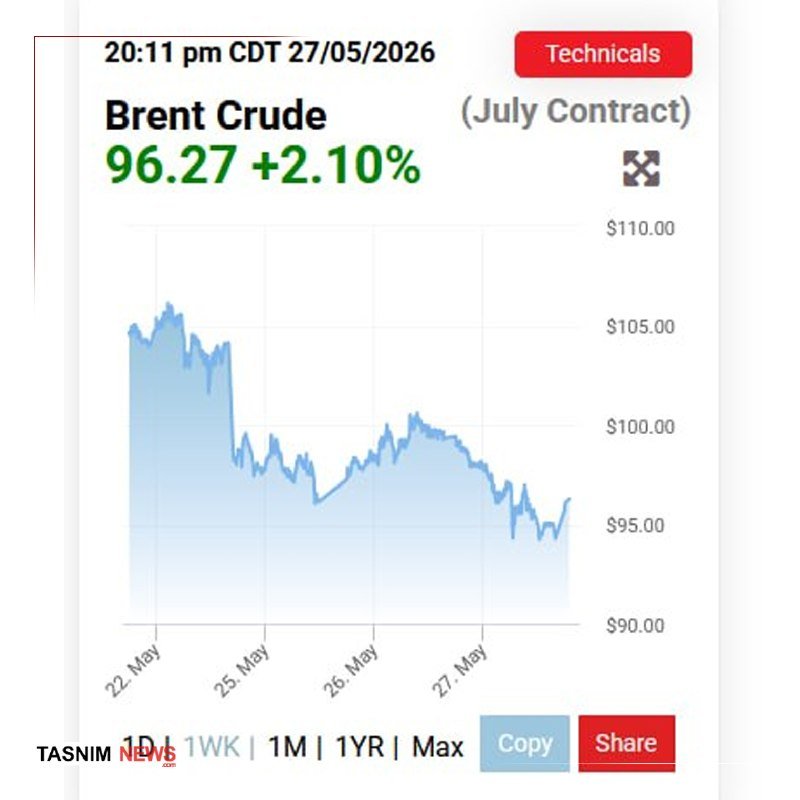
The Strait of Hormuz is open again — at a price no tanker operator expected to pay so soon. On 26 May 2026, the U.S. Navy confirmed it had resumed escort operations for commercial vessels transiting the world's most critical oil chokepoint, a decision that arrived after a night of clashes in and around the waterway sent insurers, traders, and markets into a rapid recalculation. The response was swift and measurable: Polymarket's implied probability of normal traffic resuming fell sharply within hours of the confrontations, while oil futures slipped toward levels that would have seemed implausible just days earlier.
The narrative could end there — a crisis contained, a shipping lane secured, a market stabilized. But that reading misses what the episode reveals about the structural fragility of the Hormuz corridor in 2026. The escort program is not a solution. It is a workaround, a temporary reprieve that masks rather than resolves the underlying contest over who controls the passage and under what terms.
The escort as instrument, not strategy
When the U.S. Navy escorts commercial vessels through contested waters, it performs a dual function: it guarantees safe passage for participating ships, and it signals American willingness to back that guarantee with force. The first effect is operational — tankers move, premiums drop, supply chains breathe. The second effect is political — it reminds Tehran, and every other actor with an interest in the corridor, that the United States retains the capacity and the will to keep the waterway open by coercive means.
But escort programs carry their own vulnerabilities. They are resource-intensive. They require constant coordination between naval commanders, shipping companies, and flag-state authorities. They create a target set: a U.S. warship escorting a merchant vessel is a more visible, more politically charged target than a warship running routine patrol. And they impose a burden on American deterrence credibility — every time the escort works, it reinforces the assumption that the U.S. will always show up; every time it doesn't, the credibility cost is asymmetric and severe.
What the market is actually pricing
The Polymarket movement on 26 May is instructive not because it predicts the future but because it captures what a specific, informed, and financially-incentivized audience believes right now. A falling probability of normal traffic resuming suggests that the clashes near the Strait have moved the Overton window of acceptable outcomes — not toward conflict closure, but toward a sustained low-intensity pressure scenario that keeps shipping costs elevated and insurance premiums volatile.
The projection that oil falls below $85 per barrel by next month is, in this context, a symptom rather than a cause. Lower oil prices are the expected result of credible American intervention — the escort program signals de-escalation, which reduces the risk premium baked into crude. But that reduction assumes the escort program holds, the clashes do not recur at scale, and no third party escalates unilaterally. All three assumptions are fragile.
The underlying structural tension remains intact: Iran has long treated the Hormuz corridor as a lever of coercive diplomacy, and the United States has long treated it as a line that cannot be crossed without consequence. The escort program is the mechanism through which both sides signal resolve without triggering the kind of incident that would make de-escalation impossible. That equilibrium is inherently unstable — it depends on both sides reading the other's red lines correctly and choosing restraint over demonstration.
The regional dimension
Any assessment of the Hormuz situation that ignores the broader Middle Eastern security environment is incomplete. The clashes on 25-26 May occurred against a backdrop of elevated tensions between Iran and Israel, ongoing disputes over nuclear program constraints, and a Saudi regional posture that has shifted considerably over the past three years. The Strait is not merely a bilateral U.S.-Iran issue — it is an intersection point for multiple competing security calculations, each of which introduces its own friction and its own potential for miscalculation.
Gulf Cooperation Council states have a direct interest in keeping the waterway open, but their leverage over both the escalation dynamics and the U.S. posture is limited and often informal. What they can do is provide diplomatic cover, offer port facilities for escort operations, and signal to markets that the Gulf states are not passive bystanders. That signaling matters, even when it does not show up in headlines.
What remains uncertain
The sources do not specify the nature or attribution of the clashes that triggered the escort resumption. The U.S. Navy announcement on 26 May provides confirmation of the escort decision but not of the proximate cause of the confrontations. Whether the clashes were initiated by Iranian naval forces, by IRGC-affiliated vessels, by third-party actors, or by a miscalculation during routine patrol interactions — the sources do not say. That ambiguity matters, because the answer determines whether this was a deliberate signal, an operational accident, or a test of the new American posture.
The sources also do not specify which shipping companies are currently participating in the escort program, what flag states are involved, or whether the program has formal coordination with the International Maritime Security Construct or other multilateral frameworks. Those details would clarify the program's durability — whether it is a short-term response to a specific incident or the opening chapter of a sustained operational posture.
The stakes, plainly stated
If the escort program holds and no further major clashes occur, oil markets get relief. Ships move. Premia compress. The diplomatic space for a negotiated arrangement around the corridor widens, however slightly. American credibility in the Gulf is reinforced, and allies from Riyadh to Abu Dhabi receive a tangible demonstration of commitment.
If the clashes recur — or if an Iranian decision is made to escalate rather than test — the escort program becomes a flashpoint rather than a buffer. American naval assets escorting commercial vessels in contested waters are the hardest kind of target to defend and the most consequential kind to lose. A single incident involving a U.S. warship, an escort failure, and civilian casualties aboard a tanker would shift the entire regional calculus, likely within hours.
The Polymarket odds reflect current sentiment, not inevitable outcomes. They are useful as a temperature gauge, not as a forecast. What they tell us is that the market has noticed the corridor is more fragile than it was a week ago — and that the escort program, however welcome, is a fragile instrument on which to rest the stability of the world's most important oil chokepoint.
This publication covered the Hormuz escort decision as a market-moving event rather than a geopolitical resolution. The wire framing leaned toward immediate security implications; this piece foregrounds the structural instability the escort program is designed to manage rather than resolve.
Wire provenance
This editorial synthesis draws on the following public wire/social posts:
- https://t.me/osintdefender/1248
- https://x.com/polymarket/status/1923691823474876636
- https://x.com/polymarket/status/1923620987694813669