IDF Strikes Two Hamas Members in Northern Gaza as Ceasefire Frays
Israeli forces struck two Hamas members in the northern Gaza Strip on 27 May 2026, according to an IDF statement, as Palestinian casualty reports mounted despite a pause in major hostilities.
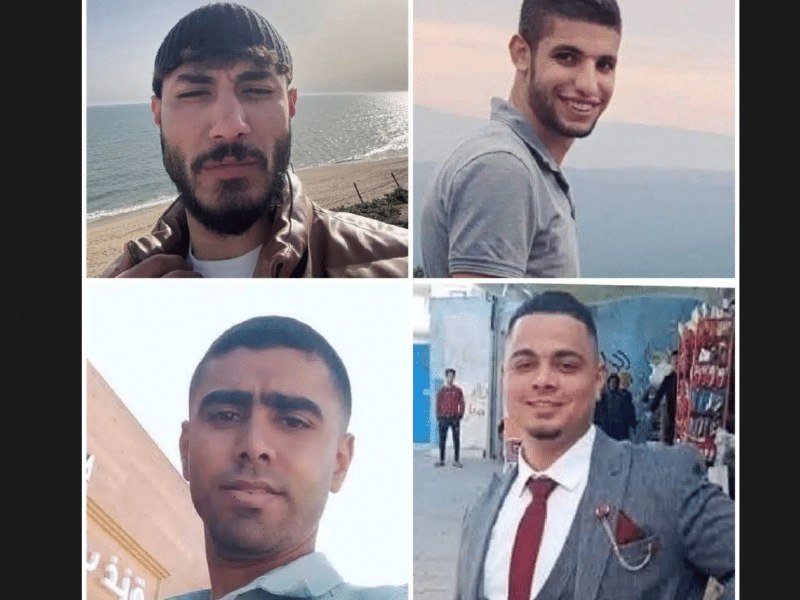
The Israeli military announced on 27 May 2026 that its forces had struck two members of Hamas in the northern Gaza Strip. The IDF described the targets as senior figures in the militant group in a statement carried by Israeli public broadcaster Kan. The strike, confirmed by at least two independent Telegram channels monitoring the conflict, occurred against a backdrop of persistent ceasefire negotiations and mounting civilian casualties in the enclave.
At least eighteen Palestinians have been killed in Gaza since the morning of 27 May, according to a report from Iranian state-affiliated outlet Jahan Tasnim. That figure could not be independently verified against Western or Israeli sources, which had not published comprehensive casualty tallies at the time of reporting. The IDF statement made no reference to civilian harm; the accounts from Gaza-based sources do not yet provide a disaggregated breakdown between combatants and non-combatants.
The Strike and Its Immediate Context
The IDF said its forces acted against what it described as an imminent threat. No further operational details were provided in the initial statement. Israeli military briefings have historically cited intelligence on planned attacks against Israeli territory as justification for targeted operations; the IDF's phrasing on 27 May followed that standard formula, but no supporting evidence had been published by the time coverage went to press.
Hamas has not issued a public statement acknowledging or denying the strike, and no independent confirmation of the targets' identities was available from non-Gaza sources at time of writing. The names of the individuals reportedly struck did not appear in the source materials reviewed.
Ceasefire Durability Under Pressure
The operation raises questions about the stability of the existing ceasefire arrangement, which multiple parties have described as under strain. The phrase "alleged ceasefire" in reporting from regional outlets reflects how the term itself has become contested: a formal cessation-of-hostilities agreement exists on paper, but Israeli forces have repeatedly cited security exceptions to justify continuing operations.
The killing of individuals described by Israel as Hamas members inside Gaza would, under a strict interpretation of a ceasefire, constitute a violation. Under a broader interpretation—one that Israeli officials have consistently favoured—the targeting of what Tel Aviv classifies as imminent threats remains permissible regardless of the nominal ceasefire status. That tension has defined the agreement's implementation since its inception.
International mediators, including Qatar and Egypt, have sought to shore up the arrangement with provisions on hostage releases, aid delivery, and the eventual withdrawal of Israeli forces from populated areas of Gaza. Progress on each of those pillars has been uneven, and the targeting of figures inside the Strip signals that both sides are maintaining the operational freedom to act unilaterally when they judge the threat calculus warrants it.
Legal and Political Framework
Israel's justification for the strike invokes its long-standing doctrine of anticipatory self-defence, which permits military action against an imminent threat even without an explicit prior attack. International legal scholars have debated whether the intelligence threshold for imminent threat has shifted in the post-October 2023 environment; the question is not settled, and Israel's position does not command universal acceptance among international law practitioners.
The status of Hamas as a designated terrorist organisation by the United States, the European Union, and other Western governments shapes how their operations are framed in much of the Western press. In reporting terms, this means that Israeli military statements about Hamas activities tend to carry more weight in some outlets than parallel statements from Palestinian or regional sources—a structural asymmetry that scholars of conflict coverage have long documented. The practical consequence is that Israeli characterisations of a strike as defensive are less likely to be qualified in wire reports than characterisations from Gaza-based sources describing the same event as an aggression.
What Comes Next
For Gaza's civilian population, each resumed strike cycle compounds a humanitarian emergency that UN agencies and international NGOs have repeatedly described as approaching collapse. Food distribution networks, medical facilities, and shelter infrastructure operate under conditions that the UN Office for the Coordination of Humanitarian Affairs has characterised as functionally inadequate. A strike on northern Gaza—which hosts a significant proportion of the enclave's displaced population—risks further displacement and further damage to the remaining civilian infrastructure.
For the mediators trying to sustain the ceasefire framework, the IDF strike is a reminder that the agreement's durability depends on both parties' willingness to absorb short-term security risks in exchange for longer-term diplomatic gains. That calculus has proved fragile throughout the negotiation process, and each incident of resumed hostilities raises the probability that one side or both will conclude that the agreement no longer serves their interests.
The sources reviewed for this article do not provide sufficient detail to establish the identities of those struck, the specific intelligence basis for the IDF's decision, or whether the ceasefire's principals have been formally consulted since the operation. Those gaps in the record are not incidental; they reflect the operational security constraints that govern both Israeli military communications and Hamas's public posture, and they limit the degree to which any outside account can currently reconstruct the decision-making chain.
Monexus reported the IDF statement and the civilian casualty figures as discrete data points, declining to merge them into a single causal frame until corroboration is available from non-aligned sources.
Wire provenance
This editorial synthesis draws on the following public wire/social posts:
- https://t.me/TheCradleMedia/
- https://t.me/wfwitness
- https://t.me/GeoPWatch
- https://t.me/JahanTasnim