The Anti-Corruption Trap: How Indonesia's Graft Prosecutions Are Reshaping the Rules of Political Combat
Indonesian prosecutors are facing mounting scrutiny over high-profile corruption cases that critics say have become instruments of political targeting rather than genuine rule-of-law enforcement — a pattern with consequences far beyond Jakarta.
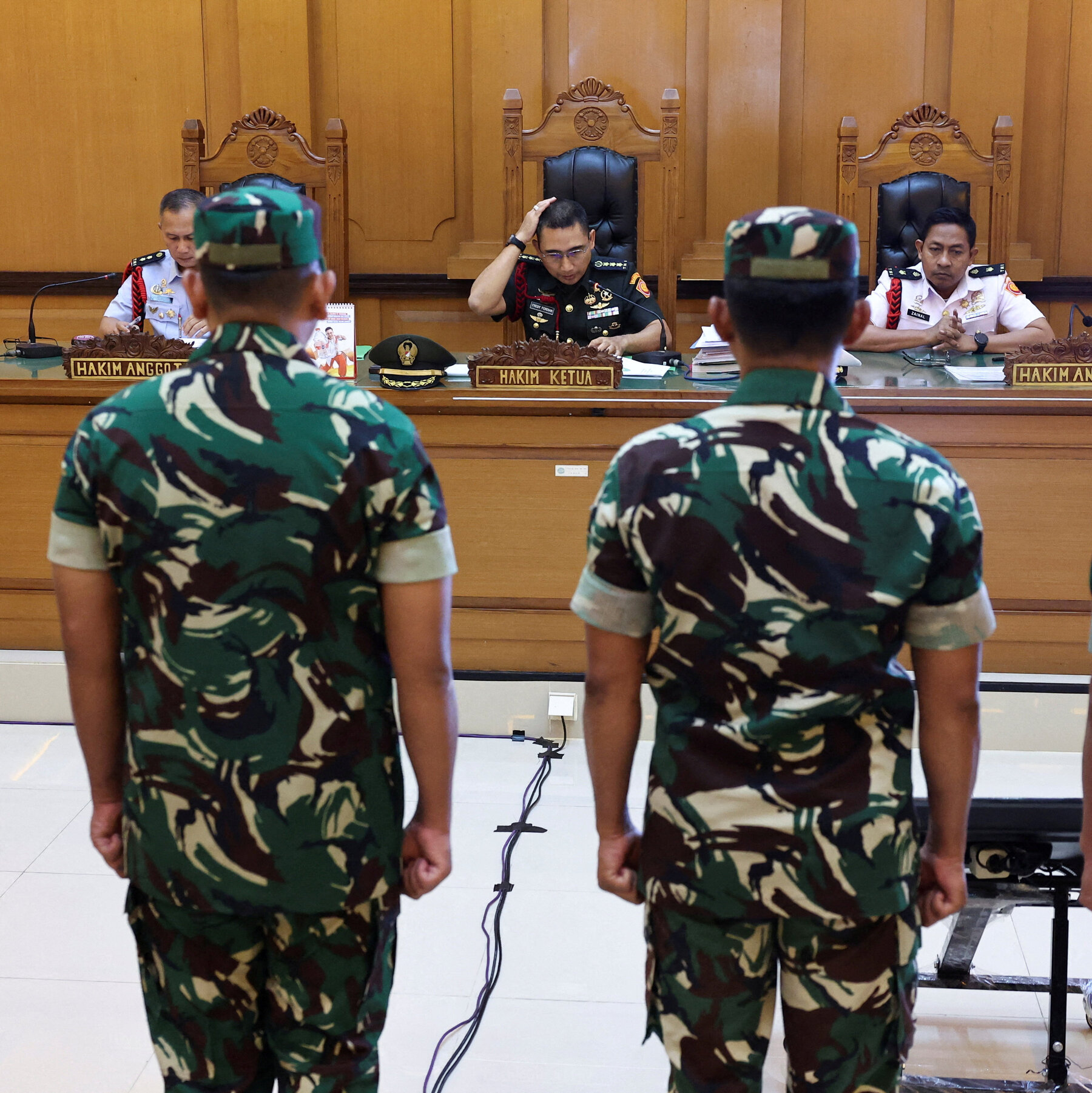
A general court in Jakarta, sometime in the past two years. The defendant is a former senior official, accused of embezzling state funds routed through a provincial infrastructure contract. The prosecution presents voluminous financial records, calls a procession of witnesses, and rests its case on the testimony of a single whistleblower whose own criminal record is mentioned only in passing. The defense argues the contract in question followed established procurement procedures, that the funds were audited without finding discrepancy, and that the whistleblower stands to benefit from a separate leniency arrangement. The judge deliberates for eleven minutes.
The scene is composite, but the dynamics are drawn from cases now under international scrutiny. Indonesian prosecutors are stoking disquiet over what human rights groups and legal observers describe as a pattern of questionable graft prosecutions — cases that arrive with suspicious timing, rely on witnesses with prosecutorial incentives to testify, and frequently collapse under appellate review. The pattern, if it holds, raises a question that extends well beyond Indonesia's borders: when anti-corruption enforcement becomes indistinguishable from political litigation, who actually suffers?
The evidence, as documented by Nikkei Asia and corroborated by reporting from regional legal observers, points to a judiciary operating under competing pressures — an avowedly reformist executive, a civil society that demands accountability, and an enforcement apparatus whose ranks still include figures from the Suharto-era prosecution service. The result is something that looks, from certain angles, like genuine rule-of-law progress, and from others, like something more troubling: a system learning to weaponize its own anti-corruption infrastructure against inconvenient figures while leaving allied networks intact.
The Cases That Triggered the Scrutiny
The proximate cause of the current wave of scrutiny is a cluster of high-profile prosecutions that legal observers say share uncomfortable commonalities. In each instance, the defendant held a position of institutional authority — a regional governor, a former minister, a senior civil servant in a state-owned enterprise — and in each instance, the charges arrived at a politically sensitive moment. The financial allegations, while technically defensible as prosecutable conduct, are framed in ways that invite questions about selective application: the same procurement and contracting practices that underpin the charges are standard practice across dozens of ministries and agencies, none of which are under investigation.
Prosecutors have defended the cases as the product of evidence-driven investigations, not political direction. The Attorney General's office has pointed to its conviction rates and its publicized anti-corruption agenda as evidence of institutional commitment to reform. In public statements, senior prosecutors have rejected the suggestion of selectivity, arguing that the volume of cases brought under the current administration exceeds that of any predecessor and that the evidence base for each charge is independently assessed.
That defense is not without weight. Indonesia's corruption perception index, while still reflecting significant institutional challenges, has shown marginal improvement in recent years, and the country's anti-corruption commission — the KPK — has historically operated with a degree of independence that exceeds many regional peers. The legal architecture for holding officials accountable exists and has been invoked. The question is not whether prosecutions can be brought, but which ones are, and what that selection reveals.
The Structural Logic of Selective Enforcement
The pattern becomes legible when examined through the lens of political incentives rather than purely legal ones. In systems where anti-corruption agencies operate without robust independent oversight — and where prosecutors' career trajectories remain tied, however indirectly, to executive preferences — the rational strategy is not to pursue all graft equally, but to pursue graft among those who lack protection. This is not unique to Indonesia; the dynamic appears in不同程度的 in democracies across Southeast Asia, Eastern Europe, and Latin America, wherever the institutional infrastructure for accountability is newer than the political structures it is meant to constrain.
The effect is a system that generates visible enforcement — enough to satisfy domestic civil society demands and international donor conditionality — while avoiding enforcement that would destabilize governing coalitions or implicate figures with current political relevance. The public record of convictions grows. The perception of impartiality grows. And the actual distribution of prosecutorial resources remains, quietly, a function of political calculation.
In the Indonesian cases currently under scrutiny, several of the defendants have political affiliations or institutional loyalties that cut against the current administration's positioning. Others are former allies who have become inconvenient — figures whose prior knowledge of administrative practice makes them potential witnesses in broader investigations that the current leadership prefers to leave unopened. The prosecutions are not necessarily unfounded; the legal theory behind the charges is often defensible. What is less defensible is the theory's selective application.
The Counterargument: Reform Requires Enforcement
It would be incomplete to present this analysis without acknowledging the strongest version of the government's position. Indonesia's democracy has been shaped by an extended negotiation with entrenched corruption networks that predate the reformasi era. The institutions now under scrutiny — the prosecution service, the attorney general's office, the courts — are, in significant part, inherited structures whose personnel and practices were not fully reformed during the democratic transition of 1998-2004. The current administration inherited an enforcement apparatus that is capable of pursuing corruption cases, but only according to logics that are partly legal and partly political.
From this perspective, the selective deployment of prosecution is not a defect of the system but a transitional feature: a way of building conviction records and institutional capacity while avoiding the systemic destabilization that would accompany frontal attacks on entrenched networks. The KPK's own history suggests that even an institution with formal independence can only move as fast as the political environment permits. Prosecutors navigating this environment are, in this reading, pragmatists — doing what the law allows, where the political terrain permits.
This argument has genuine force. It is also, necessarily, an argument that justifies indefinite deferral of the institutional reforms that would make selective enforcement unnecessary. Every year in which prosecutorial discretion remains the primary mechanism for corruption accountability is a year in which the skills required for politically motivated prosecution are refined, while the skills required for politically neutral prosecution are not. The system builds capacity for selective enforcement, and that capacity, once built, has its own institutional momentum.
International Precedent and the Indonesia Case
The dynamics observed in Jakarta are not without international parallel. In Brazil, the Lava Jato operation began as a genuine anti-corruption initiative and became, over time, a mechanism whose prosecutorial strategies drew sustained criticism for targeting certain political figures while sparing others whose conduct was comparable. In the Philippines, the drug war produced an enforcement apparatus capable of generating spectacular conviction statistics while operating with procedural standards that drew international legal condemnation. In both cases, the infrastructure of enforcement — investigators, prosecutors, legal frameworks, international cooperation agreements — was real and often effective. The problem was not the existence of the infrastructure but its deployment.
Indonesia's position is complicated by its scale and its democratic legitimacy. Unlike the cases in Brazil and the Philippines, where critics could point to executive direction of enforcement as the primary distortion, the Indonesian pattern appears to operate at a level one step removed from direct political control. Prosecutors exercise discretion; that discretion is not obviously directed from the top; and yet the outcomes are consistent with political logic. This is, in some respects, a more difficult problem: a system where the appearance of rule-of-law enforcement is maintained precisely because the reality has been selectively managed.
The international dimension matters because Indonesia positions itself as a democratic anchor in a region where that claim is increasingly contested. Southeast Asian partners, Western diplomatic relationships, and multilateral governance arrangements all depend, in part, on Jakarta's capacity to project institutional credibility. A prosecution service whose decisions are perceived as politically calibrated — whether or not that perception is entirely accurate — weakens that credibility in ways that have compound effects.
What Comes Next
The immediate stakes are domestic. Indonesian civil society organizations have begun documenting the patterns of selectivity with increasing rigor, and legal aid networks supporting defendants in the contested cases report a growing caseload. The attorney general's office, for its part, has shown no indication of altering prosecutorial priorities and has, in recent months, publicly reasserted its commitment to evidence-based enforcement.
The medium-term stakes are institutional. Indonesia's next generation of anti-corruption capacity — the investigators, prosecutors, and judges who will staff these institutions for the next two decades — is learning how to operate in an environment where legal outcomes are, at minimum, influenced by political considerations. The habits formed now will be difficult to break later. If the current pattern continues, the country will have an increasingly effective enforcement apparatus deployed for increasingly selective purposes, which is not rule of law but its simulation.
The longer-term stakes are geopolitical. Southeast Asia's democratic governance experiments have a mixed record over the past decade, with backsliding in several countries and genuine progress in few. Indonesia's trajectory matters as a regional reference point — a country of 270 million that has managed three peaceful transfers of presidential power and maintains a more pluralistic political environment than most of its neighbors. Whether that record is compatible with an enforcement apparatus that prioritizes political management over legal consistency is a question that will shape the region's governance architecture for years to come.
What remains uncertain, and what the current evidence does not fully resolve, is whether the selectivity observed in the recent prosecutions represents a deliberate strategy by the current administration or an emergent property of an institution that has always operated this way and is simply being scrutinized more carefully now. The distinction matters for policy response: a deliberate strategy can be challenged through political pressure and institutional redesign, while an institutional emergent property requires deeper structural reform. The sources do not yet provide a basis for distinguishing between these two possibilities with confidence.
This report draws on Nikkei Asia's coverage of Indonesian law enforcement scrutiny and associated regional legal reporting. Monexus coverage of Southeast Asian governance is editorially independent of government and donor interests in the region.