Iran Declares Hormuz Passage for 'Hostile Countries' Still Prohibited — 23 Ships Crossed Anyway
Tehran announced a prohibition on transit by 'hostile countries' as 23 vessels crossed the Strait of Hormuz under IRGC security coordination — a contradiction at the heart of the statement that reveals more than either claim alone.
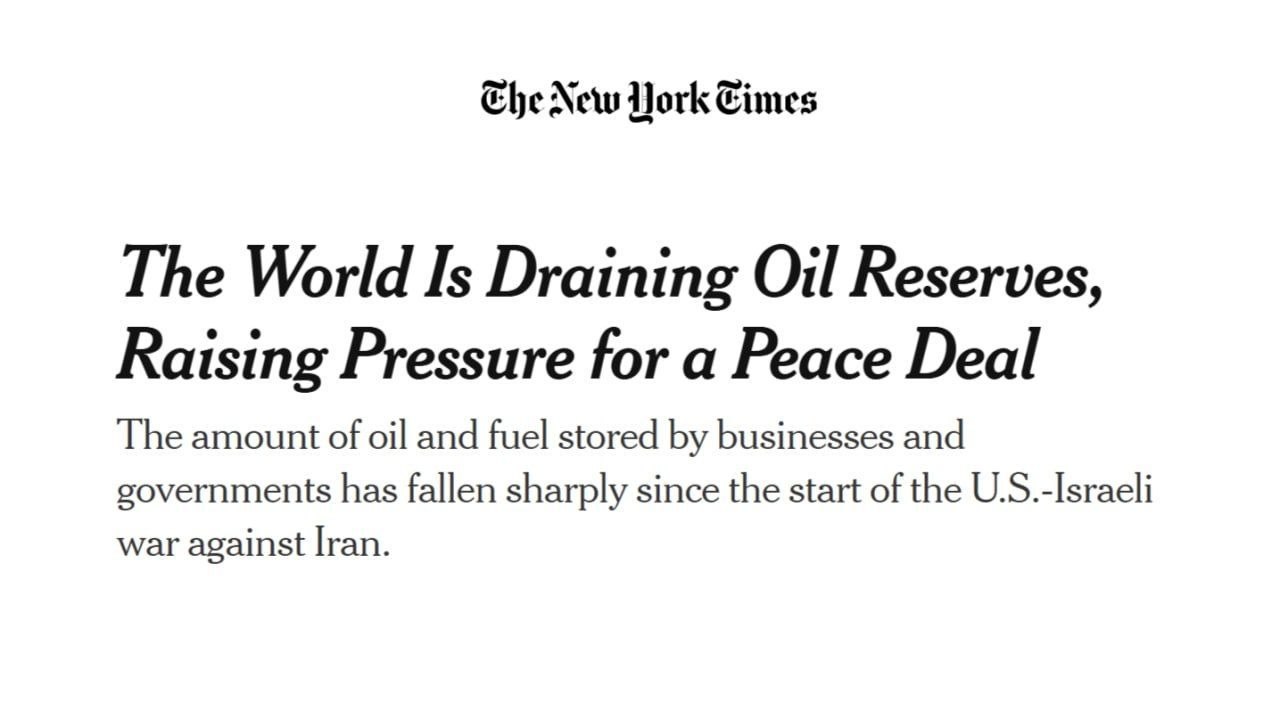
On the morning of 27 May 2026, the Islamic Revolutionary Guard Corps Navy issued a statement carrying a contradiction at its centre. The passage of ships from "hostile countries" through the Strait of Hormuz, it said, remained prohibited. Within hours, the same IRGC Navy announced that 23 vessels — tankers and container ships among them — had safely transited the waterway under its security coordination in the preceding 24 hours. The two claims were not reconciled. They were delivered in the same breath.
What the statement actually communicates depends on which audience Tehran was speaking to at any given moment. To Western naval commanders and energy-market participants, the prohibition phrase offers a reminder of Iran's ability to disrupt one of the world's most critical chokepoints — roughly 20 percent of global oil shipments transits Hormuz daily. To regional actors and domestic constituencies, it sustains the posture of a state that controls its own doorstep. To the nuclear negotiating teams that had reconvened in Oman just days earlier, it may have been a quiet pressure point.
The Strait of Hormuz has been the subject of Iranian threatening language for decades. What distinguishes the current moment is not the content of the threat but the timing and the precision of its framing. The IRGC statement on 27 May did not issue a warning; it issued a status update — a declaration that prohibition is the operative condition and that enforcement, for now, operates selectively.
A statement designed to be read differently by different audiences
The most straightforward reading of the IRGC Navy announcement is that it describes a managed transit regime, not a closure. Twenty-three ships crossing under IRGC security coordination is not an accident; it is a demonstration that Tehran can allow traffic to flow while reserving the right to stop it. The prohibition language, in this reading, is not a statement of current policy but a declaration of capability and intent.
Tanker operators and maritime insurers have treated such announcements with measured calm in recent years. The 23-vessel transit figure — verified and announced by the same body that declared the prohibition — suggests that at least for now, the Strait remains open for business. The IRGC's own data undercuts the most alarming interpretation of its statement.
This is not to say the language is harmless. Even a symbolic claim to authority over a chokepoint carries weight in commodity markets, where uncertainty is itself a price driver. When Tehran announces that passage of "hostile countries'" ships is prohibited while simultaneously confirming commercial traffic is flowing, it introduces ambiguity that actors in the energy logistics chain must price in.
The phrase "hostile countries" also warrants attention. It is not a static category. Iran has historically applied it to the United States, Israel, and their direct allies, while maintaining quieter channels with states such as China and India that Washington designates differently. The ambiguity is deliberate: it keeps的对手 on their heels without triggering the economic retaliation a full blockade would invite.
The structural position Iran occupies
The Strait of Hormuz sits at the intersection of several structural pressures that shape Iran's negotiating posture. Global demand for Gulf oil remains inelastic in the short term — there is no costless alternative supply route that can absorb a meaningful disruption. This gives Tehran leverage that is structural, not merely rhetorical. The chokepoint functions as a geographic asset that no amount of diplomatic pressure or sanctions pressure can relocate.
Western military planners are aware of this. The US Fifth Fleet operates in the Gulf with the explicit mission of keeping sea lanes open, but a confrontation with IRGC naval forces in the Strait itself would carry risks — for shipping, for regional allies, and for the broader nuclear negotiations that remain the primary diplomatic channel between Washington and Tehran. The IRGC's statement exploits this asymmetry: it can raise the temperature with language while the practical consequences of that language remain manageable as long as traffic keeps moving.
This dynamic has been observable across previous cycles of nuclear talks. Tehran has historically used maritime signalling and Revolutionary Guard statements to reinforce its negotiating position — not to reach a settlement but to ensure that the settlement, when it comes, reflects its leverage. The 27 May announcement fits that pattern. It arrives as talks in Oman enter a sensitive phase, offering the IRGC a means of demonstrating relevance without derailing the diplomatic process.
What the international system tolerates here
The absence of alarm from major trading partners and Gulf allies is itself informative. Neither Saudi Arabia nor the UAE — both of which have competing interests in Strait stability — issued public responses to the IRGC statement on 27 May. Tanker traffic data from the hours following the announcement showed no measurable disruption to southbound shipments.
This silence is not acquiescence. It reflects a calculation shared by most actors with a stake in Gulf stability: Iranian maritime brinkmanship is a known quantity, it is unlikely to escalate without a triggering event, and the costs of public confrontation are higher than the costs of quiet monitoring. The 23-ship transit figure is, in this sense, a form of reassurance — evidence that the Strait is not closing, even as the rhetorical stakes are being raised.
The European and Asian states that depend most heavily on Hormuz oil have adopted similar postures. They maintain diplomatic channels with Tehran, participate in the nuclear talks, and treat Iranian military communiqués as background noise until the traffic data tells them otherwise. The statement on 27 May has not yet changed that background reading.
Stakes and what comes next
The immediate stakes are defined not by what the IRGC said on 27 May but by what it does not yet say. The statement leaves several questions open: whether "hostile country" vessels that attempt to transit will face interdiction, what the threshold is for triggering enforcement, and how the announcement relates to the ongoing nuclear negotiations in Oman.
If the talks progress toward a deal, Iranian officials may have less incentive to maintain maritime pressure — the relief from sanctions would reduce the strategic value of disruption. If the talks stall or collapse, the IRGC's statement becomes the kind of floor that is easier to reference than to retreat from. The prohibition language, once issued, creates expectations among domestic audiences and regional adversaries that Tehran would find costly to abandon.
The 23 ships that crossed under IRGC security coordination represent a data point in a longer argument that Tehran is having with itself, with Washington, and with the energy market. The argument is about the price of a nuclear agreement and the price of no agreement. The Strait of Hormuz is the most legible piece of leverage Iran holds, and the IRGC Navy made clear on 27 May that the leverage has not been exercised — but it has not been relinquished either.
For now, the waterway remains open. That is the fact the market has chosen to price on. Whether it remains the fact that matters depends on variables well beyond the Strait itself.
This publication noted that the IRGC Navy announcement contained two claims that do not obviously cohere: a prohibition on "hostile country" vessels and the confirmation of 23 ships' safe passage. Monexus treated both as significant, reading them as a single piece of strategic communication rather than as contradictory noise. The juxtaposition itself — not the transit figure alone and not the prohibition alone — is the story.
Wire provenance
This editorial synthesis draws on the following public wire/social posts:
- https://t.me/IntelSlava
- https://t.me/TheCradleMedia
- https://t.me/sprinterpress
- https://t.me/IntelSlava