Iran Offers to Surrender Its Nuclear Stockpile. Washington Says No Deal.
Iran's offer to forgo its highly enriched uranium stockpile — long considered a red line by Western negotiators — was dismissed by President Trump within hours. The sequence raises hard questions about what a viable diplomatic off-ramp actually looks like.
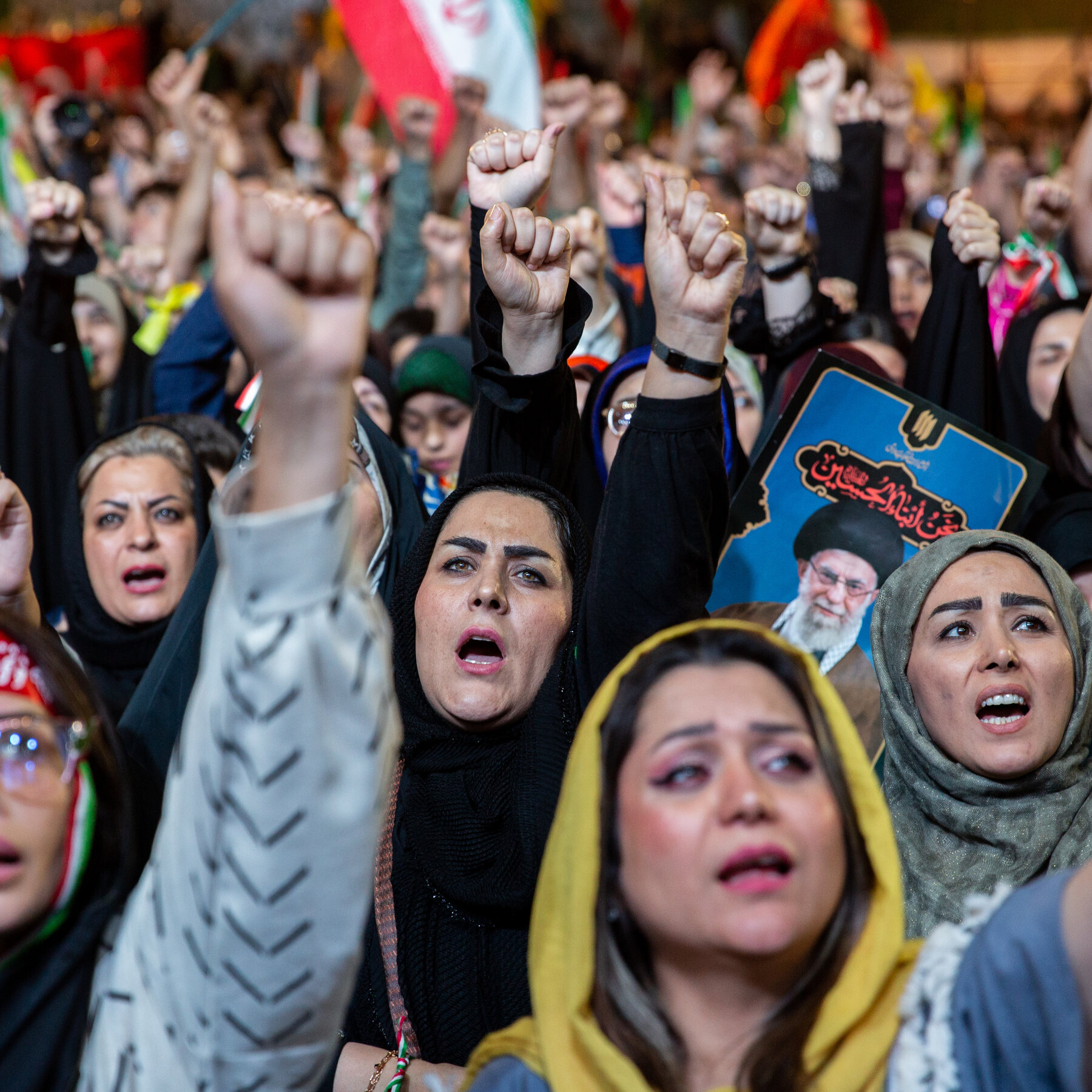
On the afternoon of 27 May 2026, the Trump administration announced it had received — and categorically rejected — one of the most consequential diplomatic offers to emerge from the Iran nuclear standoff in years. According to a senior adviser to Supreme Leader Ayatollah Ali Khamenei, Iran is willing to forgo its entire stockpile of highly enriched uranium in exchange for the lifting of economic sanctions. Within hours, President Trump answered from the White House lawn: no sanctions relief, no money, no deal.
The offer, and its swift dismissal, crystallises a diplomatic impasse that has no clean exit. Iran has moved to accept what Western negotiators have demanded for more than a decade. The administration has moved to refuse what Iran has demanded for equally as long. In between those two positions, months of shuttle diplomacy, European back-channels, and indirect talks appear to have produced nothing of substance — and the gap between the two sides may be wider now than when the conversations began.
This publication has reviewed the full thread of statements, the Iranian counterproposal, and the administration's stated rationale. The picture is one of strategic contradiction: a White House that says it wants to prevent Iran from acquiring a nuclear weapon, acting in ways that foreclose the one concession structure most likely to achieve that outcome.
The Offer
Iran's proposal, as described by a top adviser to the supreme leader, is not a vague gesture toward diplomacy. It is a specific, material offer: Iran will surrender its entire stockpile of highly enriched uranium — material that, at enrichment levels Iran has already achieved, is one processing step from weapons-grade — in exchange for the removal of the economic sanctions architecture that has governed US-Iranian commercial and financial relations since 2006.
The specificity matters. Arms control agreements typically involve not just the disposition of existing material but also caps on future enrichment levels and inspection regimes. Iran's offer appears to address the first of those — the stockpile — without publicly specifying what limits it would accept on future enrichment of lower-grade material. That omission may be deliberate, a negotiating position designed to be filled in during talks, or it may reflect a genuine gap between what Tehran is willing to concede and what Washington demands.
Either way, it is the most substantive offer to emerge since talks began in early 2026. European diplomats, who have been quietly facilitating indirect conversations between the two governments, had indicated for weeks that something of this nature was in train. The fact that it was disclosed publicly — and then immediately rebutted by the American side — suggests either a communication failure between the parties or an intentional decision by one side to blow up the offer before it could gain any traction in Washington or in European capitals.
The Rejection
Trump's response was unambiguous. "No," he told reporters, "we're not talking about any easing of sanctions, giving money, no sanctions, no money, no nothing." He added that the US was not discussing transfers of Iranian uranium to Russia or China — a reference to a question about whether those countries might serve as intermediaries or recipients of the material as part of a compromise arrangement.
The rejection carries several layers. On the surface, it is a statement of negotiating toughness — the maximum-pressure posture that has defined the administration's Iran stance since the outset. Beneath that surface, it is a statement about what the administration believes the acceptable end-state of any negotiation looks like. It is not a negotiation in which Iran trades nuclear material for economic space. It is a negotiation in which Iran, full stop, capitulates to American demands on enrichment, inspections, missile programs, and regional behaviour — with no tangible reward in return.
Administration hawks, several of whom have argued privately that the original JCPOA was insufficient and that any successor deal must be broader and more enforceable, appear to have the upper hand. Those who have argued for a narrower, faster agreement — one that addresses the nuclear file specifically in exchange for targeted sanctions relief — have been marginalised. The result is a position with no visible off-ramp, at least from the American side.
The Contradiction at the Core
The most uncomfortable question this episode raises is straightforward: if the stated objective is to prevent Iran from acquiring a nuclear weapon, and Iran has offered to give up the material required to make one, why is the offer being rejected?
The administration has not answered that question directly. What it has said, implicitly, is that Iran cannot be trusted, that any offer is a trap, and that the only acceptable outcome is one in which Iran has no enrichment capacity at all — a position that no Iranian government, reformist or otherwise, has ever accepted or is ever likely to accept.
That position has the virtue of ideological consistency. It has the vice of being impossible to achieve through diplomatic means.
The enriched uranium Iran currently holds sits at enrichment levels that, according to International Atomic Energy Agency assessments, approach — but have not yet reached — the 90 percent purity required for a nuclear weapon. The distance between 84 percent and 90 percent enrichment is technical, not fundamental. Weapons-grade material requires one further processing step. The entire rationale for the JCPOA was to keep Iran far enough from that line that the step would take a year or more, making a dash to a weapon theoretically detectable and politically costly. Iran's offer to eliminate the stockpile would, if implemented, address that specific risk in a direct and verifiable way.
The administration has not engaged with this logic in any public statement reviewed by this publication. Instead, it has maintained a posture of refusal that treats every Iranian concession as a potential deception — a stance that, if applied symmetrically, would also require doubting any future Iranian action, including compliance with a potential agreement.
The Vietnam Parallel
Trump, asked to characterise the duration of talks so far, drew a historical analogy. "We've been doing this for a few months," he said. "Vietnam lasted 19 years. Between two wars, we lost 13 souls." The reference was imprecise — the First Indochina War and the Vietnam War overlapped in a manner that makes the casualty figure difficult to interpret — but the signal was clear. The administration is wary of a long, open-ended diplomatic process that produces no visible American win.
The analogy is instructive, but not in the way the White House likely intended. The lesson of Vietnam is not that staying the course eventually produces victory. It is that American staying power is not infinite, that domestic political consensus is a finite resource, and that the willingness of an adversary to absorb sustained pressure has limits that are themselves unpredictable.
Iran is not Vietnam. It has a population of nearly 90 million, a diversified economy — battered by sanctions but not shattered — and a government with a demonstrated capacity for waiting. The Islamic Republic survived the maximum-pressure campaign of the first Trump term, the assassination of its most prominent general, and the internal protests that followed. Its resilience is not infinite, but it has proven more durable than its critics anticipated.
The Vietnam parallel also contains an uncomfortable inverse: the administration may be betting that the absence of an attractive diplomatic offer is sustainable. History suggests that bet is risky. The US did not lose in Vietnam because it lacked military capacity. It lost because the political will to sustain the commitment eroded over time. The same dynamic — a slow bleed of credibility and domestic support — is the principal risk the administration faces in its Iran approach, regardless of the strength of its initial negotiating position.
Who Takes the Uranium?
Trump's statement that he would not be comfortable with Russian or Chinese custody of Iranian enriched uranium adds a further dimension to the impasse. On one level, it is a statement about non-proliferation: moving weapons-adjacent material to countries that are themselves subject to US secondary sanctions creates a set of legal and geopolitical complications that the administration is presumably unwilling to manage. On another level, it is a statement about the zero-sum nature of the competition for influence in Tehran.
If Iran's enriched uranium cannot go to Russia, and cannot go to China, and cannot stay in Iran, and cannot be transferred to an international repository without US approval — the practical options for its disposition narrow rapidly. The administration appears to be in a position where it has ruled out every path except one in which the material remains in Iran, under Iranian control, at enrichment levels that keep it proximate to a weapons capability.
That is not a position of strength. It is a position of strategic incoherence, in which the objective (no Iranian nuclear weapon) is in tension with the chosen means (no diplomatic engagement, no sanctions relief, no third-party arrangements).
European allies, who have invested considerable diplomatic capital in facilitating the talks, face a difficult path forward. The incentive structure the EU had been building — promising Iran economic benefits in exchange for nuclear concessions — looks hollow when the primary party to any agreement has ruled out providing those benefits. China, meanwhile, has been watching with evident interest. Chinese state media has framed the US position as evidence of bad-faith negotiating, which is not surprising. What is more significant is whether Beijing will move to exploit the opening — offering Iran economic lifelines through Chinese banking channels, oil-for-investment arrangements, and diplomatic protection at the United Nations — in ways that entrench a Chinese role in the Gulf at the expense of American influence.
The uranium question may ultimately prove unresolvable through purely bilateral US-Iranian negotiation. The offers and rejections of the past months suggest that both governments are dug into positions from which they cannot easily retreat without domestic political cost. The danger is that the cost of remaining in those positions — in terms of regional instability, proliferation risk, and the erosion of non-proliferation norms that have underpinned Middle Eastern security for decades — will eventually exceed the cost of moving.
What is clear is that the coming weeks will test whether either side has the capacity to move first. This publication will continue to monitor developments as they emerge.
This article was prepared at 2026-05-27T18:00 UTC. Monexus covered Iran's nuclear offer on its own merits — foregrounding the substance of the proposal alongside the American rejection — rather than framing the story primarily as a diplomatic clash or as a vindication of maximum pressure. Wire coverage leaned toward the conflict. We attempted to hold both.
Wire provenance
This editorial synthesis draws on the following public wire/social posts:
- https://t.me/osintdefender/3321
- https://t.me/wfwitness/8823
- https://t.me/wfwitness/8824
- https://t.me/wfwitness/8825
- https://t.me/tasnimnews_en/8947