Iran, US Fail to Break Hormuz Impasse as Nuclear Talks Surface Internal Contradiction
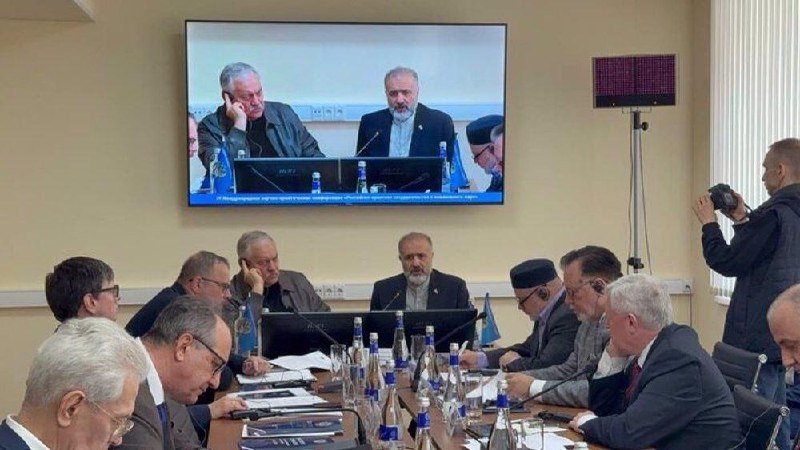
Ali Bagheri Kani, Deputy Secretary of Iran's Supreme National Security Council, acknowledged on 27 May 2026 that Iran and the United States have not reached an agreement on reopening the Strait of Hormuz to commercial shipping. The admission, reported by Tasnim News Agency and carried by The Cradle Media, signals that indirect negotiations between the two adversaries remain far from any durable breakthrough despite months of diplomatic contact. The statement came as a second disclosure — also attributed to Bagheri Kani — surfaced on the same day, raising questions about consistency in how Tehran is presenting its negotiating posture.
Hormuz Deadlock Confirmed
The Strait of Hormuz, the narrow waterway separating the Persian Gulf from the Gulf of Oman, handles approximately 20 percent of the world's oil shipments and remains the single most critical chokepoint in global energy logistics. Any closure or restriction — whether through military blockade, technical interference, or political interdiction — reverberates instantly through tanker markets and commodity benchmarks worldwide. Bagheri Kani's acknowledgment that no agreement has been reached means the longstanding risk premium embedded in Gulf shipping insurance and freight rates is unlikely to narrow in the near term.
The context matters. Washington has maintained a posture of maximum pressure on Tehran since the 2018 US withdrawal from the Joint Comprehensive Plan of Action (JCPOA), the multilateral nuclear agreement that had initially curbed Iran's enrichment activities in exchange for sanctions relief. Iranian officials, for their part, have repeatedly tied any normalization of Hormuz transit conditions to the lifting of economic sanctions — a linkage the Trump administration has rejected as coercive. Bagheri Kani's statement suggests that linkage remains unbroken in Tehran's calculus.
Western diplomatic sources have not independently confirmed the specifics of what proposals, if any, were exchanged in recent rounds. What is clear is that the talks have not produced the thaw that some regional analysts had anticipated after initial outreach signals in early 2026.
The Uranium Question and Its Contradiction
A secondary disclosure complicates the picture. On the morning of 27 May, two Tasnim-affiliated Telegram channels carried statements from Bagheri Kani that appear to conflict on a substantive point. One account, posted by @tasnimnews_en at 08:22 UTC, quoted Bagheri Kani as saying that Iran's enriched uranium reserves are "not on the agenda of the negotiations" with the United States. Another, posted by @JahanTasnim at 08:18 UTC, framed its headline around the opposite claim: that Iran's enriched uranium reserves "are on the agenda" of the talks.
Both reports cite Bagheri Kani in his capacity as Deputy Secretary of the Supreme National Security Council. The discrepancy may reflect translation ambiguity, selective quotation, or an internal incoherence in how Tehran's position is being articulated across different communication channels. Tasnim News Agency, which operates in Persian and produces English-language summaries for international audiences, has a track record of translating Iranian official statements in ways that serve the regime's immediate diplomatic messaging. This does not make the content false, but it does mean that the precise scope of what was conceded or insisted upon in the Bagheri Kani remarks requires independent corroboration from non-Iranian official sources.
The stakes of the uranium question are not minor. Iran's stock of enriched uranium — accumulated during years of incremental withdrawal from JCPOA limits — represents the most sensitive element of any future nuclear talks. The Trump administration's position has been explicit: no sanctions relief without verified caps on enrichment at weapons-adjacent levels. If uranium reserves were genuinely removed from the negotiating table, that would represent a substantial Iranian concession. If they remain on the agenda, the talks are operating on a fundamentally different basis than Tehran's English-language public framing suggests.
The Hormuz Leverage Calculus
The Hormuz question is, at its core, a question about leverage. Iran controls the eastern bank of the strait's narrowest point. The United States, through its Fifth Fleet presence in Bahrain and its partnerships with Gulf Cooperation Council states, controls most of the western apparatus — naval patrols, choke-point surveillance, and the insurance architecture that allows tankers to move. Neither side wants a direct confrontation at the chokepoint, but both have used the threat of disruption as a negotiating instrument.
Tehran's linkage of Hormuz access to sanctions relief is not new. What has changed in the current moment is the broader geopolitical context: rising oil production from non-OPEC sources, the partial reorientation of Gulf monarchies toward alternative export routes, and the continued depletion of Venezuela's and Russia's spare capacity under Western sanctions. These structural shifts have marginally reduced the leverage that a Hormuz blockade would deliver — a reality that cuts both ways, complicating Iran's negotiating posture while also reducing Washington's incentive to make concessions.
There is a plausible argument that Iran, facing sustained economic pressure and a contracting regional influence network, has more to gain from a negotiated normalization than the United States does. If that is the case, Bagheri Kani's acknowledgment that no Hormuz deal has been reached may reflect Tehran's difficulty in securing the concessions it needs to justify a deal to its domestic constituencies, rather than an unwillingness to deal at all.
What Comes Next
The immediate question is whether Bagheri Kani's statements signal a genuine impasse or a negotiating posture designed to extract further concessions before the next round of talks. The uranium-reserves contradiction — whatever its origin — is itself a data point: it suggests either poor communication between the channels through which Tehran speaks, or a deliberate strategy of calibrated ambiguity. Both interpretations are available from the public record, and neither can be resolved without additional sourcing.
For global energy markets, the practical consequence is unchanged: the Strait of Hormuz remains open, but unscheduled. Shipping insurance providers, freight forwarders, and energy traders will continue to price in a non-trivial risk of disruption for as long as these negotiations produce public statements of failure rather than public statements of agreement.
For Washington, the challenge is calibrating pressure without triggering the very instability that a Hormuz closure — even partial — would cause. For Tehran, the challenge is maintaining enough economic resilience to sustain a long negotiating arc while avoiding the domestic unrest that accompanies sustained sanctions pressure.
Neither side appears close to resolving that equation. Bagheri Kani's statement on 27 May is, in that sense, less a revelation than a confirmation of what the diplomatic record had already suggested.
This publication drew on Tasnim News Agency's Persian and English-language channels, along with The Cradle Media's reporting on the Hormuz talks, for this dispatch. Wire service coverage from Reuters and Bloomberg has not yet confirmed the specifics of Bagheri Kani's remarks on uranium reserves.
Wire provenance
This editorial synthesis draws on the following public wire/social posts:
- https://t.me/thecradlemedia/18921
- https://t.me/tasnimnews_en/45391
- https://t.me/JahanTasnim/22847
- https://t.me/thecradlemedia/18920
- https://t.me/tasnimnews_en/45392