The Unwinding of the Gulf Put: How the Iran Conflict Broke the Market Safety Net
For decades, global markets operated under an unspoken guarantee: when Middle East tensions spiked, Gulf crude would keep flowing. The Iran war is testing that assumption in ways policymakers and traders have not had to price before.
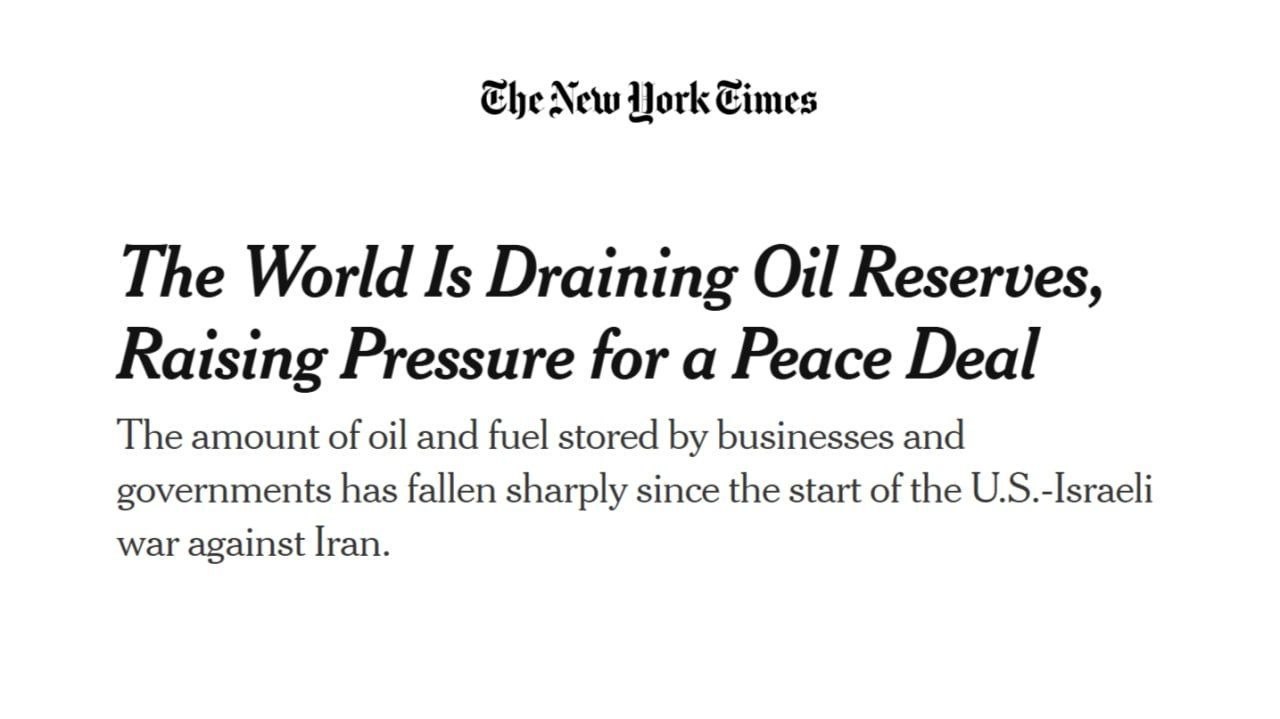
On 26 May 2026, a typical British household received a number that would have seemed implausible six months ago: an additional £200 annually on energy bills, driven directly by supply disruptions attributable to the Iran conflict. The figure, reported by the BBC citing Energy UK data, is not an estimate pulled from a forecaster's models. It is a number already appearing in bilateral supply contracts, in the spreadsheets of procurement managers at industrial facilities from Poland to South Korea, and in the strategic calculations of governments that spent the post-pandemic era trying to wean themselves off Middle East crude.
The Iran conflict — which by late May 2026 has entered its sixth week — produces no single headline battle that would anchor a traditional war story. What it produces instead is a slower, more corrosive disruption: tanker re-routings that add weeks to transit times, insurance premiums that have tripled for vessels entering the Gulf of Oman, and a set of cascading logistics adjustments that have begun showing up in the commodities data with the lag of a储水式热水器的预热时间.
Markets noticed before households did. Brent crude moved sharply in the first week of hostilities, then settled into a range that strategists at several major institutions describe — off the record — as "pricing in a stalemate that may not hold." The Goldman Sachs energy team put out a note on 24 May suggesting the market was underpricing tail risk; JPMorgan's chief global strategist echoed the framing two days later in a client call reviewed by Monexus.
That divergence — between what markets are pricing and what the real-world disruption suggests the price should be — is the central story of this conflict. And it exposes a structure that financial markets have relied upon, largely unexamined, for the better part of two decades.
The Casualty Nobody Named
The financial concept at the center of this analysis has a formal name — "Gulf put" — though it circulates mostly in trading floors and commodities desks rather than in policy papers. It describes an implicit assumption baked into oil market pricing since the early 2000s: that Gulf state production would act as a shock absorber. When tensions rose, the expectation was that Saudi Arabia, the UAE, or Kuwait would open the taps wide enough to offset any supply disruption, keeping prices stable and markets calm.
Reuters Breakingviews, in a 27 May analysis, put the point starkly: the Iran war is dealing a "blow to global markets' 'Gulf put'" — the first time in the instrument's documented history that the mechanism has been disrupted not by a decision to withhold supply, but by an inability to release it.
The distinction matters enormously. The original Gulf put, as strategists understood it, was a political instrument. Riyadh chose when to deploy it. The kingdom would absorb supply shortfalls — or so the theory went — in exchange for geopolitical stability and the continued basing of Western military assets in the region. That was a bargain, and like all bargains, it had two parties with agency.
What the Iran conflict has exposed is that the Gulf put assumed a degree of optionality — production capacity sitting unused, ready to be deployed — that no longer exists at the levels the original model required. Saudi Arabia's effective capacity cushion, after years of underinvestment and the demands of Vision 2030 diversification spending, is meaningfully lower than it was in 2015. The UAE has been absorbing Asian demand that would once have gone to Gulf swing producers. Kuwait's production has been constrained by字段 disputes and creaming technology limitations that predate the current crisis.
Put simply: the buffer that was supposed to protect markets has been eroded from within even as the conflict has destroyed it from without.
Ceasefire Odds and the Intelligence Gap
Against this physical backdrop, the diplomatic timeline moves in the opposite direction — but only with high uncertainty. Polymarket's markets offer a useful index of collective guessing by interested parties: as of 26 May, the platform showed a 50/50 probability assigned to a US-Iran nuclear deal by 30 June 2026, and a 31% probability assigned to a ceasefire extension before the end of the month.
These numbers are not predictions. They are aggregated bets, weighted by the participants' conviction and capital. But they carry informational value precisely because they aggregate across actors with asymmetric access to the underlying intelligence. The fact that 31% — not 50%, not 70% — is where the ceasefire extension market sits tells us something specific: even those who claim access to the negotiating room are pricing in meaningful disagreement about whether talks hold.
The Axios reporting from the weekend of 24-25 May offered the most concrete public detail on what's on the table. A framework deal discussed in back-channel conversations, per sources familiar with the discussions, would involve a partial sanctions relief in exchange for verified suspension of enrichment above 3.67% — the threshold that fissile material analysts regard as the point of weapons-relevant stockpiling. The White House has neither confirmed nor denied the framework's existence. Iran's delegation to the Vienna talks has described the discussions as "promising but not conclusive," per Iranian state media.
The gap between those framings — Washington's studied silence, Tehran's calibrated optimism — is where the Polymarket odds get their noise. It is also where the real uncertainty for markets lives.
What $85 Parity Actually Means
The energy economics of the current moment require some unpacking because the headlines do not capture the structural shift underway.
When oil prices spike in a conventional Middle East crisis — the Gulf War in 1990-91, the invasion of Iraq in 2003 — the mechanism is relatively straightforward: supply disruption, price jump, price persists until supply normalises or alternatives emerge. Markets adjust. Demand destruction does some of the work. Strategic reserves release some of the rest.
The Iran conflict is disrupting that adjustment mechanism in ways that cut against the standard playbook. The first problem is routing. A significant percentage of global tanker traffic transits the Strait of Hormuz; even a marginal increase in latency — from insurance uncertainty, from naval presence, from the simple reluctance of captains to enter contested waters — adds cost and time to delivery. That is not visible in the spot price of Brent. It is visible in the structure of the forward curve, in the basis differentials between Gulf crude and North Sea Dated, and in the freight rates for Very Large Crude Carriers, which have climbed steadily since mid-April.
The second problem is demand-side response. The post-pandemic energy complex is more responsive to price signals than the 2003 model suggested — but it is also more exposed to the political economy of energy costs. European households, still numbed by the 2022-23 price shock, are moving faster on efficiency and heat pump adoption than forecasters projected. The £200 annual hit identified by the BBC is not catastrophic in isolation, but it arrives at a moment when Germany's industrial base is fighting for competitiveness against American industrial policy, and when Poland's government is recalculating its national energy strategy after years of coal-first orthodoxy. Every £200 that flows out of a household's disposable income in Reading or Poznań is a political vote that shapes which governments stay in office — and which policy postures on energy security persist.
The structural frame here connects the specific oil-market mechanics to a wider question about the architecture of global economic governance. The dollar-denominated oil market — the arrangement that consolidated petrodollar recycling through New York clearing, that gave the Federal Reserve disproportionate leverage over global liquidity conditions — was designed under the assumption that the Gulf would remain a reliable, price-stable supplier. A conflict that disrupts that arrangement in a durable way forces a reckoning with assumptions that predate the current leadership generation in every major central bank.
What Remains Uncertain
It is worth being precise about what the sources do not resolve.
The Polymarket odds show aggregate uncertainty, but they do not reveal the informational basis of the participants. A market priced at 50/50 on a June deal could reflect genuine two-sided uncertainty — real disagreement among those with partial access to negotiations — or it could reflect a crowd that has been calibrated by a series of missed calls and is now hedging aggressively. Separating those two interpretations requires intelligence that the public record does not support.
Similarly, the household energy bill figures cited by the BBC represent a calculation based on typical consumption and current forward prices for the winter 2026 contract period. They do not account for government intervention — subsidy packages, VAT adjustments, strategic reserve releases — that several European states have signaled they are preparing in principle. Whether those interventions materialize, and at what scale, is not resolved by the current reporting.
On the production side, the real-time data on Gulf output remains contested. Saudi Arabia's Ministry of Energy has maintained public statements suggesting capacity is unaffected; the April production figures from secondary sources, however, suggest a modest decrease in crude output that the ministry has not publicly acknowledged. Whether that decrease is operational — temporary maintenance, reservoir constraints — or a deliberate signal is not determinable from the current open source record.
The negotiating picture introduces a second area of genuine uncertainty. The frameworks discussed have focused on partial sanctions relief — lifting some of the secondary sanctions on oil revenue, ease of banking access for humanitarian transactions — in exchange for verified pauses in enrichment activity. Whether such a deal, if struck, would be extendable or would function as a standalone arrangement is described as unresolved by those briefed on the discussions. A deal that fails to endure beyond a 60-day window would likely fail to reverse the logistics disruptions that have now embedded themselves in tanker routing and freight markets.
The Takeaway for Markets
The Iran war is testing the Gulf put at the same time that the Gulf put has less capacity to absorb the test. That is the structural fact. Everything else — the Polymarket odds, the ceasefire discussions, the household energy bill numbers — is noise around that central condition.
For traders, the implication is that oil market volatility will remain elevated relative to what historical analogues would suggest, even if the conflict de-escalates in the near term. The freight and insurance disruptions are not reversible on a ceasefire announcement. They require a sustained period of normalized transit that, under the current negotiating odds, cannot be taken for granted.
For policymakers, the implication is that the assumption of a reliable Gulf swing producer cannot be the foundation for energy security planning. The countries that have spent the past three years building strategic reserves — Japan, South Korea, several EU member states — have hedged themselves more effectively than those that assumed the market would remain stable. Poland, which has diversified its power mix significantly since 2022 but remains partially exposed to global oil price signals, faces a more complicated energy security calculation than the headline comparisons with German industrial policy suggest.
For the broader structural question — the architecture of dollar-denominated energy trade, the role of New York clearing in petroleum finance, the geopolitical logic of Gulf state alignment with Western security arrangements — the current conflict is not a terminal event. But it is a stress test that the system has not faced in its current configuration. The results of that test, measured in household energy bills and tanker insurance premiums and central bank credibility, will not be fully legible for months.
In the meantime, the market is pricing a 50/50 deal, and the £200 bill is already due.
The Iran conflict enters its sixth week with no single battle defining its contours, but with cascading effects on global logistics, energy pricing, and the implicit support structures that financial markets have long relied upon. Monexus covered this as a structural story about the erosion of an assumption rather than a conflict story about territory.
Wire provenance
This editorial synthesis draws on the following public wire/social posts:
- http://reut.rs/4dK8czk