Israeli Convoy in Quneitra Meets Hezbollah's 37-Operation Salvo
As an Israeli convoy entered the Quneitra countryside on 27 May and Hezbollah announced 37 operations in 24 hours, the simultaneous dual-front escalation carries signals both sides may be struggling to decode.
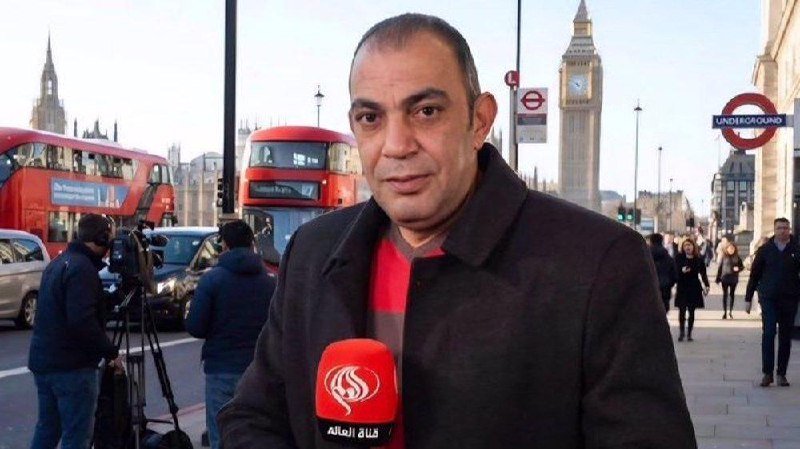
On the same day an Israeli military convoy crossed into the village of Al-Hiran in the Quneitra countryside — according to Syrian sources cited by Iran-aligned Arabic-language channel Al-Alam on 27 May 2026 — Hezbollah announced it had executed 37 separate operations targeting Israeli positions in the preceding 24 hours, and then disclosed an additional strike on a gathering of Israeli army vehicles in the town of Al-Adissa using two assault drones. The timing of these two fronts operating simultaneously is not coincidental. It is a signal — one both sides may be struggling to fully decode.
Neither the Israeli incursion into Syrian sovereign territory nor Hezbollah's concentrated 37-operation salvo appears designed to trigger the kind of full-scale war neither government in Jerusalem or Beirut appears ready to absorb. Yet the pattern connecting them — synchronized escalation executed within the same 24-hour window — suggests something more purposeful than a series of disconnected reactions. What we are watching is not random tit-for-tat. It is coordinated demonstration: each side using the same calendar to tell the other what escalation looks like, and to test where the threshold sits before it is crossed.
The Escalation Pattern Is the Message
Hezbollah's announcement of 37 operations in a single day is, on its face, a claim. Iranian state-adjacent media have an interest in projecting strength, and operational claims made during wartime require independent corroboration before they can be treated as verified fact. But even discounting for potential inflation, the cadence described — multiple axes, multi-site targeting, precision weapons — reflects a level of operational readiness that cannot be dismissed as rhetorical. The Al-Adissa strike, targeting a vehicle gathering with assault drones, is a specific enough action to carry credibility on its own. Drones require logistics, targeting intelligence, and launch windows. A claim of 37 operations requires a level of organizational capacity that, if real, changes the threat calculus for Israeli forces along the Lebanese border.
The Israeli convoy entering Al-Hiran is a different kind of signal. Quneitra sits adjacent to the Golan Heights — territory Israel has occupied since 1967 and effectively annexed since 1981. Crossing into the Syrian side of that demarcation line is not a routine patrol. It is a statement of reach: Israeli forces can project into Syrian territory at will. That message is addressed to multiple audiences — Hezbollah in Lebanon, the Syrian government in Damascus, and Iran, whoseIRGC-linked networks operate in southern Syria. Each audience receives the same information differently. The question is whether any of them is interpreting it the way Jerusalem intends.
Military Strategy vs. Political Calculation
Hezbollah's targeting choices — military convoys, vehicle gatherings, fixed positions — follow a logic consistent with keeping the conflict in the military lane. A strike on civilian infrastructure or a mass-casualty attack on Israeli towns would invite a response of an entirely different order, one that would almost certainly trigger international pressure and potentially a sustained Israeli ground campaign into southern Lebanon. The absence of civilian targeting in the operational record, even as claimed strike numbers climb, suggests a hierarchy of escalation: demonstrate capacity, impose costs, avoid triggering the red line that forces a war neither side's leadership has publicly chosen.
Israel's position is more complicated. The convoy into Quneitra is a show of force that carries real risk: it can be interpreted by Syria and its Iranian-backed allies as provocation, inviting retaliation that expands the operational theater. If Israel responds heavily to Hezbollah's 37-operation salvo — strikes into Lebanese territory beyond the border zone, air attacks on deep targets, or mobilization of ground forces — it risks the fragile normalization process between Israel and Syria that has been a quiet priority for Gulf-brokered backchannel diplomacy over the past two years. If it responds with restraint, it signals to Hezbollah and its sponsors that the threshold for acceptable provocation has moved. And if it does nothing, it risks appearing to absorb cost without answering — a perception that carries its own dangers in a neighborhood where deterrence is currency.
The political calculus inside both governments is, at bottom, about threshold management. Neither wants all-out war. Both want the other side to know that one more step crosses the line. But threshold wars are inherently unstable precisely because each side's threshold is partly a function of domestic pressure, battlefield telemetry, and the credibility of the signal it has sent — not just its own preferences.
Structural Pressures and the Golan Fault Line
The Golan Heights is not a symmetrical front. Israel controls the high ground, controls the water resources, and has built civilian communities — Kiryat Shmona, Metula, communities within 10 kilometers of the Lebanese border — that sit in range of a Hezbollah rocket and drone arsenal that has grown substantially since the 2006 war. The IDF has spent eighteen years building defensive architecture along the northern border: Iron Dome batteries, surveillance grids, rapid-response units. But defensive architecture does not deter — it absorbs. And absorption has limits.
Hezbollah's leadership knows this. Israel's leadership knows this. The people of northern Israel, many of whom were evacuated from border communities during the 2023-24 exchange, know it most acutely. The structural pressure is simple: as long as the parallel conflicts continue — Israeli operations into Syria, Hezbollah operations from Lebanon — the pressure to test the next threshold builds. The international frameworks that might stabilize the Golan frontier — UNIFIL's mandate, the 1974 ceasefire agreement's monitoring mechanisms — have been described as inadequate by senior Western diplomats for years. Nothing in the reporting from the past 24 hours suggests that assessment has changed.
The stakes are not abstract. If the pattern of simultaneous dual-track escalation continues, the probability of a triggering event — a miscalculated strike, an errant drone, an IDF ground operation that Hezbollah interprets as crossing a red line — increases with each operational cycle. Neither side wants that outcome. But the architecture to prevent it has not been built, and the diplomatic off-ramps that might have contained the escalation a decade ago are not on the table in 2026. What we are left with is two forces operating in parallel, each convinced the other will flinch first, and neither equipped with a mechanism to signal de-escalation without domestic political cost.
The 27 May cycle — Israeli convoy, 37 Hezbollah operations, Al-Adissa strike — is not a one-day event. It is a data point in a trajectory that has been building for years and is showing no signs of reversing.
Wire provenance
This editorial synthesis draws on the following public wire/social posts:
- https://t.me/alalamarabic/789456
- https://t.me/alalamarabic/789454
- https://t.me/alalamarabic/789452