Israeli Airstrikes Kill 31 in Southern Lebanon, Health Ministry Says
Lebanon's Health Ministry reports 31 killed and 40 injured in a 24-hour period, as the cumulative death toll since March 2026 climbs past 3,200. The strikes come amid stalled ceasefire negotiations and escalating regional tensions.
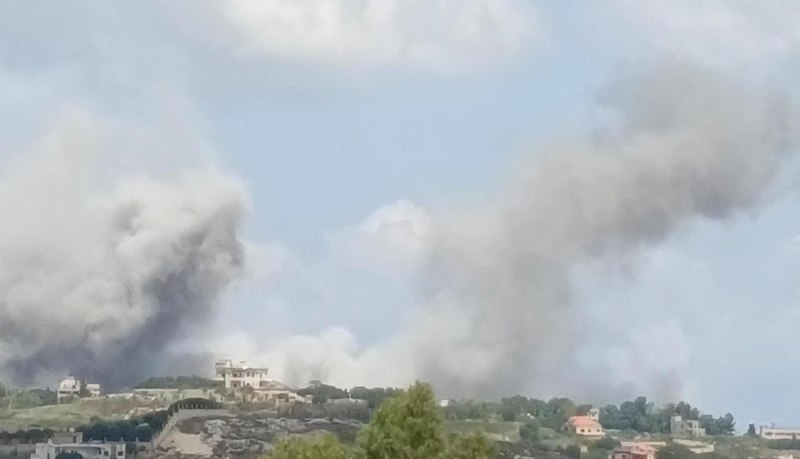
Israeli airstrikes killed 31 people and wounded 40 others across southern Lebanon within a 24-hour period ending Tuesday, according to Lebanon's Health Ministry. The ministry's latest figures bring the cumulative death toll since March 2 to 3,213, with 9,737 injured over the same span — a documentation of civilian harm that has accumulated steadily as military operations along the border region continue without a ceasefire agreement in place.
Documented casualties and their limits
The Health Ministry count, compiled from reports across southern Lebanon, lists the dead and injured as of the 24-hour window ending Tuesday. The 31 killed and 40 wounded in that single period are consistent with the average daily casualty rate the ministry has reported since early March. That pattern — consistent, daily, and heavily concentrated among civilian-populated areas — is the core factual dispute at the center of how this conflict is reported and understood.
What the figures do not capture is granularity of targeting. The Health Ministry records outcomes, not intentions. Israeli military statements, cited in Western wire reports, have characterised the strikes as precision operations targeting fighters embedded in villages. Lebanese authorities have documented entire families killed in residential structures. The gap between those two framings — what the numbers say happened versus what each side claims the numbers mean — is where most of the interpretive work happens, and it is work that the casualty figures themselves do not resolve.
Israel's stated rationale and its internal contradictions
Israeli military officials, speaking on background through official channels, have maintained that operations in southern Lebanon are targeted at Hezbollah infrastructure and fighters who operate within civilian areas — a deliberate strategy, they argue, by the opposing side to place military assets among the population. Israel's right to self-defence, including strikes against military positions in southern Lebanon, has been defended on those grounds in statements to Western capitals.
The problem with that framing, as the casualty figures compiled by the Health Ministry document it, is structural. Over 3,200 dead and 9,737 injured in under three months is a rate of harm that, by any conventional measure of proportionality, demands scrutiny of targeting choices — not just of the presence of military assets in civilian areas, but of whether the scope and cadence of strikes reflect a genuine attempt to distinguish between combatants and non-combatants. Israeli officials have said their operations are precise and discriminate. The documented civilian harm does not resolve that debate, but it does anchor the debate in verifiable data rather than in abstract claims about military necessity.
Ceasefire talks and the regional arithmetic
The strikes landing on Tuesday, and the death toll they add to, arrive against a backdrop of ceasefire negotiations that have repeatedly failed to produce binding agreements. The framework under discussion — a pause conditioned on Hezbollah's withdrawal from areas near the border — has stalled over enforcement mechanisms, with both sides accusing the other of using the talks as cover for continued military activity.
Israeli strikes have continued throughout the diplomatic process. The cumulative death toll, now past 3,200, has climbed during the very period in which talks were ongoing. That is not a coincidence — it reflects a military calculus that, whatever its legal or strategic merits, has produced a humanitarian outcome that is documented, specific, and continuing. The diplomatic track has not slowed the strikes. As of Tuesday, there is no agreed ceasefire, no binding framework, and no mechanism that appears capable of stopping the casualties from accumulating.
Stakes
The immediate stakes are human and measurable: 31 people dead in a single day, hundreds more in recent weeks, a cumulative toll that places southern Lebanon among the highest-intensity conflict zones in the region. The political stakes are different but connected. As the death count rises, the pressure on both sides to achieve a ceasefire grows — but the same dynamics that have stalled negotiations so far remain in place. Israeli military officials have said operations will continue as long as threats persist. Lebanese authorities have said the strikes are destroying civilian infrastructure and displacing populations faster than aid organisations can respond. The gap between those positions is not narrow, and there is no indication at present of a mechanism capable of bridging it.
This publication's coverage of the strike series foregrounds Health Ministry documentation and independent reporting over official military statements. Western wire coverage of the same strikes has led primarily with Israeli military framing; the casualty figures are present but less prominently featured in those accounts.
Wire provenance
This editorial synthesis draws on the following public wire/social posts:
- https://t.me/presstvnew/12538