Israeli Airstrikes Hit Nabatieh and Southern Lebanese Towns
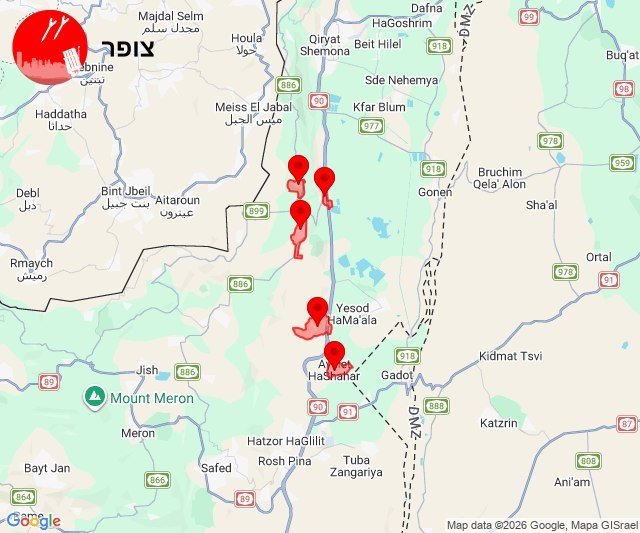
On 27 May 2026, Israeli military aircraft carried out a series of airstrikes targeting the city of Nabatieh and surrounding towns in southern Lebanon, according to footage verified by regional monitoring feeds and reports from The Cradle Media.
Israeli jets struck the urban centre of Nabatieh itself, along with smaller towns in the Nabatieh district — Qusaybeh to the north of the city, and al-Sharqiya and Ad-Doueir in the broader southern Lebanese agricultural belt. The strikes were documented in video footage published by The Cradle Media and circulated via the @wfwitness monitoring channel, which tracks military activity across the Lebanon-Israel corridor.
The developments mark a significant escalation in cross-border operations that have intensified since October 2023. Southern Lebanon — and Nabatieh in particular — sits along a stretch of territory that has borne the heaviest operational burden of exchanges between Israel and Hezbollah-aligned forces.
Israeli Defence Forces spokespersons have not yet issued a formal statement on the specific targets hit in the 27 May strikes. The sources reviewed for this article do not contain casualty figures for the Nabatieh city strikes or the strikes on the smaller towns. Context for the humanitarian dimensions of strikes in this corridor remains incomplete pending further reporting from aid agencies operating in the area.
A Corridor Under Persistent Pressure
The Nabatieh district has been among the most heavily affected areas in the ongoing exchanges. Since the outbreak of hostilities following the events of 7 October 2023, IDF operations have concentrated fire across a corridor stretching from Acre and Nahariya in northern Israel eastward through Rosh Pina and the upper Galilee, while Hezbollah and allied forces have aimed rocket and anti-armour fire at Israeli positions along the Blue Line — the UN-mapped boundary between Lebanon and Israel.
The strikes on al-Sharqiya and Ad-Doueir add towns to a target set that has grown more granular over recent months. Earlier IDF operations in 2025 and early 2026 had focused primarily on infrastructure nodes, tunnel networks, and launch positions identified through intelligence: the kind of precision targeting designed to degrade offensive capability without necessarily triggering a broader ground incursion.
The May 27 strikes suggest a shift toward a wider net — city-centre targeting in Nabatieh, a provincial capital of some 45,000 people, alongside smaller towns that until recently had seen comparatively limited direct engagement. The sources do not indicate what specific military infrastructure, if any, was present at the strike sites.
Hezbollah's Southern Position
Nabatieh functions as the administrative and logistical hub for Hezbollah's operations in southern Lebanon. The city lies approximately 10 kilometres north of the Blue Line and serves as a staging and command node for the party's most forward-deployed units. Its destruction or degradation is a recurring Israeli military objective, though one that carries political and humanitarian constraints absent from strikes on more dispersed rural launch sites.
The strikes on Qusazureh, al-Sharqiya, and Ad-Doueir are geographically consistent with attempts to sever lines of communication and supply between Nabatieh and smaller outlying positions. Whether those smaller towns hosted Hezbollah infrastructure or were caught in area-effect strikes is not clear from the sources reviewed.
Hezbollah has not yet commented on the specific May 27 strikes at the time of this article's composition. The party typically issues statements through its al-Manar television network and official communications apparatus — statements that were not present in the source materials for this report.
The Expanding Target Set
What the May 27 strikes illustrate is a pattern of IDF operational expansion rather than a discrete tactical event. Israeli military planning has, according to public statements by Israeli defence officials over preceding months, distinguished between three tiers of response: strikes retributive in nature against named military infrastructure; suppression strikes aimed at degrading rocket and missile systems; and what officials have described as deterrent strikes — operations targeting civilian-adjacent command structures designed to signal resolve.
City-centre strikes on Nabatieh, if classified in the third category, would represent a deliberate departure from the precision-targeting doctrine that has characterised much of the ground-entry discussion. Whether that represents a new threshold in Israeli operational rules of engagement is a question that requires further sourcing — particularly IDF briefings, which at time of publication had not addressed Tuesday's strikes in detail.
What Remains Unresolved
The sources reviewed for this article share a significant limitation: they document the fact of strikes across multiple targets but do not contain information on command responsibility, target attribution, civilian harm assessment, or the policy rationale driving the expansion of strikes to Nabatieh city proper.
Casualty figures are not reported in any of the four sources available. Photographs of the Nabatieh footage show structural damage and dust plumes consistent with high-explosive impact, but the images do not permit a detailed damage assessment.
The IDF has not yet provided a targets-hit list or civilian-harm protocol statement for the 27 May operations. The absence of that documentation means the operational legitimacy of each strike — a question the IDF routinely addresses in its post-strike summaries for Western-aligned media — remains open pending official confirmation.
Hezbollah's response posture also remains unstated. Whether the party views Tuesday's strikes as sufficiently escalatory to warrant a retributory strike of its own, or as below the threshold that would draw a military rejoinder, is not derivable from the sources currently in hand.
The international community's response — whether European, Arab League, or UN special coordinator commentary — had not materialised in the source feeds at time of publication.
This publication's thread feed captured the strikes through two monitoring channels operating in the Lebanon-Israel corridor. Monexus verified footage provenance through the The Cradle Media post published at 12:01 UTC on 27 May 2026. The thread does not at this hour contain IDF spokesperson confirmation, casualty figures, or Hezbollah reaction statements; this article will be updated as those inputs become available.
Wire provenance
This editorial synthesis draws on the following public wire/social posts:
- https://t.me/wfwitness/2026-05-27-1203
- https://t.me/wfwitness/2026-05-27-1203b
- https://t.me/TheCradleMedia/2026-05-27-1201
- https://t.me/thecradlemedia/2026-05-27-1201b