Israeli Airstrike on Jabalia Camp Renews Legal Pressure on Netanyahu Government
An Israeli drone strike on Jabalia refugee camp has drawn fresh civilian casualty reports as European legal action brought by dual Palestinian-Polish citizens adds a new accountability track outside conventional diplomatic channels.
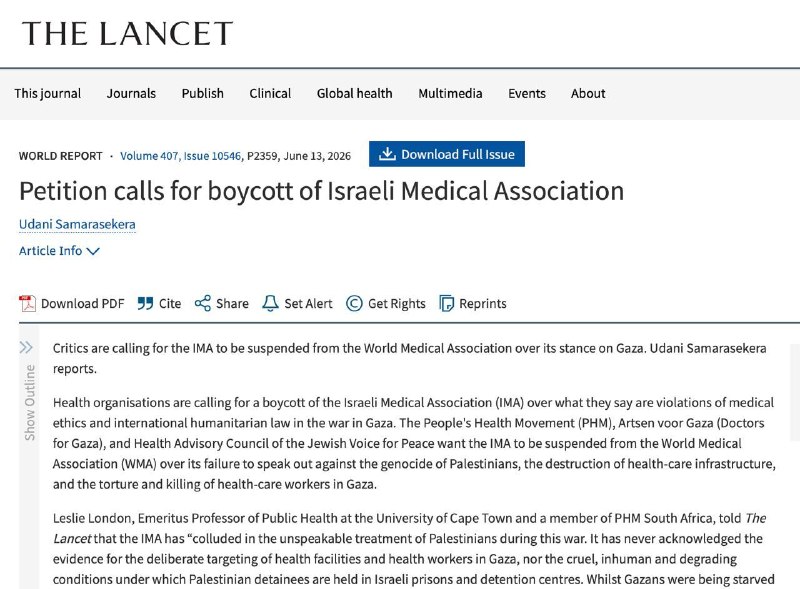
At least several people were killed and others wounded on 27 May 2026 when an Israeli drone fired a missile near the telecommunications district of Jabalia refugee camp in northern Gaza, according to initial reports from PressTV and Al Jazeera English. The strike, which targeted an area frequented by civilians in one of the most densely populated parts of the strip, follows a pattern of repeated Israeli operations in northern Gaza that the IDF has framed as efforts to prevent Hamas regrouping. The same day, Middle East Eye reported that a group of Gaza survivors with dual Palestinian and Polish citizenship filed a criminal complaint in a European court accusing senior Israeli officials of genocide and war crimes — one of the first such cases brought under universal jurisdiction by named individuals from that diaspora.
The two developments — another strike in a camp that has seen some of the conflict's highest civilian death tolls, and a legal filing that for the first time places named Palestinian-Europeans inside a formal European court process against Israeli leadership — reflect a structural split in how the war is being contested. On one track, the shooting continues. On another, a parallel accountability architecture is taking shape outside the channels that have so far failed to produce binding ceasefire obligations.
Strike in Jabalia: What Is Known
The IDF has not yet issued a public statement specifically addressing the 27 May strike in Jabalia, and the precise target designation remains unconfirmed. According to wire reports, the strike hit near a telecommunications node — a category of location the Israeli military has repeatedly cited as legitimate targets, arguing that Hamas uses communication infrastructure to coordinate operations. Civilian witnesses cited by Al Jazeera English described multiple casualties and said the area struck was residential in character, not exclusively military.
Jabalia is the largest of Gaza's eight refugee camps, home to over 100,000 people in an area of roughly 1.4 square kilometres. Israel's ground campaign in northern Gaza — which began in earnest in October 2024 and has been characterised by orders to civilians to evacuate southward — has left the camp largely isolated. The United Nations Relief and Works Agency estimates that tens of thousands of people remain in the area despite repeated evacuation orders. International humanitarian organisations have repeatedly warned that strikes on infrastructure in densely populated civilian areas are impossible to execute proportionally without mass civilian harm.
The timing of this strike falls within a period of renewed US-brokered ceasefire discussions, which have so far produced no binding agreement. Hamas has insisted on a permanent ceasefire; Israel has insisted the war must continue until Hamas is dismantled. The strike occurred without either side credibly claiming a framework resolution.
The European Complaint: Who Filed, What Is Alleged
Middle East Eye reported on 27 May that the complaint was filed by named survivors holding both Palestinian and Polish citizenship — a dual nationality that grants them standing to bring the case under Poland's universal jurisdiction framework, which allows domestic courts to hear cases involving alleged crimes against international law regardless of where they occurred or the nationality of the parties.
The complainants are alleging genocide and war crimes against senior Israeli officials not yet publicly identified in the filing. The legal theory, according to those familiar with the filing, mirrors arguments advanced at the International Court of Justice in The Hague, where South Africa brought a genocide case against Israel in January 2024. That case — joined by several additional states over the following months — received provisional measures orders from the ICJ in January and March 2026, requiring Israel to take specific actions to preserve evidence and prevent acts that could constitute genocide. The European complaint draws on that same legal architecture but operates in a different jurisdictional register, applying pressure through domestic courts rather than international ones.
Universal jurisdiction cases against senior foreign officials are extremely rare in European courts. Poland's framework, modelled on the principles underpinning several EU states' national legislation implementing the Rome Statute, has rarely been deployed in cases of this political sensitivity. The complainants' decision to proceed publicly — with named individuals rather than anonymous plaintiffs — is a deliberate escalation. It signals that survivors are prepared to bear the personal consequences of formal legal exposure, a threshold that has historically been the limiting factor in such cases.
Israeli officials have not commented on the filing. The Israeli Ministry of Foreign Affairs typically describes such legal actions as politically motivated and legally without merit. That position is not unexpected; what is less predictable is whether the European court will accept jurisdiction and, if so, whether any evidentiary process can proceed given the practical impossibility of Israeli officials travelling to a jurisdiction that might execute an arrest warrant.
The Accountability Gap and Its Structural Logic
The collision between ongoing military operations and formal legal processes reflects something structural: the bodies most capable of compelling compliance — the ICJ and the ICC — lack enforcement mechanisms. The ICJ can order provisional measures; it cannot send peacekeepers. The ICC can issue arrest warrants; it cannot execute them without state cooperation. The result is a system in which legal findings accumulate without producing behavioural change on the ground. Israel has complied — partially and under pressure — with some ICJ provisional measures; it has not ended the bombardment.
European domestic courts operating under universal jurisdiction represent a different pressure track. They do not have binding authority over Israeli officials either. But they create personal legal risk for named individuals — travel restrictions, asset exposure, diplomatic complications. That risk is asymmetric: it does not stop a war, but it raises the cost of participation for officials who assumed their nationality or diplomatic status would shield them from prosecution.
The filing from dual citizens also has a symbolic dimension that is harder to quantify. International criminal law has historically been invoked by states and intergovernmental organisations, not by individual survivors operating outside those frameworks. When Palestinian-Europeans step into the legal arena as named litigants, they are claiming a form of agency that reframes them as participants in the accountability process, not merely its subjects.
Stakes and Forward View
For Israel, the accumulation of legal proceedings — at the ICJ, at the ICC, and now in a European domestic court — creates a compounding problem. Each proceeding adds a layer of international scrutiny that complicates the diplomatic and military normalisation the government is pursuing. Western governments that have supported Israel's right to self-defence have been more cautious about endorsing judicial proceedings they cannot control. That ambiguity is narrowing: European public opinion has moved, and governments that once avoided the legal questions are now under pressure to account for their own obligations under international law.
For the complainants, the filing is an opening move with an uncertain outcome. European courts have declined or dismissed similar cases in the past on jurisdictional grounds. The political will to pursue them is variable and sensitive to bilateral relationship pressures. But the filing itself — public, named, documented — changes the landscape in ways that are not fully reversible.
What the sources do not specify is whether the IDF has opened a formal investigation into the Jabalia strike, or whether any of the named officials in the European complaint have yet been notified. Both are the next factual markers that will determine whether this case follows the pattern of previous universal jurisdiction attempts — stymied at the jurisdictional gate — or whether it produces a different outcome.
This publication covered the Jabalia strike and the European complaint as two connected developments in the same conflict rather than as separate stories. The dominant Western wire treatment separated the legal filing as a distinct political item; the framing here foregrounds their structural relationship.