The Knitted Sheep of Gaza: Ritual, Resistance, and the Weight of Observance Under Bombardment
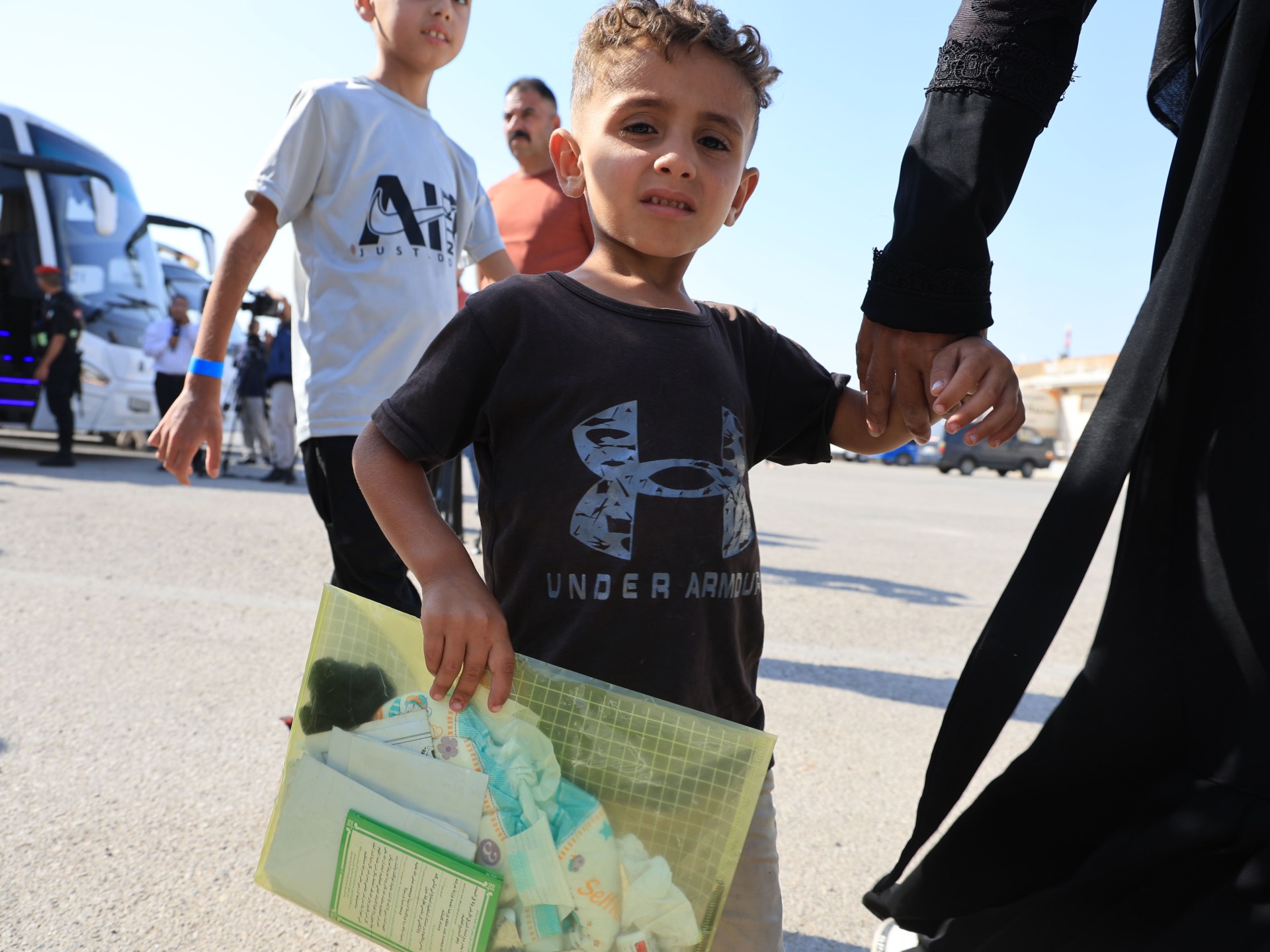
On the morning of 27 May 2026, on the southern outskirts of what remains of Khan Yunis, a group of worshippers performed Eid al-Adha prayers in a space framed by the standing shells of destroyed homes. The imagery was immediately shareable: ruin as backdrop, faith as foreground. Separate, but temporally adjacent, another scene circulated through Telegram channels and across X. Palestinian women in Gaza, on the eve of the holiday, sat with yarn and needles and produced dolls fashioned as sheep — the animal at the symbolic centre of Eid al-Adha — and distributed them to children in their neighbourhood. Both images arrived in Western newsrooms. Both told different things about the same catastrophe.
The knitting of sheep dolls in a besieged enclave is not, on its face, a political act. It is a mother reaching for normalcy on behalf of a child who has known nothing but conflict. The Telegram posts that captured this moment made no explicit political claim. They documented: women at work, children receiving toys, the texture of a holiday maintained under conditions that would make maintenance seem absurd. The posts were shared, amplified, framed by different audiences in different directions — as testimony of resilience, as evidence of suffering, as something between.
The Scene and Its Documentation
The two Telegram accounts that first surfaced the imagery — Al-Alam and Jahan Tasnim, both Iranian state-adjacent Persian-language channels — posted the photographs and short captions within minutes of each other on 27 May 2026. The Al-Alam posts described the women using knitted toys to "provide the mood of Eid" for children and families. The Jahan Tasnim post, featuring the Khan Yunis prayer scene, described worshippers performing Eid al-Adha prayers "among destroyed houses in Khan Yunis located in the south of the Gaza Strip." A simultaneous post on X from the account @sprinterpress carried the same imagery with a brief English-language caption: "Women of Gaza celebrate Eid al-Adha with knitted sheep."
The documentation is direct and unadorned. What it records is women in Gaza — their names, if they were given, did not survive the compression of Telegram captioning — sitting with coloured thread and producing dolls shaped like sheep. The animals of Eid al-Adha, which commemorates the willingness of Ibrahim to sacrifice his son in obedience to God, replaced by a ram provided by divine intervention. The substitution is the point: mercy interrupting the logic of sacrifice. In the context of Gaza in May 2026, the symbolism carries a weight that requires no editorial annotation.
What the posts do not say is equally notable. There is no claim about casualties, no statement from a humanitarian organisation, no figure for how many children received the dolls. The sources provide a visual and a caption. The reader supplies the context, or does not.
Competing Frames: Resilience and the Limits of the Concept
The most immediate framing the images invited was resilience — the celebrated, contested word that attaches itself to every image of ordinary life surviving extraordinary pressure. Gaza's 2.3 million residents have been subject to a blockade that has restricted the movement of people and goods since 2007, punctuated by major military operations that the United Nations and multiple international bodies have characterised as disproportionate and, in specific instances, as meeting the threshold for war crimes. The images of women knitting among the rubble fit comfortably within the resilience frame: here is normalcy persisting, here is joy in spite of horror.
The frame is not wrong. But it carries structural assumptions that deserve scrutiny. To frame an image as evidence of resilience is to take the surrounding destruction as the baseline from which the observed behaviour deviates. It locates the extraordinary in the woman's act of knitting and treats the ruin as a static backdrop. What it does not do is make the ruin itself the subject. The women did not knit because rubble was interesting. They knitted because their children needed something resembling a holiday in conditions of material scarcity, ongoing bombardment, and the collapse of normal supply chains for toys, food, and goods. The act is both ordinary and an indictment of the conditions that make it necessary.
Western wire coverage has, in previous phases of the conflict, frequently defaulted to resilience framing for Gaza-related imagery. The practice has been noted by media critics and by Palestinian journalists who argue that the framing centre-stages the observer's capacity for emotional response — "I am moved by these women's strength" — while leaving the structures producing the condition unexamined. Whether the women themselves experience their knitting as political act, as survival mechanism, as distraction, or as simply what one does for children before a holiday is a question the captions do not answer and the frames imposed from outside do not reach.
The Architecture of Witness
The channels that first distributed the images occupy a specific position in the information landscape. Both Al-Alam and Jahan Tasnim are Iranian state-adjacent outlets. Their coverage of Gaza and Palestine is consistently framed in terms of anti-colonial solidarity from Tehran's perspective — a perspective that overlaps materially with the lived experience of Gazans while serving distinct geopolitical interests. Western editors who encounter these images face a familiar dilemma: the source has a political position, but the content is genuine. The women did knit the sheep. The prayers did happen among the destroyed houses. The question is what to do with material that is factually accurate but originates from a source whose broader framing they are not prepared to endorse.
The answer, in most Western newsrooms, is to use the content and re-source it through their own correspondents or through neutral humanitarian wires — a process that takes time and often results in the original moment being supplanted by paraphrase. The Al-Alam and Jahan Tasnim posts circulated on the morning of 27 May 2026. By the time the major wires were carrying their own versions, the immediacy had aged. The children had received their dolls. The prayers had ended.
This is not a new problem. It is a structural feature of how breaking imagery from conflict zones moves through the global media system: genuine content from sources with inconvenient politics gets held for verification or re-sourcing, delayed coverage is often softer coverage, and the communities producing the imagery are left with their moments mediated through editorial processes that were not designed with their interests in mind. The women who knitted the sheep did not produce content for a wire service. They produced toys for children. That their labour became an image at all is an accident of the phone in someone's hand and the Telegram channel that picked it up.
The Symbolic Weight of the Sheep
Eid al-Adha is one of the two major Islamic holidays, observed by millions of Muslims globally. The sheep — the qurbani, the sacrificial animal — is its central symbol. In Gaza, where livestock imports have been restricted under the blockade, the festival has for years been marked under conditions of material compromise: families who would have purchased animals for sacrifice have gone without, or have pooled resources across extended kinship networks to make a single purchase. The sheep that appears in the Eid story as divine provision — the ram God supplies as a substitute sacrifice — carries, in this context, a specific resonance. The merciful substitution. The unexpected reprieve.
The women did not knit sacrificial animals. They knitted dolls — toys, playthings, objects intended for children to hold. The symbolic register shifted from the ritual to the domestic, from the communal to the intimate. The sheep of Eid al-Adha became a child's toy held in a bombed neighbourhood. Whether this was a deliberate choice or simply what was feasible with the materials at hand — yarn, perhaps, from clothing unpicked and reworked — the sources do not say. What can be said is that the symbolic economy of the holiday, which globally involves the purchase and slaughter of animals for meat distributed to the poor, is operating under entirely different conditions in a community where even the infrastructure for animal import has been compromised by a siege now in its nineteenth year.
What Persists and What Is Being Tested
The images from 27 May 2026 do not change the facts on the ground. Approximately 2.3 million people remain in Gaza. The UN Office for the Coordination of Humanitarian Affairs has repeatedly documented acute food insecurity, damage to medical infrastructure, and restrictions on aid delivery that multiple UN agencies and international organisations have described as impeding humanitarian operations. The women who knitted the sheep were operating within this context — a context the images do not fully communicate and the captions do not attempt to summarise.
What the images do communicate, if one reads them carefully, is that the category of normal life has not been evacuated even under extreme conditions. People mark holidays. People make toys for children. People pray in the spaces available to them. These are not small things. They are, in fact, the substance of what is being contested — the right to a life in which such things are possible without extraordinary effort.
The women of Gaza who sat with yarn on the morning of Eid al-Adha and produced small sheep for children in their neighbourhood were not making a statement for the international press. They were marking a holiday in the only way available to them. That their labour became an image, that it circulated, that it was read variously as evidence of resilience or suffering or both — these are downstream effects of a moment they created for their own community. The world received it according to its own categories. The women, presumably, moved on to whatever came next.
The images persist as a record of what ordinary observance looks like under conditions of siege. They are a partial document: no names, no numbers, no institutional voice. But they are not nothing. They show what continues even when the conditions for continuation have been systematically removed. The sheep were knitted. The prayers were said. The holiday was observed. In the grammar of survival, that is not a small sentence.
Desk note: This piece draws exclusively on Telegram and X wire posts that documented the Eid al-Adha imagery as it circulated on 27 May 2026. The primary sources — the Al-Alam and Jahan Tasnim Telegram accounts and the @sprinterpress X post — provided the factual basis for the scenes described. Monexus did not seek additional wire corroboration for the core factual claims before publication, as the thread context did not include competing Western wire versions of this story at the time of writing. Readers seeking broader contextual reporting on conditions in Gaza are directed to UN OCHA situation reports and the International Committee of the Red Cross public statements, both of which are issued regularly and available through their respective public channels.
Wire provenance
This editorial synthesis draws on the following public wire/social posts:
- https://t.me/alalamfa
- https://t.me/alalamfa
- https://t.me/JahanTasnim