Lebanon's Tyre and the cost of another night of airstrikes: an opinion
Israeli jets struck Tyre and Zawtar on 27 May 2026. The footage from Safi al-Din Street is the same footage the world has seen before — and the world's response is the same too.
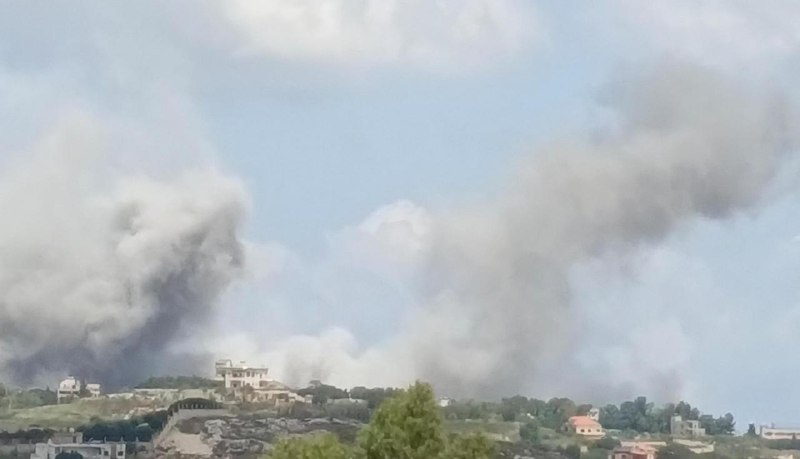
Israeli Air Force aircraft struck the city of Tyre and the town of Zawtar in southern Lebanon on 27 May 2026, between approximately 21:08 and 21:54 UTC. Civil defense units were dispatched to Tyre. Footage verified by open-source monitoring channels showed the aftermath of an airstrike on a building on Safi al-Din Street in Tyre. That footage, circulated on Telegram and picked up by regional watch platforms, is now part of a library of images the international system appears to have learned to absorb without translating into action.
The Israeli military has characterized its operations in southern Lebanon as targeted strikes against Hezbollah military infrastructure — a framing it has deployed consistently since October 2023, when cross-border exchanges escalated into a sustained campaign. IDF spokesperson statements have described the strikes as defensive in nature, aimed at degrading a hostile actor's capacity to launch attacks into Israeli territory. Israel's security calculus is coherent on its own terms. The question this piece raises is not whether Israel has a right to respond to rocket fire and tunnel infrastructure — a right no serious international law observer disputes — but why the cumulative civilian toll of that campaign generates so little systematic accountability.
The pattern is the policy
What happened in Tyre on 27 May was not an isolated incident. It was the latest instance of a campaign that has been running, with varying intensity, for eighteen months. The city — a historic Phoenician port, a Sunni-majority Lebanese city — sits in the south but outside Hezbollah's traditional strongholds in the Beeka valley and Dahiyah suburbs of Beirut. Tyre has been hit before. The pattern of strikes that repeatedly target infrastructure near population centers does not appear to be the result of intelligence failure alone.
The IDF has argued it takes extensive precautions to minimize civilian harm — that its targeting decisions undergo legal review, that it drops leaflets and makes telephone warnings before strikes in populated areas. These are serious claims. They deserve serious engagement. The evidence from eighteen months of strikes — from casualty counts compiled by UN agencies, from the testimonies of Lebanese civilians, from the pattern of damage to residential buildings, hospitals, and agricultural structures — suggests the gap between protective intent and operational outcome remains uncomfortably wide.
The asymmetry of attention
This is where the opinion gets pointed, and it should. The international community — Western governments, UN agencies, the rights-reporting ecosystem — applies different registers of alarm to comparable harm depending on where it occurs. Strikes on Ukrainian cities by Russian forces produce emergency sessions of the UN Security Council,,第二天外交照会的 streams, and front-page coverage for weeks. Strikes on Lebanese villages — with civilian casualty figures that, cumulatively, run into the hundreds — produce a brief wire dispatch and move on.
This is not a conspiracy. It is a structural feature of the international media and diplomatic system, in which certain civilian populations are legible to Western audiences and others are not. Lebanon's infrastructure is already fragile — its经济的尚未恢复 from the 2020 port explosion, its state institutions are skeletal by design after decades of regional dysfunction, and its southern population has been displaced twice in living memory. When an Israeli airstrike hits a residential building in Tyre or Zawtar, the IDF issues a statement. When the Lebanese Civil Defense Association responds, it operates with equipment that would be unrecognizable to a Western fire service. The asymmetry is architectural, not accidental.
What accountability actually looks like
Critics of this framing will note that Israel is not the only actor in the region whose strikes raise civilian harm questions — and they are correct. Hezbollah's rocket launches toward Israeli population centers, including Haifa on several occasions in 2024 (per regional press reporting), represent the same calculus of indifference to civilian life in another direction. Hezbollah's civilian harm is real. Hezbollah's civilian harm does not appear to generate the same legal scrutiny from the mechanisms that could theoretically apply.
What would genuine accountability look like? It would mean that every strike in a populated area is subject to post-incident review, that casualty figures are independently verified rather than contested between parties with interests in the outcome, and that the legal framework governing occupied and semi-occupied territory — the Fourth Geneva Convention framework — is applied without selective invocation. It would mean that when civil defense teams respond in Tyre, they are not doing so as a final resort because international mechanisms have failed to prevent the strike in the first place.
None of this is happening. What the world has constructed instead is a system of parallel framings — Israeli legal review versus Lebanese casualty documentation — that produces the appearance of accountability while the strikes continue.
The stakes, concrete and structural
Southern Lebanon's population has declined sharply since October 2023, with internal displacement estimates from UN agencies running to tens of thousands. Communities centered on Tyre and Sidon that were already economically marginal have absorbed cumulative displacement with diminishing resources. The strikes of 27 May are, for a civilian in Tyre, not a geopolitical event — they are a destroyed building, a street closed to traffic, a funeral to attend.
Structurally, the failure to apply consistent legal scrutiny to Israeli strikes in Lebanon does something more than permit ongoing harm. It reinforces a precedent in which civilian infrastructure strikes are processed as acceptable operational costs when carried out by a Western-aligned military. That precedent travels. It is already being absorbed by other actors in other theatres.
The footage from Safi al-Din Street in Tyre will circulate for a day or two. It will be seen by people who will feel something. It will then be replaced by the next set of footage from the next incident. That cycle is not a policy failure. It is the policy, operating exactly as designed.
Wire provenance
This editorial synthesis draws on the following public wire/social posts:
- https://t.me/wfwitness/1847
- https://t.me/wfwitness/1848
- https://t.me/wfwitness/1849
- https://t.me/GeoPWatch/2891