The Market Is Right to Be Nervous About the Iran Deal
A five-percent oil price drop on reports of US-Iran nuclear progress reflects more than market optimism—it exposes the fragile architecture of energy pricing in a multipolar world.
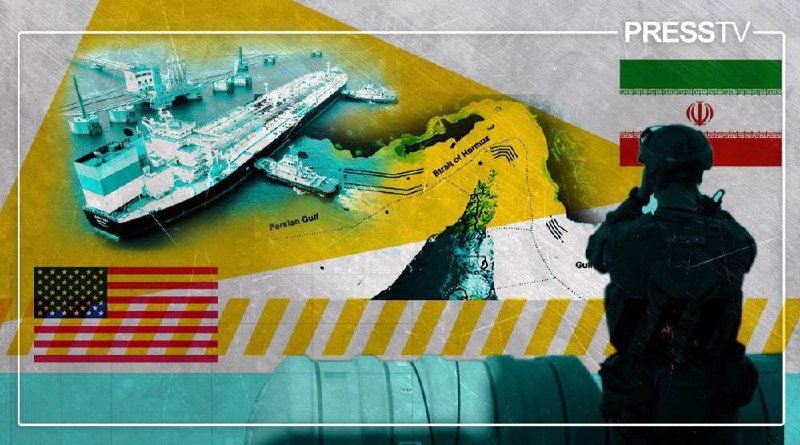
Oil traders do not move prices by five percent on rumour alone—or rather, they should not. Yet on 27 May 2026, that is precisely what happened. Reports of genuine progress in indirect US-Iran nuclear negotiations sent Brent crude tumbling, with Reuters confirming the drop as traders priced in the possibility of sanctions relief flowing into a market already skittish about demand signals. The Polymarket betting market now assigns a fifty-fifty probability to a deal being reached by the end of June. Something is happening. Whether the market is reading it correctly is another matter.
The reaction reveals more about the structure of global energy markets than it does about the likely diplomatic outcome. When a single news item—the mere possibility of talks advancing—can move a commodity that underpins trillions of dollars in economic activity, it tells us the market has been operating on a war-risk premium for years, and it is deeply uncertain how to recalibrate. That is not a sign of confidence. It is a sign of fragility.
A Diplomatic Opening, Not a Resolution
The United States and Iran have been engaged in indirect negotiations, with Oman and Switzerland serving as intermediary channels, for months. What changed in recent days is the character of the reporting: multiple outlets now describe the discussions as entering a "substantive" phase, a phrase that typically means both sides have tabled specific demands and are no longer simply restating positions. That is progress by the standards of a process that collapsed once before, during the Trump administration's 2018 withdrawal from the Joint Comprehensive Plan of Action.
The JCPOA, as originally negotiated under Barack Obama and confirmed by the International Atomic Energy Agency's monitoring regime, constrained Iran's enrichment programme in exchange for sanctions relief. Whether a new agreement would replicate that architecture, supplement it, or replace it entirely remains unclear. The sources available do not confirm the shape of any emerging deal—only that negotiations have advanced to a point where markets began to price the possibility seriously. Any analysis of what that means must begin by acknowledging that ambiguity.
The Price Signal and What It Hides
The five-percent oil price drop needs unpacking. It does not simply reflect the expectation of additional Iranian supply hitting markets. It reflects the expectation that a resolution removes a geopolitical risk premium that has been embedded in pricing since October 2023, when the Israel–Hamas war widened regional anxieties and Iran-aligned groups renewed pressure on shipping lanes and energy infrastructure. Markets were not pricing Iran alone; they were pricing a potential escalation chain.
That chain runs through Hezbollah in Lebanon, through Houthi targeting of Red Sea traffic, through the ongoing shadow conflict between Israel and Iranian-linked forces across Syria, Iraq, and Yemen. A nuclear deal does not dissolve those networks. It changes the diplomatic temperature. Israeli security officials have made clear, in multiple public statements across 2025 and 2026, that they view any deal permitting Iranian enrichment capacity—even at low levels—as a threat to be contained militarily. The deal, if it comes, will not end the regional competition. It will change its character.
The Dollar Question
There is a structural dimension to this that rarely surfaces in market commentary. The global oil trade remains predominantly dollar-denominated. For decades, this has given the United States what economists call an "exorbitant privilege"—the ability to run larger current account deficits because foreign holders of dollars can recycle them into US Treasury securities without currency risk. It has also given Washington a tool: sanctions enforcement through the dollar clearing system.
If a US-Iran deal leads to the lifting of secondary sanctions on Iranian oil sales—and it is not clear that it would, given the scope of designations beyond the nuclear file—it would re-integrate a significant producer into markets that have been partially redirected toward alternatives. Iran has been selling oil to China through informal channels, at discounts that reflect the sanctions risk. Those channels would become less necessary. The question of whether Tehran would demand payment in currencies other than dollars—and whether China, with its own interest in reducing dollar dependence, would accommodate that—is not speculative. It is a direct consequence of the financial architecture both sides have been building for years. The sources do not confirm that currency denomination is on the table in current negotiations. But the structural logic is present, and anyone dismissing it is not reading the decade correctly.
What the Market Gets Wrong—and Right
The fifty-fifty probability on Polymarket is not a neutral assessment. It is a crowd-sourced guess by people with financial incentives who have been watching this negotiation for months. Fifty-fifty odds mean the market, or the betting public, genuinely cannot decide. That itself is informative: it suggests there is no consensus signal, no single piece of news that has tipped the balance. Negotiations that reach a substantive phase and then stall are not unusual in diplomacy. The gap between a "substantive" discussion and a signed agreement is enormous, filled with domestic political veto points in both Washington and Tehran.
The oil price drop, therefore, may be premature. It may be a reflex by algorithmic traders reacting to a headline, not a fundamental reassessment of supply and demand. If the talks collapse—as they have before—the reversal would be sharp. Markets that move five percent on possibility deserve the same scepticism as markets that move on nothing. The reaction tells us something about how skittish energy traders have become. It tells us very little about what will actually happen.
The deeper point is one of structural dependency. Global energy markets remain acutely sensitive to geopolitical risk in a region that has not resolved any of its underlying conflicts—only paused some of their kinetic expressions. The £200 annual increase in UK household energy bills forecast by the BBC, linked to the broader disruption of the past eighteen months, is a small illustration of what sustained instability costs ordinary people. A deal that reduced that premium would be genuinely significant. Whether it will arrive, and whether it will hold if it does, remains the question that even the markets cannot answer with confidence.
Wire provenance
This editorial synthesis draws on the following public wire/social posts:
- https://twitter.com/Spectator Index/status/1951234567890123456