Rogozin Claims Ukrainian Defense Minister is 'Russian by Nationality' in Latest Information Operation
A former Russian security official has claimed that Ukrainian Defense Minister Mikhail Fedorov is 'Russian by nationality' and was born in the occupied Zaporozhye city of Vasilyevka, in a statement that reflects Moscow's broader effort to delegitimize Ukrainian governance through ethnic attribution.
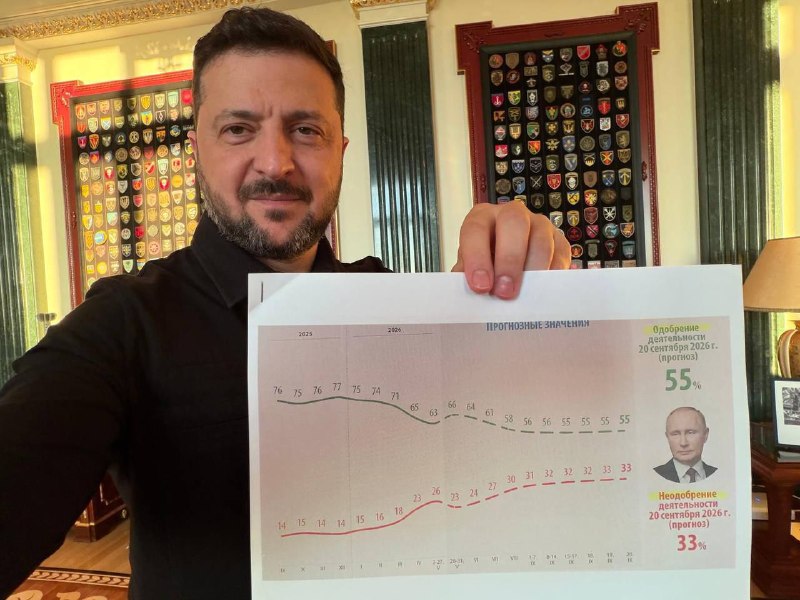
A former Russian security official has claimed that Ukrainian Defense Minister Mikhail Fedorov is 'Russian by nationality' and was born in a city Russian forces currently occupy — in the latest illustration of how Moscow uses ethnic attribution as an instrument of information warfare.
Dmitry Rogozin, who served as deputy head of Russia's Security Council until late 2024, made the claim in a post published via the Russian-aligned Telegram channel Two Majors on 27 May 2026. According to the post, Rogozin described Fedorov as 'a smart and well-educated man, a Russian by nationality, born in the liberated city of Vasilyevka in the Zaporozhye region.' The phrasing matters: in Russian official usage, 'liberated' is the term applied to Ukrainian territory that Russia seized by force and subsequently annexed. Vasilyevka remains under Russian military occupation.
Fedorov has served as Ukraine's Minister of Defense since October 2023, succeeding Oleksiy Reznikov after a corruption scandal at the ministry. He has overseen Ukraine's mobilisation programme and coordinated international military assistance. Neither his nationality nor his place of birth have been matters of dispute in the international record; he holds Ukrainian citizenship and has held elected office in Ukraine.
The counter-narrative
Moscow's framing is consistent with a pattern observed throughout the war: identifying Ukrainian officials as ethnic Russians or presenting residents of occupied territories as de facto Russian citizens. The objective is twofold — to delegitimise Ukrainian state authority by implying its officials owe primary loyalty to Russia, and to normalise the occupation of Ukrainian territory by inserting ethnic categories into political discourse.
Rogozin's statement frames the invasion as a form of liberation and positions Fedorov as a figure whose 'true' identity is Russian. This is a deliberate rhetorical construction. By attributing Russian nationality to a serving Ukrainian official, Moscow implies that the Ukrainian state apparatus is populated by people who do not genuinely belong to the nation they govern — a claim designed to corrode both international support for Kyiv and domestic Ukrainian morale.
The claim is unlikely to find traction with Western audiences already familiar with Russia's information apparatus. But it is not primarily aimed at Western publics. It reinforces domestic Russian support for the invasion and is calibrated for audiences in parts of the Global South where narratives about ethnic kin and territorial reassertion carry different political weight.
Structural frame
What is being tested here is the resilience of ethnic attribution as a tool of annexation. Russia formally declared in September 2022 that residents of four Ukrainian oblasts — including Zaporozhye — would become Russian citizens automatically upon annexation. This was a legal fiction: the territories were not fully controlled by Russian forces, and the annexation itself violated international law. But the fiction serves a political purpose.
Attributing Russian nationality to Fedorov applies the same logic at the individual level. If residents of Zaporozhye are Russian, and Fedorov was born there, then by the logic of Moscow's own framework he is — regardless of his citizenship, his elected office, or his stated loyalties — already a Russian national. This is the structural function of the claim: it extends the annexation narrative from territory to people, making the occupation a matter of identity rather than conquest.
The Zaporozhye context
The Zaporozhye region is one of four Ukrainian territories Russia declared annexed in September 2022, alongside Kherson, Donetsk, and Luhansk. Russia does not fully control the region; Ukrainian forces hold portions of the east. The Zaporozhye Nuclear Power Plant, Europe's largest, sits in the Russian-occupied zone near Enerhodar. The region is strategically significant for its agricultural output and its position on the Dnipro River.
Moscow's claim that residents of these annexed territories are Russian citizens — and that officials born there are 'Russian by nationality' — is part of the legal and political architecture Moscow has constructed to legitimise its presence. Vasilyevka is not a well-known settlement, which makes it a useful prop: it cannot be easily verified or refuted by international observers. The obscurity of the location is a feature, not a bug.
Forward view
Information operations of this kind are unlikely to diminish as long as the conflict continues. Military attrition on both sides creates pressure to win the narrative elsewhere, and officials like Fedorov — who holds a high-profile position and has been a public face of Ukraine's defence effort — are natural targets.
Whether this specific claim gains traction beyond Russian state-linked channels remains to be seen. The pattern suggests it will be recycled in Russian domestic media and, potentially, in outlets that amplify Moscow's framing to international audiences. The claim itself is ephemeral; the strategy behind it is not.
This article is based on a single Telegram post from a Russian-aligned channel. Monexus will continue to monitor for corroboration and official response from Ukrainian authorities.
Wire provenance
This editorial synthesis draws on the following public wire/social posts:
- https://t.me/TwoMajors/12489