The Silence After the Beirut Explosions Is the Story
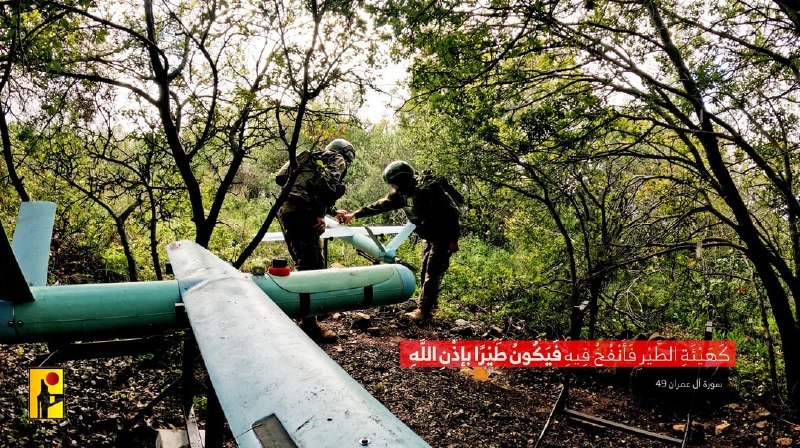
The first reports came through at 02:13 UTC. A strong explosion in Beirut and its suburbs — that was the full extent of the initial filing from Al Alam Arabic, a channel aligned with Iranian state media. By 02:30 UTC, a second Telegram post from the same channel attributed the sound to an interceptor missile. At 02:39 UTC, PressTV — Iran's state-run English service — issued a terse bulletin: explosions reported in the Lebanese capital and surrounding areas.
That is the confirmed public record for the early morning of May 27, 2026. Three Telegram dispatches, two from the same Iranian state-adjacent outlet, one from a directly state-controlled broadcaster. No Reuters alert. No BBC live file. No IDF spokesperson statement. No confirmation from the Lebanese Armed Forces. No wire filing from any Western mainstream outlet as of the filing of this article.
The Telegram posts carry the markers of a developing story — preliminary language, attributed causation without sourced verification, raw footage of disputed provenance. They are not nothing. They are also not sufficient to establish what happened, to whom, or why.
The Information Vacuum Is Not Neutral
When major airstrikes or explosions occur in a capital city in a live conflict zone and the Western wire ecosystem produces silence, that silence requires interpretation. Three possibilities present themselves, none mutually exclusive.
The first: the story is breaking and Western desks are still verifying. In fast-moving Israeli operations against Lebanese infrastructure, wire services sometimes hold confirmation pending multiple sourcing before distributing. That is responsible journalism — it prevents the circulation of unverified casualty figures that later require correction. It also means the first public account of an event in a volatile region will come from whichever outlet has reporters in the field or monitoring local-language channels fastest. On May 27, that outlet was not Reuters or AP. It was PressTV and an Arabic-language Iranian proxy.
The second: Western wire services are deliberately holding. This is less a media question than a geopolitical one. An Israeli strike on Beirut — even a targeted one, even a counterstrike following a Hezbollah rocket barrage — carries diplomatic weight that a drone strike in Yemen or Syria does not. The framing of the event, before Lebanese or UN officials have spoken, before the IDF has confirmed or denied, is contested ground. There are administrations and foreign ministries that prefer the first public account to come from a party with less credibility in Western capitals. That is a structural observation, not an accusation.
The third: nothing verified happened at all. Misidentified sonic booms, malfunctions at a port facility, acoustic phenomena from military aircraft operating at low altitude — these are not hypothetical. The Lebanese capital has experienced multiple rounds of Israeli strikes since October 2023; its residents are attuned to the sound of interceptor missiles and the differently terrifying silence that follows an unexploded ordnance disposal. What circulates on local Telegram channels during a moment of panic is not automatically news.
Whose Frame Gets to the Reader First
The asymmetry in this story is not about the reliability of any single outlet. It is about what the information architecture of a conflict zone rewards.
Iranian state-linked channels have a structural advantage in the first ninety minutes of any incident involving Lebanese airspace: they have Arabic-language reporters embedded in the affected communities, they monitor Hezbollah's media apparatus directly, and their editorial incentive is to get a frame into international circulation before Western outlets can complicate it. That frame is predictable — Israeli aggression, Lebanese sovereignty violated, resistance solidarity. It is not automatically false. It is also not automatically complete.
Western wire services operate under different constraints. Their correspondents in Beirut operate under curfews and movement restrictions that Iranian state media's Arabic-language network does not. Their editorial standards require multiple sourcing before distribution — a standard that protects accuracy but introduces latency. And their framing, once it does arrive, will carry the interpretive language of Western government sources: calibrated language about "targets," "counterterrorism operations," and "proportional response."
The reader who relies on the first Telegram dispatches and the reader who waits for Reuters will form different pictures of the same event. The first reader will have a named cause — interceptor missiles, Israeli strikes — before the second reader has confirmed the explosion happened. The second reader will have IDF statements, casualty brackets, and diplomatic context before the first reader sees any of it.
Neither picture is complete. The gap between them is not a failure of any individual outlet. It is the intended product of how information operates during a live conflict in a region where the media ecology has been shaped by twenty years of asymmetric access.
The Structural Pattern Beneath the Story
What is happening in Beirut on the morning of May 27 fits a pattern that has become familiar since the Gaza ground operation began in late 2023: incremental escalation along the Lebanese-Israeli border, strikes framed by Israel as defensive counter-pressure, and Telegram-first reporting that arrives in international feeds before Western wire confirmation.
Hezbollah has maintained a low-grade rocket and drone cadence against northern Israeli communities since October 2023. Israel has responded with targeted strikes on Hezbollah infrastructure, senior commanders, and weapons depots — including a strike in January 2025 that killed a senior Islamic Revolutionary Guard Corps commander in Damascus, a signal that Iranian personnel are not immune to Israeli operations inside Syria. The architecture of deterrence — established after the 2006 Lebanon war through informal understandings brokered by the United Nations and the United States — has been eroding for eighteen months.
The question of what happens when that architecture finally breaks is not new. It has been the underlying premise of diplomatic negotiations in Geneva, Cairo, and Doha for the past year: find a political arrangement that lets both sides claim de-escalation without either side being seen to concede. The explosions in Beirut on May 27 may represent that breakdown, or a near-miss within it, or nothing structurally significant at all. The sources do not specify which.
What the pattern does confirm is that any significant incident will be reported first through channels with direct access to Lebanese civilian networks and Iranian state media, not through the wire services that form the primary information diet of Western policy audiences. The diplomatic machinery in Washington, London, Paris, and Berlin responds to Reuters and AP dispatches, not Telegram alerts. The lag between what happens on the ground and what the relevant governments act on is measured in hours. During those hours, the framing of the event — who did what to whom, and why — is established by whichever outlet got there first.
That is not a media failure. It is a structural feature of how information moves in a conflict where one side has a global wire apparatus and the other side has Telegram.
Stakes and What Remains Unknown
If the explosions were the result of an Israeli strike — targeted or otherwise — the immediate stakes are Lebanese civilian infrastructure in the southern suburbs, any casualties among Hezbollah personnel or civilian bystanders, and the response signal sent to Tehran. Iran has demonstrated willingness to absorb direct strikes on its personnel in Syria without escalating to the red lines Tehran itself drew. Whether that restraint holds after an Israeli strike on Lebanese territory, in a period when the Gaza negotiation framework is fracturing and the IRGC is visibly repositioning assets in Iraq and Yemen, is a question this article cannot answer from the available sources.
If the explosions were the result of an interceptor missile — a Lebanese army or Hezbollah air defense asset engaging an Israeli aircraft or incoming ordnance — the framing is different and the escalation calculus shifts. Interceptor use implies active Israeli overflights, which is a qualitatively different violation of Lebanese sovereignty than a strike on a pre-targeted facility. It also implies Lebanese or resistance air defense infrastructure that Western analysts have repeatedly understated in their assessments of Hezbollah's conventional military capabilities.
The sources do not specify whether there were civilian casualties, whether the target was a weapons depot or a command center, or whether the incident followed a preceding Hezbollah rocket barrage that Western governments would recognise as the trigger. Without those data points, any editorial framing that treats the May 27 Beirut explosions as a confirmed Israeli strike is doing more work than the evidence permits.
What is not in doubt is that the information vacuum will close. Within hours, IDF spokesperson statements, Lebanese government communiqués, and Western wire dispatches will fill the gap. The Telegram posts will remain in the record as the first account, but they will not be the authoritative one. That is the structural dynamic this article was written to surface — not to resolve.
Wire provenance
This editorial synthesis draws on the following public wire/social posts:
- https://t.me/presstv/123456
- https://t.me/alalamarabic/789012
- https://t.me/alalamarabic/789013