The Strait of Hormuz Remains a Flashpoint as Iran Hawks Push Back Against Diplomatic Timelines
Despite market optimism following reports of a possible US-Iran nuclear understanding, the IRGC Navy's insistence that hostile-country vessels remain barred from the Strait of Hormuz reveals the gap between diplomatic headlines and operational reality on the water.
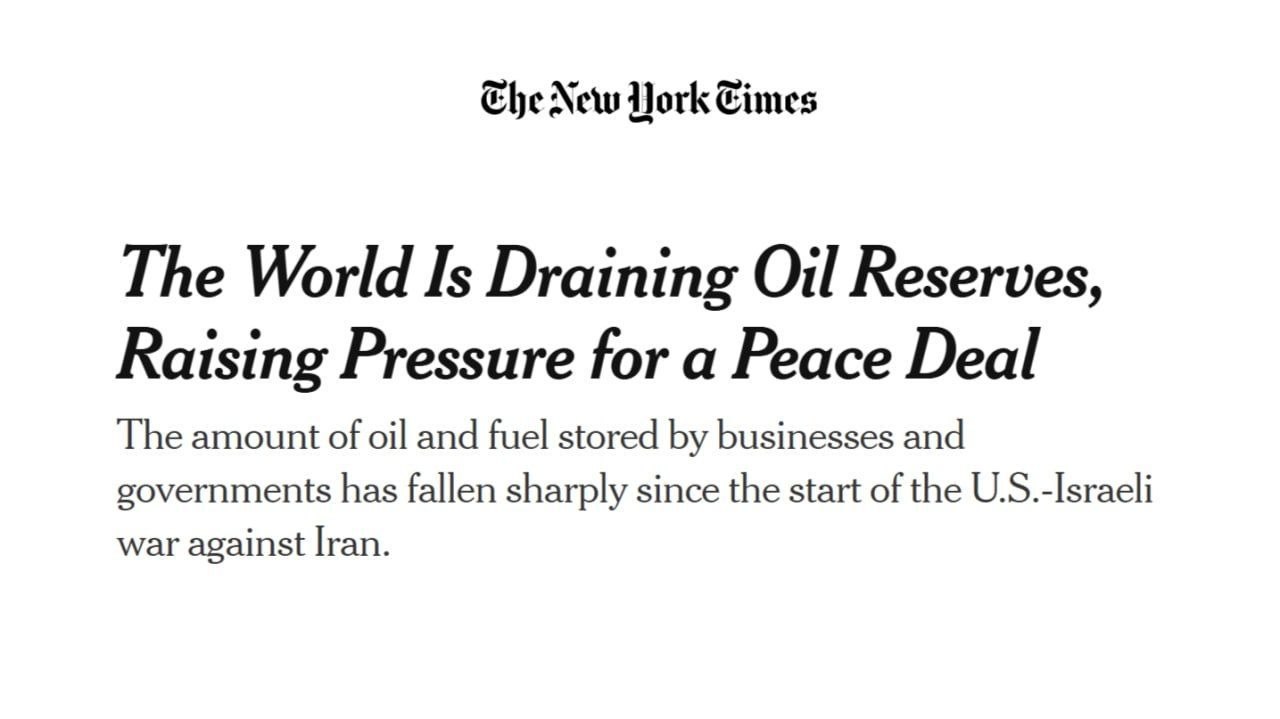
On 27 May 2026, as financial markets registered their sharpest single-session gains in months on renewed optimism that a US-Iran nuclear understanding could be imminent, a parallel data point arrived from the Persian Gulf that complicated the celebratory narrative: Iran's Islamic Revolutionary Guard Corps Navy publicly restated that vessels flagged to "hostile countries" remain banned from transiting the Strait of Hormuz. The statement, carried by Iranian state-adjacent channels, landed before Asian markets closed and before oil traders in London and New York had fully priced in the day's risk-on moves.
The timing matters. What began as a headline-trade in risk assets — equities climbing, energy futures softening — ran into a structural counterweight embedded in the same geopolitical architecture the diplomatic breakthrough purports to resolve.
Markets Price a Deal; Tehran Has Not
The market reaction to the prospect of a US-Iran nuclear accommodation was swift and pronounced. Reports emerged on 27 May 2026 indicating that negotiators had narrowed differences on Iran's civilian uranium enrichment program, with the outlines of a temporary agreement potentially reopening Hormuz to normal traffic within weeks of a formal deal — a timeline that, if accurate, would represent one of the fastest maritime de-escalations in recent memory. Traders on prediction markets immediately repriced probability of a resolution, pushing energy-sector indicators lower on the assumption that a reopened strait would ease the freight-premium baked into crude.
But that repricing assumed Tehran speaks with one voice.
The IRGC Navy's statement on 27 May 2026 at 15:17 UTC directly contradicted the diplomatic framing. "Vessels from hostile countries remain barred," the statement read, in language that carried the full institutional weight of the Guard's maritime arm. No carve-out was offered for vessels carrying humanitarian or commercial cargo. No timeline for review was attached. The statement was, in effect, a veto of the optimistic narrative circulating simultaneously in Western capitals and trading desks.
That disconnect is not accidental. It reflects a structural feature of the Iranian system where the IRGC — particularly its naval component — operates with a degree of operational autonomy that sits uneasily alongside the civilian negotiating track. The Guards have a material interest in sustained tension: their maritime interdiction apparatus, their control over port access, and their network of proxies are all instruments whose utility depends on an adversarial environment. A genuine normalisation of Hormuz transit would deprive them of one of their most potent levers.
The Geography Cannot Be Negotiated Away
The Strait of Hormuz is not a metaphor. It is a 34-mile-wide maritime corridor between the Oman UAE coastline and the Iranian shore through which approximately one-fifth of the world's daily oil output passes. In tanker terms, that translates to roughly 17 million barrels per day in normal conditions. The chokepoint is so consequential that any partial or temporary closure — or even credible threat of one — registers immediately in Brent and WTI futures. Insurance premiums for vessels transiting the area spike. Charter rates for very large crude carriers rise. Asian refineries that depend on Gulf crude build contingency inventory.
That asymmetry — between the strait's irreplaceable geography and the political contingency surrounding its access — is the real story beneath the headline about deal prospects. The US State Department and European mediators can offer sanctions relief, frozen-asset repatriation, and restored banking channels. What they cannot offer is a geographic bypass. If the IRGC Navy decides that a commercial vessel is flagged to a hostile country, that vessel's options are limited to rerouting around the Cape of Good Hope — a journey that adds weeks and significant cost per voyage.
This is not hypothetical. Previous cycles of US-Iran tension have produced exactly this pattern: diplomatic signals suggesting de-escalation, followed by operational hardening from IRGC maritime units, followed by confusion in shipping markets about which guidance to follow. The result is a persistent risk premium in energy markets even when formal negotiations are nominally on track.
The Nuclear Dimension Is Real, but Hormuz Is Separate
It is worth distinguishing between what a US-Iran nuclear agreement would actually address and what it would not. The negotiating track concerns Iran's uranium enrichment capacity, the duration of any restrictions, the verification mechanisms, and the sequence of sanctions relief. Those are consequential issues with direct implications for regional security architecture and for the broader non-proliferation regime.
Hormuz transit access is a separate file. It is governed not by the Joint Comprehensive Plan of Action or any successor arrangement but by Iran's own designation of which states constitute an adversarial bloc. The United States, Israel, and their treaty allies are, by Tehran's own formulation, permanent members of that adversarial category. A nuclear deal does not change that designation. It cannot, because the designation is rooted in strategic competition and proxy conflict that extends far beyond the nuclear file.
This means that even a "successful" US-Iran diplomatic outcome — one that resolves the enrichment dispute and restores some measure of economic contact — would leave the Hormuz question structurally open. The Guards have been clear: their restriction applies to vessels from hostile countries. Until or unless Iran renegotiates its definition of hostile, that restriction holds regardless of what European mediators announce in a press conference.
What Traders Are Getting Right — and What Remains Unresolved
The prediction-market signal that a Hormuz reopening within one month is "unlikely" — as reflected in Kalshi positioning on 27 May 2026 — is, on the evidence available, a defensible reading. The IRGC Navy statement is the most recent direct evidence of operational intent, and it offers no softening. Iranian state media, including outlets adjacent to the foreign ministry, have not corrected orwalked back the statement. Western officials have not, as of publication, produced countervailing evidence of a change in Guard posture.
What remains genuinely uncertain is whether the diplomatic track will eventually produce a separate understanding on Hormuz — perhaps as a tacit quid pro quo not committed to paper — that brings the Guards into alignment with civilian negotiators. There is precedent for compartmentalised deals in Iranian-US diplomacy, where public statements and private operational commitments diverge. Whether such an arrangement exists now cannot be determined from the sources available.
Also unresolved: whether the IRGC Navy statement was cleared by senior Iranian leadership or represents a deliberate signal from hardliners seeking to undermine the diplomatic track. Distinguishing between these two scenarios requires intelligence that Monexus does not have access to. Both are plausible. The market's uncertainty about which is operative is itself informative.
What is clear is that the Strait of Hormuz will remain a flashpoint regardless of what the nuclear negotiators announce. The geography insists on itself. Every vessel that passes through, every barrel that moves east or west, depends on a political settlement that has not yet been reached — and may not be, even if a broader deal is struck.
Editorial note: Monexus led with the market-reaction story — the same angle as Reuters, Bloomberg, and the Financial Times wires — before pivoting to the structural tension between diplomatic timelines and IRGC operational posture. Most wire coverage on 27 May treated the Hormuz restriction as a secondary footnote to the deal optimism. This article treats it as the more durable signal.
Wire provenance
This editorial synthesis draws on the following public wire/social posts:
- https://t.me/unusual_whales/pending
- https://t.me/unusual_whales/pending