Tehran's red lines are not a negotiating position — they are the price of admission
President Pezeshkian and senior parliamentarian Boroujerdi have outlined Iran's terms for any agreement with the United States — terms the Trump administration will find difficult to dismiss without exposing its own negotiating posture as theatre.
On 27 May 2026, as Iran marked Eid Al-Adha, President Masoud Pezeshkian issued a statement that doubled as diplomatic preamble. The occasion, he said, was evidence of the Iranian people's "patience and solidarity" in the face of "oppressive sanctions and international hostility." His office released the statement via Al Alam, the Islamic Republic's Arabic-language broadcaster. Hours later, Alaeddin Boroujerdi — a senior figure in the Iranian parliament whose previous portfolios include the Foreign Policy and National Security Commission — offered a more granular translation of what Tehran means by patience: any document signed with the United States would be evaluated against a checklist, and the first item on that checklist is the regime's own red lines.
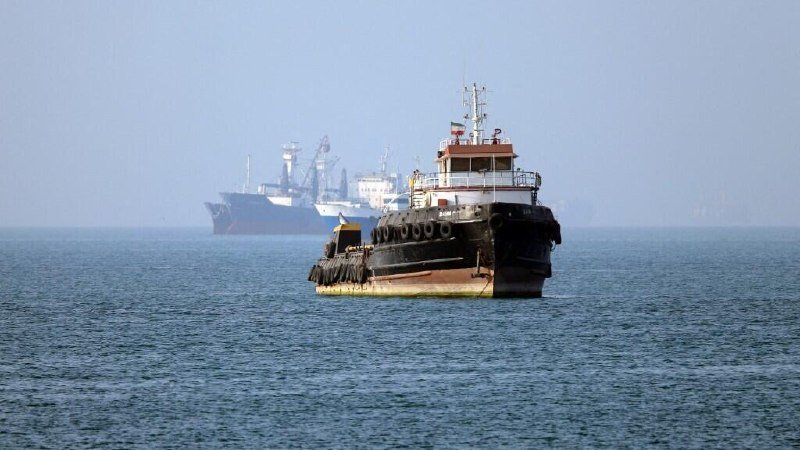
The red lines are specific. Boroujerdi named two: the liberation of a "large portion" of Iran's frozen overseas assets, and the ending of what Tehran describes as a naval blockade — a characterisation Washington disputes, but which reflects Iran's consistent framing of US carrier group positioning in the Persian Gulf as economic warfare by other means. This is not a posture. It is a price list.
The asymmetry the White House does not want to name
The Trump administration's approach to the Iran file has been consistent since the return to office in January 2025: maximum pressure is a prelude, not a policy. The stated goal is a new nuclear agreement — narrower than the 2015 Joint Comprehensive Plan of Action, more focused on enrichment ceilings and inspection access, and explicitly bilateral rather than multilateral. Senior officials have suggested privately and on the record that sanctions relief would be incremental, contingent, and reversible. The word "decertification" has been floated as a mechanism for secondary penalties if Tehran cheats.
That framework assumes Iran is desperate enough to trade away its enrichment programme for economic oxygen. The Pezeshkian-Boroujerdi statements suggest a different starting assumption. Tehran is not coming to the table as a supplicant. It is coming with its own ledger — frozen assets estimated in the tens of billions of dollars, and a naval posture it characterises as coercive encirclement. The asymmetry matters because it determines who blinks first, and when.
There is a structural reason Iran can hold this line. The sanctions regime, while severe, has not produced the internal collapse the maximum pressure camp predicted in 2018 when the US withdrew unilaterally from the JCPOA. Iran has survived on reduced oil revenues, managed currency depreciation, and a carefully cultivated network of non-dollar trade channels — through UAE intermediaries, barter arrangements with Russia, and yuan-denominated oil contracts with China. The instrument has not worked as advertised. That history gives Tehran's negotiators something the White House's internal briefings likely underestimate: time.
What a deal would actually require
The substance of any US-Iran understanding, if one emerges, would have to address three overlapping questions: what Iran can enrich, where it can store it, and what happens to the financial architecture around it. On enrichment, the US position reportedly seeks a cap below the weapons-grade threshold — perhaps 3.67 percent, the JCPOA ceiling — with no enrichment at Fordow. Iran will resist abandoning Fordow categorically; the site is a symbol of national resolve as much as a technical asset.
On the financial side, the frozen assets question is not incidental — it is load-bearing. Iran has calculated, probably correctly, that Washington cannot credibly demand verification regimes without offering something concrete on the asset freeze. Those assets are not merely a negotiating chip for Tehran; they are leverage the US has used to restrain third-country banking relations with Iran. Releasing them is not a concession Iran is making. It is a concession the US would be making, and Boroujerdi knows it.
The naval question is the hardest. The US Navy's presence in the Gulf is not only about Iran — it is about the credibility of US security commitments to Saudi Arabia, the UAE, and Israel. An agreement that ends the "blockade" framing would require either a US withdrawal of forward positioning or a face-saving formula that both sides can call something other than what it is. This is where previous rounds of back-channel diplomacy have consistently broken down.
The domestic politics neither side is discussing
Pezeshkian faces his own constraints. He is a reformist who won office in 2024 partly on the promise of economic relief through diplomacy. He cannot sign an agreement that his base reads as capitulation without paying a political price — which is precisely why his Eid statement was framed in the language of steadfastness, not concession. Boroujerdi, whose parliamentary standing is rooted in the conservative establishment, is effectively the guarantee mechanism: his public articulation of red lines signals that no deal can be ratified if it deviates from them. This is not a hardliner veto — it is a consensus requirement built into the system.
On the US side, the political calculus is equally constrained. Any agreement that includes significant sanctions relief without a full dismantlement of Iran's enrichment infrastructure will face immediate criticism from the Senate's Republican conference and from Gulf partners who view any US-Iran normalisation as a strategic betrayal. The administration needs enough visible concessions from Tehran to call the outcome a win — but not so many that Iran walks away, taking the diplomatic achievement with it.
The deal that is probably available
The most likely shape of a US-Iran understanding — if one materialises — is not a grand bargain. It is a temporary arrangement: sanctions relief in exchange for verified enrichment restraint, asset releases structured as escrow rather than outright transfers, and a tacit understanding on Gulf transit that neither side formally endorses but both comply with. Call it JCPOA 2.0, stripped of its multilateral architecture and its explicit sunset clauses.
That outcome serves both governments' immediate interests. It gives the Trump administration a foreign policy win to headline. It gives Pezeshkian the economic oxygen his government needs to survive the next two years. It does not resolve the structural competition between the two countries — on nuclear latency, on regional proxies, on the broader architecture of Middle Eastern security. But it buys time, and in a region where time is the scarcest resource, that is not nothing.
The question is whether either side can sell the compromise to its own constituency without the other side collapsing the deal in the process. Boroujerdi's red lines are not a negotiating tactic. They are the minimum his parliament will ratify. The administration would do well to treat that as a starting condition rather than a negotiating position.
This publication covered the Pezeshkian Eid statement and Boroujerdi's subsequent remarks as Iranian state-mediated communications requiring corroboration through independent regional and wire reporting.
Wire provenance
This editorial synthesis draws on the following public wire/social posts:
- https://t.me/alalamarabic/78523
- https://t.me/alalamarabic/78524
- https://t.me/alalamarabic/78528
- https://t.me/alalamarabic/78527