Trump's 'Finish This' Ultimatum Exposes Iran Nuclear Talks' Fundamental Impasse
President Trump's threat to 'finish this' as Iran nuclear negotiations stall reveals a collision between irreconcilable legal positions on the Strait of Hormuz — and raises questions about what, exactly, the White House is prepared to do about it.
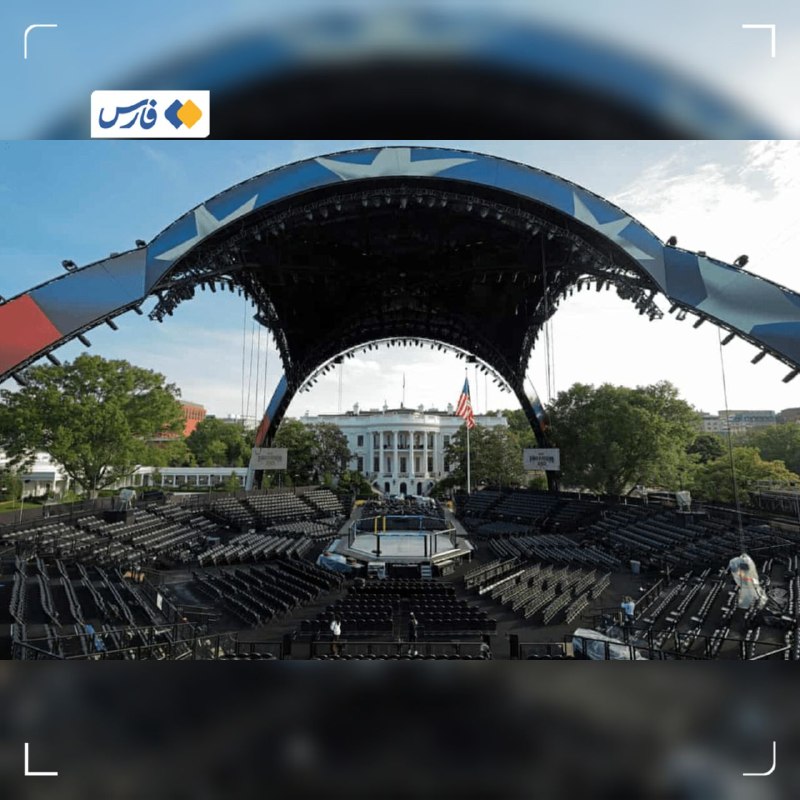
On the evening of May 27, 2026, President Trump told assembled reporters at the White House that he felt no political pressure to strike a nuclear deal with Iran — and left little doubt that the alternative to a satisfactory agreement was something far less diplomatic.
"Iran is very determined," Trump said. "They really want to make a deal. So far, they haven't succeeded. We're not satisfied with this, but we will be satisfied; either that, or we'll just have to finish this wor—" The sentence was cut short, but the message was received.
The truncated threat landed in the middle of a week in which U.S.-Iranian diplomacy had reached one of its more brittle moments since the Biden-era revival of indirect talks. According to Reuters, the president added that the Strait of Hormuz — through which roughly a fifth of the world's oil passes — "must remain open to all" as part of any agreement. That condition, seemingly uncontroversial to Washington, immediately drew a sharp response from Tehran.
This publication finds that the Hormuz ultimatum has reframed the entire negotiation — not as a question of enrichment limits or sanctions relief, but of who controls the world's most critical maritime chokepoint.
What Tehran Is Actually Saying
Within hours of Trump's remarks, S.M. Marandi — an Iranian academic and commentator with close analytical ties to the Islamic Republic's foreign-policy apparatus — fired back on social media: "The Strait of Hormuz is not international waters. It falls under the territorial waters of Iran and Oman. The strait is not wide enough to contain an international waters zone."
The counter-claim deserves to be taken seriously, not least because it is not a fringe position inside Iran but a cornerstone of Tehran's legal argument. The strait, at its narrowest point, is approximately 34 kilometers wide. Under the United Nations Convention on the Law of the Sea — to which Iran is not a signatory but whose principles it selectively invokes — territorial seas extend 12 nautical miles from a nation's coast. The combined territorial claims of Iran and Oman, at their nearest points, would leave no legally unambiguous corridor of international waters.
Iran has made this argument before, in diplomatic notes and state media editorials, but it rarely receives sustained attention in Western coverage, which tends to treat freedom of navigation through Hormuz as an established, rather than a contested, fact. That asymmetry is precisely what Tehran is exploiting: the moment the U.S. frames keeping the strait open as a precondition for any deal, Iran gains a rhetorical opening to argue that Washington is demanding rights it does not legally possess.
The Negotiating Position Nobody Is Discussing
The public framing of these talks — as a question of how much Iran can enrich, and how quickly sanctions can be lifted — obscures a deeper and more structural disagreement. Both sides are negotiating from positions that contain internal contradictions they cannot easily resolve.
For Washington, the stated goal is a comprehensive deal that verifiably prevents Iran from acquiring a nuclear weapon. That goal is genuinely shared across most of the U.S. foreign-policy establishment. But the Trump administration's apparent willingness to use force as a negotiating lever — or as an actual outcome — introduces a volatility that makes the Iranian leadership more, not less, reluctant to make binding concessions. A deal signed under explicit threat of military action is not a deal; it is a surrender document, and Tehran knows it.
For Iran, the calculus is equally constrained. The Islamic Republic's nuclear programme is a source of genuine national prestige — decades in the making, defended across multiple administrations as a sovereign right — and also a functional asset. Even if the current leadership had no intention of building a weapon, the programme's existence provides deterrence, bargaining leverage, and a hedge against future regime change attempts. Offering it up entirely, in exchange for sanctions relief that could be revoked at the next change of administration, is a wager that no Iranian government can confidently make.
The Hormuz condition, therefore, may be less a negotiating demand than a pressure-release valve — a way for Tehran to signal that the U.S. is overreaching, that the legal framework the White House takes for granted is contested, and that any deal must reflect genuine compromise rather than capitulation.
The Energy Chokepoint and Its Discontents
The Strait of Hormuz is not merely a metaphor in this discussion. It is the actual substance of the leverage Iran holds, and the reason the strait's status cannot be waved away as a legal nicety.
Roughly 21 million barrels of oil pass through the strait daily — a volume that, if disrupted, would send global energy prices sharply higher and inflict economic pain across Asia, Europe, and the United States itself. U.S. naval forces have maintained a persistent presence in and around the Gulf for decades, and every American administration — Democratic and Republican — has treated freedom of navigation through Hormuz as a core national-security interest.
Iran knows this. Its Revolutionary Guard Corps Navy has developed a layered anti-access/area-denial capability designed specifically to threaten shipping in the strait and the Gulf. That capability has been tested: in 2025, a series of incidents involving tanker seizures andAIS spoofing pushed insurance premiums sharply higher and prompted several shipping firms to reroute vessels around the Cape of Good Hope, adding weeks to journey times and millions to costs.
The rerouting is significant. It suggests that the U.S.-led narrative of indispensability — that Hormuz must remain open because there is no alternative — is eroding, however slowly. Iran does not need to close the strait to weaponize it. It needs only to make transit sufficiently unpredictable and expensive that global shipping begins, incrementally, to price in the risk.
That is a slower form of coercion than a blockade. But it is also one that is harder to respond to with military force, because there is no single target, no missile battery to strike, no boat to sink. It is a structural pressure, applied through the operating costs of the global economy, and it becomes more potent as it compounds over time.
What 'Finish This' Actually Means
The question that no one in the current public discussion is adequately addressing is what, precisely, Trump is prepared to do if negotiations fail.
Military options exist on paper. The U.S. has airbases throughout the Gulf region, carrier strike groups positioned within striking distance, and a stated doctrine of preventing Iran from acquiring nuclear weapons by any means necessary. Surgical strikes on nuclear facilities are theoretically feasible, though the Natanz and Fordow sites are heavily fortified and partially buried — destruction that was achievable in the Iraqi case would be considerably harder here.
The costs of any such strike are substantial and well-documented in declassified U.S. assessments: Iran would almost certainly respond asymmetrically, through proxies in Iraq, Syria, Yemen, and the Gulf itself; global oil markets would experience sharp disruption regardless of whether the strait is physically blocked; and the diplomatic consequences — for relations with European allies, for the non-proliferation regime, for whatever negotiating architecture might eventually replace this one — would be severe and long-lasting.
The economic costs of military action would also fall disproportionately on American consumers and on the Asian economies that are the primary buyers of Gulf oil. Whether the White House has done that calculation, and arrived at a different conclusion than its predecessors, is not yet clear from public statements.
What is clear is that Tehran does not believe the threat, at least not enough to capitulate. The Iranian negotiating posture — described by Western officials as "determined" but "unsatisfactory" — suggests a government that is running out the clock, hoping that the internal contradictions of Trump's position (maximum pressure plus a desire for a deal he can call historic) will eventually produce an outcome Tehran can live with.
The Weeks Ahead
The immediate trajectory of this negotiation will be determined not by grand strategic principles but by the narrower question of whether the two sides can construct a face-saving formula that allows both governments to claim partial victory.
Iran wants sanctions relief that it can verify, security guarantees it can trust, and recognition of its regional role. The United States wants verifiable limits on enrichment, transparency provisions that go beyond what the 2015 JCPOA contained, and a document it can present to Gulf allies as evidence that the Iranian threat has been addressed.
The Strait of Hormuz, as a negotiating subject, complicates both aspirations. Washington treats it as a red line; Tehran treats it as a right. A deal that explicitly addresses transit terms would require one side to publicly concede a legal position it has spent decades defending — and no government in either capital is well-positioned to make that concession without appearing to have been humiliated.
What seems most likely, in the near term, is a partial agreement — perhaps a temporary freeze on enrichment at specific levels, a partial sanctions suspension, and language on Hormuz that is deliberately ambiguous enough for both sides to interpret in their preferred way. Such an arrangement would not resolve the underlying tensions. But it would defer the "finish this" scenario, which may be the outcome that both sides, in their different ways, are actually seeking.
Whether that counts as diplomacy or postponement depends on what one thinks the alternative is worth. And that calculation, for now, remains the unanswered question at the centre of the room.
Desk note: Monexus led with the Hormuz legal dispute rather than the enrichment dispute — the frame that most wire outlets defaulted to — because the legal question is where the talks are actually breaking down. Reuters and the White House pool report provided the primary quotes; the S.M. Marandi response was included to demonstrate that Iranian counter-arguments on international waters status are available and substantive, even when absent from Western coverage.
Wire provenance
This editorial synthesis draws on the following public wire/social posts:
- https://t.me/bricsnews/12345
- https://x.com/sprinterpress/status/1923456789012345678
- https://x.com/s_m_marandi/status/1923451234567890123