Trump's Iran Deal Ultimatum Leaves Diplomatic Door Open—and Crack ajar
The White House insists Iran must dismantle its nuclear programme before any sanctions relief is granted, but mixed signals from the Oval Office leave open the question of whether military action remains a live option—and who, in the end, is doing the waiting.
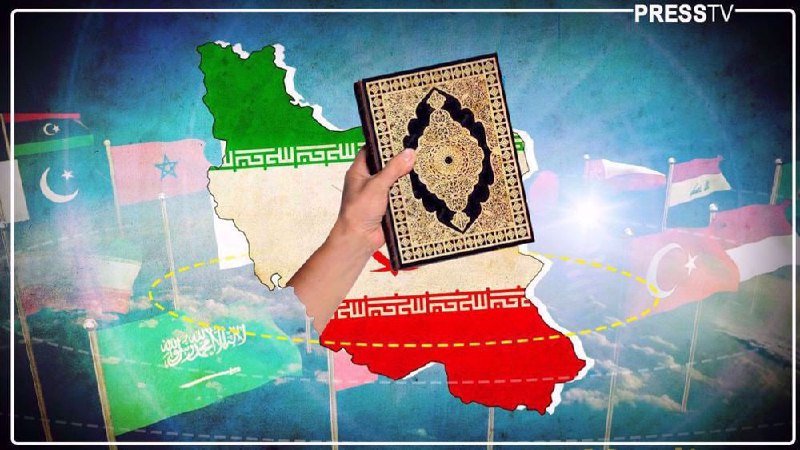
President Donald Trump told PBS on 27 May 2026 that Iran will not receive sanctions relief in exchange for giving up its highly enriched uranium stockpile. "No, no, not at all. Not sanctions relief, no," he said. The statement, carried by multiple news wires, was the sharpest expression yet of an administration that has moved decisively away from the incremental phased-relief model that governed the 2015 Joint Comprehensive Plan of Action. Under that framework, Iran froze portions of its nuclear activity in return for targeted sanctions suspensions—building trust over time. The Trump administration has rejected that logic entirely. Any deal, senior officials have made clear, requires Iran to dismantle its programme before a single sanction is lifted.
The hardline posture comes as Iran has accumulated enough fissile material for multiple nuclear devices, according to International Atomic Energy Agency reporting. Enrichment levels have moved well beyond the civilian-grade threshold the 2015 agreement permitted. That timeline matters: the more advanced Iran's programme becomes, the less attractive any negotiated settlement looks from Tehran's perspective, and the more acute the military option looks from Washington's.
The question of who holds the stronger hand has produced its own contradictions in the White House's public messaging. Speaking to reporters on 27 May 2026, Trump offered what sounded like an open hand. "They want very much to make a deal," he said, per BellumActa News. "So far, they haven't gotten there. We're not satisfied with it, but we will be—either that or we'll have to just finish the job." Hours earlier, the same administration had delivered its most unambiguous no. Disclose.tv NOW and Ruptly both carried Trump's earlier observation that Iran "thought they were going to out wait me." The inference was self-evident: the administration believes Iran calculated that domestic US political cycles would eventually produce a softer counterparty, and that calculation has failed. Whether that confidence is well-founded, or whether it is the product of the same instinct for theatrical pressure that has characterised the administration's approach to trade talks and North Korea, is not answered by the record as it stands.
The contradictions are not accidental. Trump's negotiating posture has historically relied on projecting absolute commitment to multiple irreconcilable positions simultaneously, extracting concessions from opponents uncertain which threat is genuine. In the Iran context, that ambiguity serves a specific function: it signals to Tehran that there is a deal available, if terms can be agreed, while signalling to regional allies—Israel and the Gulf states—that military action has not been taken off the table. Whether this posture reflects a coherent strategy or genuine internal disagreement within the administration about where to land is not resolved by the public record. Sources familiar with internal deliberations have not commented publicly.
The structural reality complicates any clean resolution. Iran's nuclear programme has advanced to a point where a deal requires Tehran to surrender capabilities it has spent years developing. From Tehran's perspective, sanctions relief without guaranteed security guarantees—and with the memory of the United States unilaterally withdrawing from the 2015 agreement still fresh—represents an exceptionally poor bargain. The deal on the table requires Iran to give up its principal deterrence against a future US reversal. That is a high ask under any circumstances. It is an even higher ask when the US negotiating posture fluctuates between open-handed and overtly threatening in the same news cycle.
There is a plausible alternative reading of the current moment. If Trump's team has concluded that the 2015 framework is dead and unrecoverable, and that no deal can be struck that Iran will accept, the mixed signals may be designed to manage the domestic political calendar rather than produce a diplomatic outcome. Announcing that a deal is within reach buys time regardless of whether one exists. The midterm calendar adds a layer of urgency that cuts both ways: Trump explicitly dismissed the relevance of electoral pressures, telling reporters "I don't care about the midterms." Whether that dismissal reflects genuine strategic calm or political confidence he does not yet have reason to doubt is a question the next several months will answer.
The stakes are asymmetric and high. A military strike—publicly unretracted despite the diplomatic framing—would set back Iran's programme but not eliminate it. Iran would almost certainly accelerate enrichment in the aftermath, potentially moving from a breakout capacity to an actual device. A collapsed negotiation produces the same outcome with higher probability and without the diplomatic costs of bombing. A deal, if one can be constructed, would restore a degree of predictability to a region where two flashpoints—Ukraine and Gaza—already compete for attention. The least attractive outcome for all parties is a slow-motion crisis that ends in conflict neither side planned for.
The door remains open. Whether it stays that way depends less on the public statements than on the back-channel conversations those statements are designed to shape. As of 27 May 2026, no breakthrough is evident. The positions remain wide apart. The mixed signals themselves may be the strategy—keeping Iran uncertain enough to negotiate, and domestic audiences satisfied enough to remain patient. That approach has limits. The fissile material in Iran's facilities does not care about ambiguity.
This publication's 26 May 2026 coverage of the Iran nuclear situation noted that the IAEA had confirmed enrichment above civilian-grade levels. The 27 May statement on sanctions relief sharpens the US position and is the primary development in this report.
Wire provenance
This editorial synthesis draws on the following public wire/social posts:
- https://t.me/GeoPWatch/4561
- https://t.me/osintlive/23489
- https://t.me/BellumActaNews/8912
- https://t.me/ruptlyalert/11023