The Deal or Else Doctrine: How Trump Redefined the Iran Nuclear Standoff
On 27 May 2026, Donald Trump gave Iran an unambiguous ultimatum: agree to terms that would dismantle its enrichment programme entirely, or face military action. The approach is audacious, but the structural conditions that make a diplomatic resolution possible — or not — deserve scrutiny.
On 27 May 2026, Donald Trump told reporters at the White House that the United States had not reached an agreement with Iran and that he was not satisfied with the state of negotiations. He then added a clause that left little room for diplomatic ambiguity: Iran would either reach a deal or the United States would, in his words, "finish the job." The statement, carried live by PBS and immediately relayed by Iranian state news agencies including Tasnim and Fars News, was the sharpest articulation yet of what analysts are beginning to call the Deal or Else Doctrine — a foreign-policy framework in which diplomatic concessions are presented not as negotiated outcomes but as conditions for avoiding force.
The specific terms, as the President outlined them in an interview with PBS television on 27 May 2026, are stark. Iran will not receive sanctions relief in exchange for handing over its highly enriched uranium. "No, no, not at all. Not sanctions relief, no," Trump told PBS, rejecting any linkage between nuclear concessions and economic reprieve. According to reporting carried by Fars News International and corroborated by GeoPWatch, the White House is demanding that Iran surrender its enriched uranium stockpiles — the material that, at high fissile purity, represents the technical threshold between a civilian programme and a weapons capability — without receiving the immediate sanctions relief Tehran has consistently identified as a prerequisite for any agreement.
The implications of that sequencing are significant. It means the United States is asking Iran to take irreversible steps — verifiable destruction of centrifuge cascades, elimination of stockpiles — before a single sanction is lifted. The historical precedent suggests that no Iranian government has accepted such terms, and none currently in office shows signs of departing from that established position.
Trump, for his part, cast the deadlock as a failure of Iranian nerve rather than a structural impasse. "They thought they were going to outwait me," the President said, referencing what he characterised as an Iranian strategy of waiting for political pressure from American midterm dynamics to force concessions. "I don't care about the midterms," he added, in a statement that drew on a result he described as a prelude to expanded political authority.
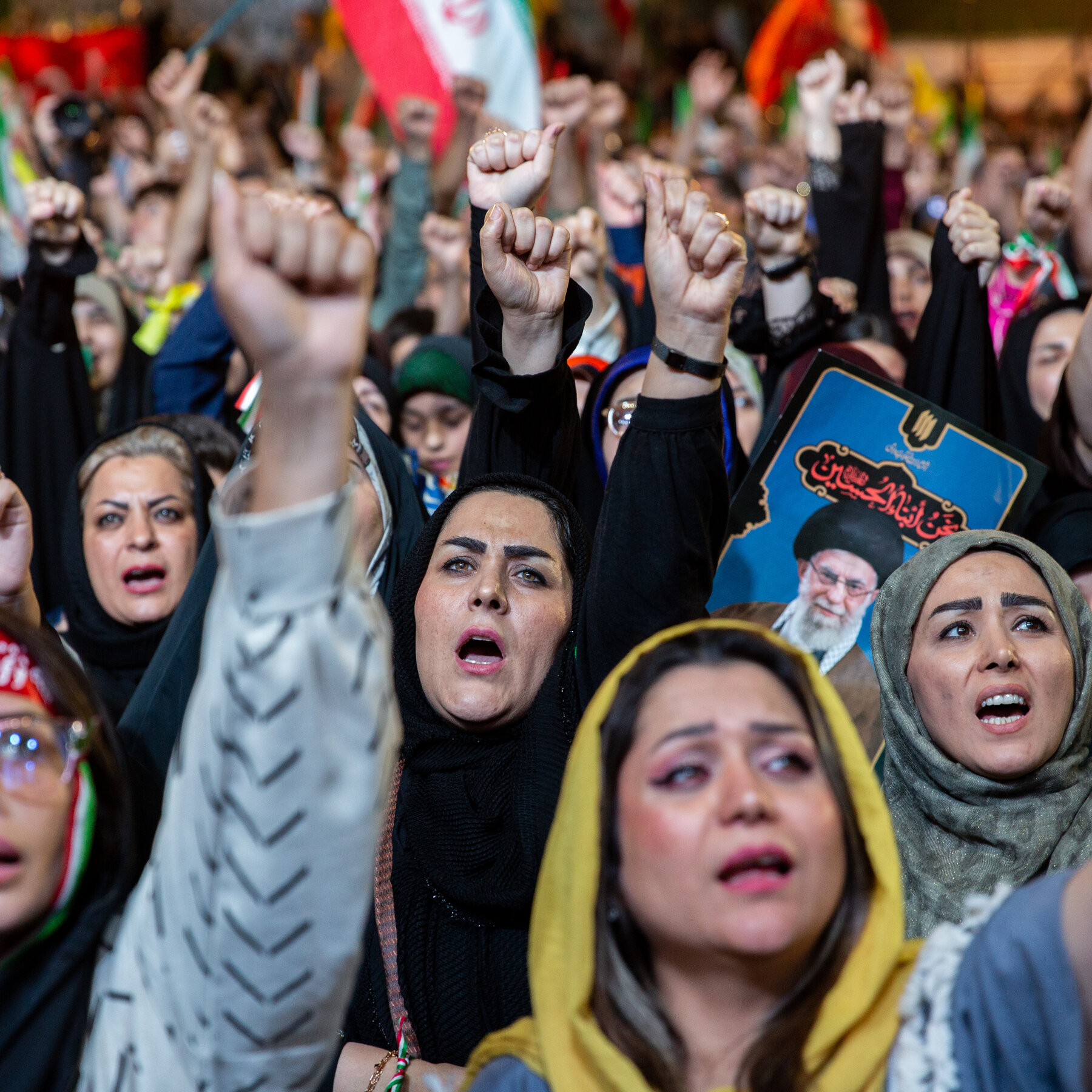
The immediate reaction from Tehran, as reported through Tasnim and Jahan Tasnim — outlets operating under the direction of Iranian state media — was rejection of the framing. Iranian official statements, carried verbatim by state channels, accused the American government of hostility and characterized the negotiating posture as an attempt to impose unilateral terms. The language used in those statements was consistent with established Iranian government rhetoric on the nuclear question: enrichment is a sovereign right, and any agreement must acknowledge that reality.
Whether the public posture reflects private flexibility is the central unknown in this episode. Iranian officials have, at various points in recent months, signalled a willingness to accept constraints on weapons-grade enrichment — a category distinct from the civilian research-grade material currently at issue — in exchange for sanctions relief that restores oil-export revenues and reinstates access to the international banking system. That implicit bargain mirrors, in broad terms, the framework that produced the Joint Comprehensive Plan of Action in 2015. But the current American demand goes further than the JCPOA ever did: it does not merely cap Iranian enrichment at research grade; it appears to require its cessation entirely.
The gap between those two positions — constrained enrichment under international monitoring versus zero enrichment — is not a technicality. It is the fundamental dispute that has prevented a negotiated settlement since 2018, when the Trump administration withdrew from the JCPOA and reimposed the full battery of sanctions that had been lifted under the agreement. Iran's subsequent expansion of its enrichment capacity — bringing its stockpile and enrichment level materially closer to weapons threshold than the 2015 agreement permitted — has been described by the International Atomic Energy Agency as a matter of persistent concern. It has also been used by the current administration as justification for a harder line.
The sanctions regime itself is the subject of a separate and underreported set of pressures. The objective, as stated by the administration, is to reduce Iranian oil exports to near zero — a target that has proven difficult to achieve given the willingness of Chinese refiners to continue purchasing Iranian crude at a discount. The secondary sanctions mechanism that Washington has deployed against Chinese entities engaging with Iranian oil has created friction in the broader US-China commercial relationship without demonstrably reducing Iranian export volumes. If the intent of the sanctions programme is to create economic conditions so acute that Iranian leadership capitulates, the evidence for that strategy's success is thin. If the intent is to demonstrate American resolve to partners in the Gulf and to Israel — both of whom have expressed preference for a more confrontational posture — the signalling has been effective.
The Deal or Else Doctrine, stripped of its rhetorical force, is a bet that leverage is absolute — that economic pressure combined with explicit military contingency will produce Iranian capitulation before domestic political costs in Washington become unmanageable. It is also, implicitly, a statement about the kind of negotiation the White House is willing to conduct: one in which the asymmetry of power is total, the terms are non-negotiable, and the only variable is whether the target complies before the deadline expires.
The risks of that framing are not abstract. Military action against Iranian nuclear infrastructure would, by the assessment of most non-partisan strategic analysts, set back the programme by years at most — a fact that the administration does not appear to dispute, but which it characterises as a sufficient outcome. The retaliation that would follow any strike, through proxies across the region and potentially through disruption of commercial shipping in the Strait of Hormuz, is a variable that the President has not elaborated on in public. US regional partners, including Saudi Arabia and the United Arab Emirates, have publicly expressed concern about escalation pathways, even as they share the underlying objective of preventing an Iranian nuclear weapon.
The European response, historically aligned with a diplomatic resolution, has been muted. Three rounds of US withdrawal from nuclear agreements in sixteen years have corroded whatever residual credibility the Western negotiating position once carried in Tehran. Whether the current ultimatum is a negotiating posture designed to produce a better deal through manufactured crisis, or a genuine expression of preferred policy, is a question that will determine whether European capitals engage seriously or stand aside.
What is clear is that the diplomatic architecture of the past decade — under which the JCPOA provided a framework, imperfect but functional, for constraining Iranian enrichment in exchange for sanctions relief — has been dismantled by the United States itself and not replaced. The result is a negotiation conducted entirely on American terms, with no international body acting as intermediary and no agreed baseline from which to move. The structure of the current engagement — ultimatum, demand for irreversible concessions, explicit military threat — leaves Iran with two options that are both, from Tehran's perspective, strategically ruinous.
The timing is not neutral. Trump's explicit reference to political outcomes and to the midterm results as indicators of mandate suggests that a window exists — one whose closure is tied to domestic political calendars rather than to the pace of Iranian technical progress. That creates an incentive structure in which both sides are managing perceived domestic audiences rather than engaging with each other's substantive concerns.
The question of what a deal would actually look like — one that Iran could accept without precipitating internal political crisis, and that the United States could present as a victory — has not been answered publicly. The gap between zero enrichment and constrained enrichment is not unbridgeable in principle. In practice, the Deal or Else Doctrine appears to have foreclosed that bridge before negotiations have formally concluded. Whether that is a negotiating tactic or a considered policy choice will define the next phase of a standoff whose consequences extend well beyond the nuclear question into the broader architecture of Middle Eastern security, the credibility of American alliance commitments, and the willingness of states worldwide to accept that the dollar-based financial system remains a reliable framework for sovereign economic relations.
Ukrainian President Volodymyr Zelensky, in a letter sent to Trump on the same day as the Iran ultimatum, according to reporting by Fars News International on 27 May 2026, warned of critical deficiencies in Ukraine's missile defence capabilities. The juxtaposition is not incidental. A United States stretched across multiple simultaneous security commitments — a grinding war in Ukraine, an open-ended Middle Eastern confrontation, and competing strategic pressures in the Indo-Pacific — is a United States whose capacity to sustain an ultimatum is itself a variable. The credibility of the "finish the job" clause depends, in part, on the credibility of American power across theatres. That credibility is currently under simultaneous test in ways it has not been since the post-Cold War unipolar moment ended.
The sources do not clarify whether back-channel negotiations are underway beyond the public posturing. The public record reflects two positions that appear, on their face, incompatible. The resolution of that incompatibility — whether through diplomatic compromise, implicit face-saving formula, or the use of force — will be among the defining foreign-policy decisions of this administration. The structure of the current engagement offers no evidence that the path to compromise has been preserved. That absence is, in itself, a choice.
This article was filed from available wire and state-media sources. Monexus will continue tracking negotiations as they develop.
Wire provenance
This editorial synthesis draws on the following public wire/social posts:
- https://t.me/FarsNewsInt/12345
- https://t.me/JahanTasnim/9876
- https://t.me/ClashReport/5555
- https://t.me/disclosetv/4321
- https://t.me/GeoPWatch/7890
- https://t.me/FarsNewsInt/12346
- https://t.me/FarsNewsInt/12347
- https://t.me/tasnimnews_en/11111