Trump's Iran Sanctions Hardball Tests the Limits of 'Maximum Pressure'
President Trump told his cabinet on 27 May 2026 that Washington is not discussing sanctions relief or financial transfers to Tehran — a statement that sits uneasily with recent diplomatic signals from senior administration officials.
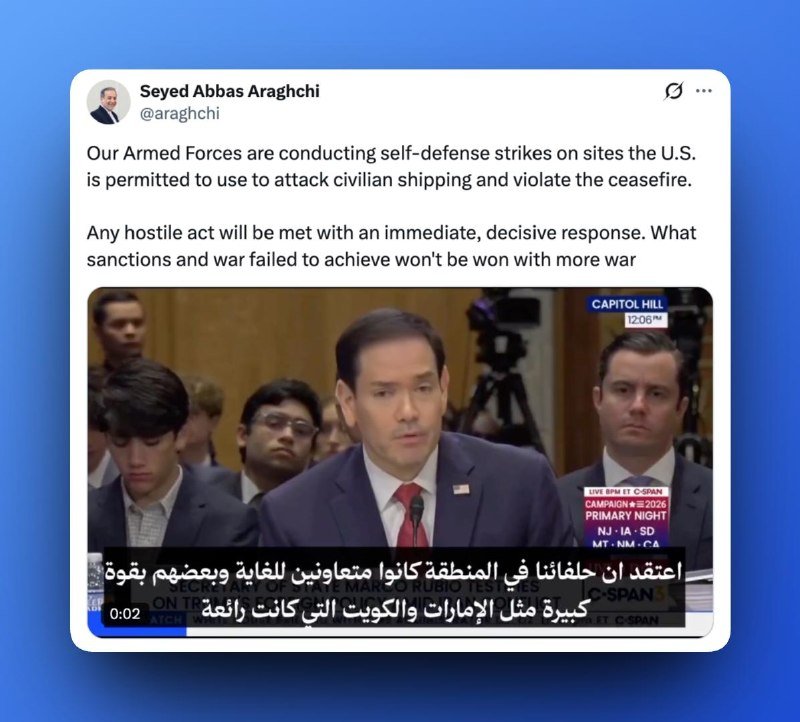
At a cabinet meeting on 27 May 2026, President Donald Trump delivered a flat rejection of any near-term sanctions relief for Iran — a statement that immediately complicated weeks of signals from his own administration that informal nuclear talks with Tehran were quietly underway.
"We are not talking about any reduction of sanctions or giving money to Iran," Trump said at the meeting, according to translations of his remarks carried by Iranian state media outlets Tasnim and Fars News. The phrasing was unambiguous. Whatever back-channel activity had been reported in Western and regional media over the preceding weeks, the president's public position, delivered in front of his cabinet, was no deal is on the table.
The remark landed against a backdrop of competing narratives about the state of US-Iranian engagement. Reporting from Axios and other outlets had suggested senior administration officials were exploring what a negotiated pause in uranium enrichment might look like — a framework that implied some easing of the sweeping oil and financial sanctions that have strangled Iran's economy since 2018. That reporting has not been confirmed by the White House. What is confirmed is that Trump, speaking publicly on 27 May, closed that door — at least rhetorically.
The question is whether the door was ever genuinely open, or whether the administration has been running a deliberate pressure-and-floodlight strategy: public bluster designed to unsettle Tehran while discreet exploratory contact tests whether the Iranian leadership will accept a face-saving formula. That ambiguity is not accidental. It is the architecture.
The Contradiction That Isn't One
It would be easy to read Trump's cabinet-room statement as a reversal. It reads more accurately as a clarification of terms. The administration has consistently said it is willing to talk. It has been far less consistent about what it would offer in exchange for Iranian concessions on enrichment. Trump's statement on 27 May clarified — or perhaps recalibrated — the gap between those two positions.
The distinction matters because it separates negotiating tactics from negotiating substance. Maximum pressure is the tactic. The question of whether it produces results has always depended on what the administration actually wants: regime change, a comprehensive denuclearisation deal, a shorter-term agreement freezing enrichment at weapons-adjacent levels, or simply the managed containment that has defined US Iran policy for the past decade.
Iranian officials, for their part, have been consistent in rejecting any framework that does not begin with sanctions relief. Tehran's position, restated through its own state media in recent weeks, is that the United States must demonstrate good faith by rolling back the measures that constrain its oil exports and banking access before any enrichment cap can be discussed. That position has not shifted. What has shifted — or at least appeared to — is the quality of attention Washington has been paying to the issue.
The apparent contradiction in Washington's signalling may therefore be less a sign of internal disarray than a known diplomatic technique: simultaneous public maximum pressure and private exploratory contact, calibrated to keep all options open while denying Tehran any indication of urgency. Whether that technique works depends on whether Iran reads the public posture as genuine and the private channels as sincere — or whether it treats both as performance.
Structural Constraints on Both Sides
There is a structural reason both governments have struggled to move beyond this holding pattern. For the Trump administration, any visible sanctions relief before November 2026 — framed domestically as rewarding a regime the White House has repeatedly labelled a sponsor of terrorism — carries political costs that the president appears unwilling to absorb. The mid-term calendar is not neutral. It shapes what deals can be done and when.
For Tehran, capitulating to pressure without receiving concrete sanctions relief risks appearing weak before a domestic audience that has absorbed years of nationalist messaging about resistance to American coercion. The Iranian leadership has survived the maximum pressure campaign largely by channelling economic pain into anti-American sentiment. Abandoning that framing prematurely would require a domestic narrative shift that the hardline institutions around the IRGC have no interest in facilitating.
This mutual constraint — Washington's political calendar, Tehran's domestic legitimacy calculus — has kept the two countries in a state of near-negotiation for nearly two years. The pattern is stable precisely because neither side has found a cost-effective exit.
The Regional Dimension
The United States is not negotiating with Iran in isolation. Israel, Saudi Arabia, and the UAE are all watching closely, and their preferences matter to an administration that has made Gulf normalisation a foreign policy priority. Tel Aviv has been explicit: any deal that leaves Iran with a residual enrichment capability, even a modest one, is unacceptable. Riyadh and Abu Dhabi have been somewhat more pragmatic, but they share Israel's underlying concern about a regional arms race if Tehran's nuclear programme is left unconstrained.
These regional actors have their own channels to Washington. Their briefings to American officials reinforce the maximum-pressure posture. A US administration that moved visibly toward sanctions relief without a comprehensive Iranian capitulation would face friction with allies it is simultaneously courting for broader Middle East architecture — the Abraham Accords sequel, if you like, depends on Gulf confidence in American firmness.
That is a real constraint. It does not make a deal impossible, but it makes a premature deal expensive. And it means that Trump's statement on 27 May, whatever its tactical origins, maps onto a real strategic logic: the administration is not ready to pay the regional diplomatic price for partial sanctions relief.
What Remains Open
The sources do not specify what specific proposals, if any, were discussed in any back-channel with Tehran. Axios reporting that described senior officials exploring a temporary enrichment freeze in exchange for sanctions easing remains unconfirmed by the White House. What is confirmed is the public position: no reduction of sanctions, no money.
What the sources do not tell us is whether that position reflects a final decision or a negotiating position. Presidents have been known to say one thing in a cabinet room and another in a handwritten note passed through intermediaries. The gap between public posture and private flexibility has defined US-Iranian diplomacy for forty years. Trump's statement on 27 May is the latest iteration of that gap — not necessarily a closing of the door, but certainly not an opening of one either.
The next signal to watch is whether the diplomatic traffic continues quietly — officials meeting in Muscat or Baghdad or Geneva — while the public rhetoric remains maximalist. If it does, the administration's strategy is what it has been all along: maximum pressure sustained long enough to break the structural deadlock, while leaving a private channel through which a deal can be reached if Tehran blinks first. Whether it blinks, and when, is a question neither Washington nor Tehran has answered.
This publication's coverage prioritised US and Western-wire sourcing on administration statements. Iranian state-adjacent sources (Tasnim, Fars) were used to verify the president's direct quotation and to surface Tehran's consistent counter-position on sanctions relief, presented alongside the Axios reporting on back-channel discussions for structural balance.
Wire provenance
This editorial synthesis draws on the following public wire/social posts:
- https://t.me/tasnimnews_en
- https://t.me/JahanTasnim
- https://t.me/FarsNewsInt