Trump's Iran Ultimatum Is a Venezuela Playbook in Disguise
When Donald Trump said on 27 May 2026 that the US could close an Iran war quickly and might have to, he was not describing a military plan — he was describing an economic siege that has already begun, and whose logic runs through Caracas.
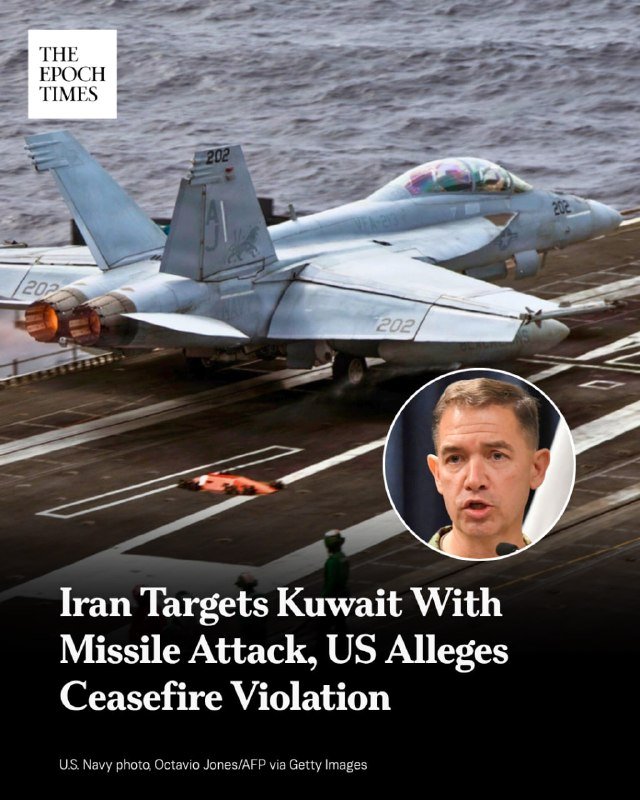
There is a moment in every coercive campaign when the language shifts from negotiation to siege. On the South Lawn of the White House on 27 May 2026, Donald Trump crossed it. "They're starting to give us the things that they have to give us," he told reporters. "And if they won't, then the man on my left is going to finish them off." The man on his left was Defense Secretary Pete Hegseth. The message was not diplomatic theatre. It was a threat of annihilation dressed in the syntax of a deal that does not yet exist.
The Trump administration's position, as spelled out in the same press interaction, has no precedent in recent American Iran policy. "We're not talking about any easing of sanctions or giving money," Trump said. "No sanctions, no money, no nothing." This is not how arms-control agreements work. Classical negotiation theory — and every US approach to Tehran since 2015 — assumed that pressure and inducement operated in tandem: sanctions eased in exchange for verified concessions on enrichment, monitoring, and weapons testing. Trump has removed the inducement side of the ledger entirely. What remains is pure coercive maximum — demand compliance, threaten annihilation, offer nothing.
The Venezuela Precedent
Trump did not invent this style. He applied it to Venezuela in early 2025, declaring on social media that the US had "taken over Venezuela in one day" — a claim that was factually false in the literal sense but structurally accurate as a description of what coercive economic pressure can achieve. The combination of secondary sanctions on oil exports, asset freezes on state entities, and aggressive diplomatic isolation had forced the Maduro government to the table without a shot being fired. For an administration that operates on the logic of deals and dominance rather than multilateral institutions, the Venezuela outcome was a proof of concept: maximalist demands, threat of force, no concessions, results.
Iran is a harder target. Venezuela's economy was already hollowed out by years of sanctions and mismanagement; Tehran still commands a functional industrial base, a regional network of proxy forces, and the Strait of Hormuz — through which roughly a fifth of global oil trade passes. The leverage calculus is different. But the administrative instinct is the same: present an ultimatum, demonstrate willingness to escalate, wait for internal fracture. Whether that calculus accounts for the difference between Caracas and Tehran is the central question this moment raises.
The Strait and the Leverage Question
Trump addressed the Hormuz directly on 27 May. "The Strait has gotta be open to everybody. It's international waters," he said. "[Iran] would like to control it; nobody's going to control it." This framing — framing open waters as a US security interest rather than an Iranian provocation — is consistent with Washington's long-standing position, but the way it was delivered, juxtaposed with a direct threat of military force, functions as a secondary ultimatum layered on top of the nuclear demand. Iran cannot simultaneously face an existential ultimatum on its nuclear programme and a prohibition on using its most significant geographical asset as leverage.
Iran's response will be shaped less by ideology than by the internal politics of a regime that has survived maximum pressure before. The Trump administration's decision to eliminate the sanctions-easing pillar of previous frameworks is, on its face, an attempt to recreate the conditions that produced the Venezuelan capitulation: isolate the target, demonstrate that international rescue is unavailable, and wait for the leadership to calculate that survival requires compliance. Whether that framework works against a state with Tehran's regional depth and institutional resilience remains genuinely contested. Administration officials have publicly characterised military action as a last resort, not a preferred instrument. But the man delivering that message has also just described "finishing them off" as an active option on the table.
What the Regional Map Looks Like
The nuclear question is not the only pressure point. Hezbollah released footage on 27 May of its fighters operating in close proximity to IDF positions in southern Lebanon — a deliberate signal that the Iran-aligned front is watching and that any US strike on Iranian nuclear infrastructure would carry a wider regional cost that the Trump administration would have to absorb. Israeli officials have privately expressed concern, per several regional wire reports in recent weeks, about being drawn into a conflict whose contours they did not design. That concern sits uneasily alongside the White House's apparent confidence that the Hormuz threat alone deters Iranian escalation.
There is a coherent argument that the Trump administration's approach is less about achieving a comprehensive nuclear deal than about resetting the terms of Iran's regional role. The nuclear question — uranium enrichment levels, monitoring access, breakout timelines — is real, but it functions as the opening negotiating position. The deeper objective, from this read, is a structural accommodation in which Iran's regional network contracts, its economic participation in global trade normalises under severe constraints, and its nuclear programme remains below weapons threshold under loose monitoring. That is not the Vienna deal. It is not really a deal at all. It is a managed subordination.
Whether Tehran accepts managed subordination, and whether its regional allies allow the terms to be imposed without independent escalation, will define the next phase of a conflict that has been simmering since 2018. Trump said he believes the US "may have to" act militarily, and that the war could be closed quickly if it comes to that. The administration is clearly hoping it does not come to that — and that the Venezuela playbook, applied at scale, produces a result without a shot fired. The bet is that economic attrition, diplomatic isolation, and the constant presence of the military option are sufficient to break the will of a regime that has survived far worse.
The region is watching closely. The Strait of Hormuz is open for now. Whether that remains true depends on calculations in Tehran that are not visible from the South Lawn, and on whether the ultimatum's logic — demand everything, concede nothing — contains within it the seeds of the very conflict it is designed to avoid.
Wire provenance
This editorial synthesis draws on the following public wire/social posts:
- https://t.me/osintlive/4823
- https://t.me/osintlive/4823
- https://t.me/osintlive/4823
- https://t.me/osintlive/4823
- https://t.me/osintlive/4823