Trump's Maximum-Pressure Reset: Why the US Is Offering Iran a Deal It Cannot Accept
The White House has presented Iran with a stark choice: dismantle its enriched-uranium programme and receive nothing in return — or face military escalation. That framing, delivered across three consecutive statements on 27 May 2026, suggests the administration is not seeking a deal but a capitulation dressed as one.
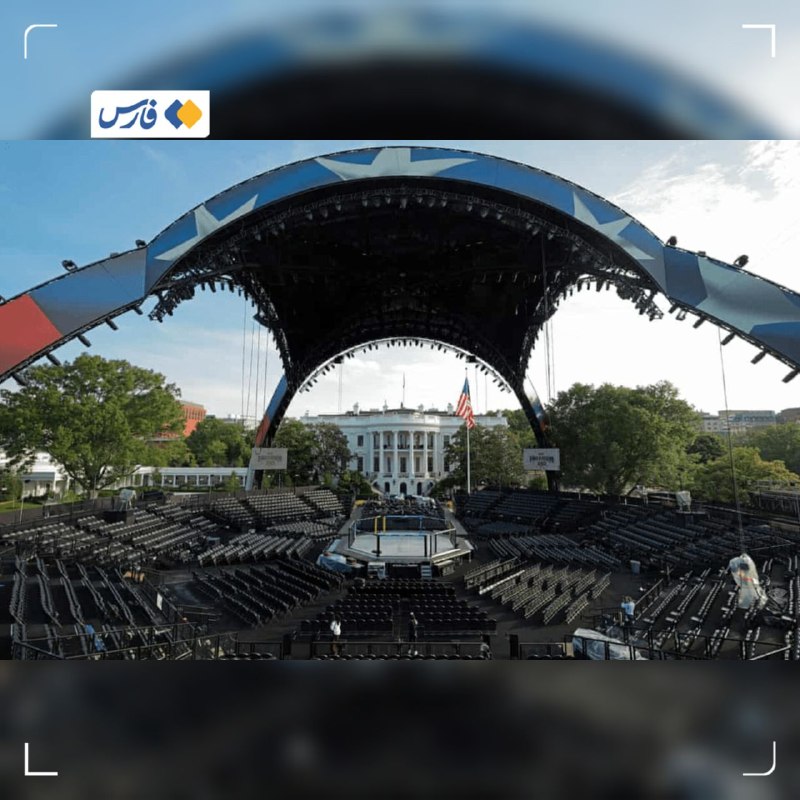
On 27 May 2026, in an interview with PBS NewsHour, President Donald Trump delivered a position on Iran that the administration has spent weeks quietly constructing: Iran may come to the table, but only on American terms, and those terms include no economic relief in return. "No, no, not at all. Not sanctions relief, no," Trump said when asked whether sanctions easing was on the table in exchange for Iran's highly enriched uranium stockpile. The statement was not a negotiating position — it was a disqualification. It closed off one of the few leverage points Tehran has historically used to sustain a diplomatic track, and it did so in public, in a format designed to foreclose ambiguity.
That same afternoon, the President's Secretary of Defense provided the military complement to the diplomatic signal. Speaking to reporters, Pete Hegseth described Iran's current predicament in blunt terms: its missile programme is stalling, its drone production is constrained, and its naval capabilities have been degraded by sanctions and the regional isolation of recent years. "They may have missiles, but they can't build more right now. They can't build more drones. They can't build more ships," Hegseth said, before adding — in language that has since circulated widely across regional media — that Iran had effectively come to the table because it had run out of options. "They came and cried uncle to talk," he said. The phrase, unironic in the context of the briefing, captures something essential about how the current administration conceptualises the diplomatic moment: not as a mutual process with give and take, but as a reckoning.
The convergence of these two statements — from the President and his Secretary of Defense, delivered within the same three-hour window on a single Tuesday — constitutes the most explicit articulation yet of what the Trump administration actually wants from Iran. It is not a deal in the conventional sense, with phased concessions and reciprocal steps. It is a structural submission, in which Iran dismantles the most sensitive elements of its nuclear programme while receiving nothing from the US side beyond the cessation of further military pressure. Whether that constitutes a negotiating strategy or a predetermined rejection of diplomacy depends on how one reads the administration's own publicly stated intentions.
What Iran Is Being Asked to Surrender
The central demand — that Iran give up its highly enriched uranium — sounds, in the administration's framing, like a reasonable prerequisite for any diplomatic engagement. In practice, it is the most significant concession Tehran could make. Iran's enriched-uranium programme has been the product of decades of investment, both financial and political. It represents not merely a weapons potential but a bargaining chip of considerable value, one that successive Iranian governments have used to signal deterrence and extract concessions from international interlocutors.
The stockpiles, under any realistic scenario, cannot be handed over without a face-saving framework — some form of compensation, sanctions relief, or international validation that the transfer is voluntary rather than coerced. Without that, handing over the enriched uranium would amount to unilateral disarmament by a state that has spent years calculating that the programme is central to its security posture. The notion that Iran would do so in exchange for nothing — for the mere cessation of threats — is, on its face, difficult to sustain as a realistic diplomatic outcome.
What the administration has offered instead, in the clearest terms Trump articulated on 27 May, is that Iran should expect to keep its money — the frozen central bank assets that have been held offshore — only when it has "behaved properly" and completed whatever acts Washington deems satisfactory. "We are not talking about any easing of sanctions or giving money," Trump said. "We have control of money that they claim is theirs. We will keep control of that money. When they behave properly and do what they have to do, we'll talk." That formulation shifts the entire architecture of the negotiation: Iran must first demonstrate compliance, after which talks might begin, after which relief might be considered. There is no phase-in, no partial lifting, no face-saving off-ramp built into the framework.
This matters because prior diplomatic frameworks — the JCPOA of 2015, the ongoing informal talks in Oman and Qatar — were structured around a sequence in which Iran would take verified steps to limit its programme in exchange for verified sanctions relief, implemented in coordinated tranches. The Trump administration's position collapses that sequence entirely. It demands the end-state in advance and offers no credible pathway to the relief Iran would need to justify such a concession to its own domestic audience.
Tehran's Counter-Position and the Regional Dimension
Iranian state media, reporting on the Trump statements within hours of their publication, framed the position as evidence that the US approach was designed to fail rather than to succeed. That framing, while self-serving, is not without structural support. A negotiation structured so that one party must surrender its primary leverage in exchange for nothing cannot, by most definitions, produce an agreement. It can produce a capitulation, if the pressured party is sufficiently weakened to accept terms; or it can produce a collapse of the process, if Tehran calculates that accepting such terms would be more damaging than walking away.
The military dimension complicates the calculation on both sides. Hegseth's remarks — that Iran cannot currently replace its missiles, drones, or naval vessels at the pace its deterrent strategy requires — suggest the administration believes Iran is militarily vulnerable in a way that strengthens its negotiating hand. But that vulnerability cuts both ways. A state that believes it cannot sustain a military build-up may be more, not less, inclined tocling to the nuclear programme as the one element of its defence architecture that remains fully under its own control.
The broader regional context matters here in ways the administration appears to underweight. Iran's network of allied forces — in Lebanon, in Yemen, in Iraq — constitutes a second-order deterrent that the US has spent two decades attempting to contain. Any deal that requires Iran to dismantle its nuclear programme while leaving those regional relationships intact would represent a significant restructuring of the Middle Eastern balance of power in favour of US regional partners. That structural outcome is, presumably, part of the appeal for the administration. But it also means Iran would be surrendering its one independent strategic asset — its nuclear potential — in exchange for a future in which its regional influence is still subject to American pressure through other means.
The Strategic Logic Behind the Hard Line
There is a coherent, if aggressive, logic to the administration's approach. Trump's first term saw a policy of "maximum pressure" that produced a wave of sanctions but no renegotiation of the nuclear deal. His second-term team appears to have concluded that the failure was not in the pressure but in the willingness to offer relief — that the previous administration, in offering sanctions relief, validated Iran's bargaining position rather than undermining it. The current approach, in that reading, is to remove the incentive structure entirely and see whether Iran, facing an economy under sustained maximum pressure, will capitulate on terms the US finds acceptable.
That logic has a historical parallel in the 'snapback' mechanism of the original JCPOA — the provision that allowed the US to restore all UN sanctions if Iran violated the agreement. That mechanism was activated by the Trump administration in 2020 as a means of destroying the deal rather than enforcing it. The current approach suggests the administration has extended that logic: rather than using snapback to enforce compliance, it is using the threat of sustained military pressure to achieve compliance with terms the US would design unilaterally.
The problem with that strategy — and this is where the structural critique becomes difficult to dismiss — is that it relies on Iran making the rational calculation that capitulation is preferable to sustained pressure. That calculation requires Iran to believe the US will follow through on its military threats if Iran refuses. Hegseth's own remarks — that Iran has already "cried uncle" and come to the table — suggest the administration believes that threshold has been crossed. If that assessment is wrong, and Iran calculates that the military threat is a bluff, the negotiation will have to find another footing — or collapse entirely.
There is also the question of what happens to the broader diplomatic architecture if the Iran nuclear file is treated as purely a bilateral US-Iran matter, stripped of European and multilateral involvement. The JCPOA was, whatever its flaws, a multilateral agreement with a built-in verification framework involving the IAEA, European parties, and Russia and China as guarantors. A unilateral US-Iran deal — if one can even be constructed on the terms the administration is currently setting — would lack that multilateral cover, making verification more difficult and making any future US administration more likely to simply walk away again, as the first Trump administration did in 2018.
What Happens if Tehran Says No
The most direct consequence of the administration's current posture — if Iran declines to surrender its enriched uranium for no concession — is a military escalation. Trump has been explicit on this point. "If they do, that's great. If they won't, then Hegseth will finish them off," the President said on 27 May. The phrasing, casual in the extreme, conceals a decision of enormous gravity: that the US is prepared to initiate military action against a state with a documented advanced nuclear programme, in a region where any such action carries a high probability of triggering wider conflict through Iran's allied networks.
Hegseth's assessment that Iran cannot currently replace its critical military hardware is a direct signal that the administration believes military action would be more effective now than it would be in twelve or twenty-four months. That assessment may be correct — sanctions have demonstrably degraded Iran's military-industrial capacity, and its air defence systems remain limited in their coverage. But a strike that degrades Iran's facilities does not eliminate its knowledge, its engineering capacity, or its stored material. Military action, even if technically successful in the short term, would set in motion a dynamic in which Iran rebuilds — behind sanctions, under IAEA monitoring constraints that would no longer apply, and with a national justification for weapons development that the current regime has thus far resisted.
The alternative scenario — that Iran accepts the framework as currently structured — is equally unsettling. A surrender by Iran, accepted as a result of economic and military pressure rather than a negotiated give-and-take, would not produce a stable diplomatic resolution. It would produce a resentful, isolated state with a demonstrated capacity for nuclear research, stripped of its most visible leverage but not of its underlying interest in maintaining a deterrent capability. The history of arms control agreements negotiated under duress suggests those outcomes tend to be temporary — they resolve the immediate crisis without resolving the underlying incentives that drove the programme in the first place.
The Stakes Beyond the Nuclear File
What the current moment reveals, beyond the specific question of Iran's enriched uranium, is a US administration that has decided the architecture of the 2015 nuclear deal — a multilateral framework with phased sanctions relief and verified dismantlement — is not merely imperfect but structurally unacceptable. That is a defensible position. The JCPOA did not address Iran's regional activities, its ballistic missile programme, or its domestic human rights record. It was, as its critics noted, a transaction rather than a transformation.
But the alternative the administration is constructing — a demand for unilateral disarmament in exchange for the promise of future talks — is not a more ambitious version of that critique. It is a different kind of failure. A deal that Iran cannot accept without destroying its own negotiating credibility is not a deal at all. It is a pretext for escalation, dressed in the language of diplomacy.
The question for the coming weeks is whether the administration will interpret Iran's likely refusal as evidence that pressure must be intensified — and the military option activated — or as a signal that the terms themselves need revision. The statements of 27 May do not suggest the latter. They suggest an administration that has decided maximum pressure is not a means to a deal but a substitute for one. Whether that calculus is strategically sound or catastrophically misjudged depends entirely on whether Iran, faced with the alternative of military conflict, ultimately capitulates. The historical record of states choosing capitulation over existential military risk is not encouraging for those who are betting on it.
This article draws on statements from the White House and Pentagon on 27 May 2026, as reported across regional wire services and government-adjacent channels. Monexus notes that the original framing across US wire outlets leaned toward treating the administration's position as a negotiating opening, whereas this analysis reads it as a pre-condition for escalation.
Wire provenance
This editorial synthesis draws on the following public wire/social posts:
- https://t.me/ClashReport/4821
- https://t.me/ClashReport/4820
- https://t.me/ClashReport/4819
- https://t.me/BellumActaNews/1142
- https://t.me/FarsNewsInt/3105
- https://t.me/GeoPWatch/1243
- https://en.wikipedia.org/wiki/Joint_Comprehensive_Plan_of_Action