Trump Says No Iran Deal Reached, Camp David Cabinet Meeting Postponed
Trump stated at a cabinet meeting on Wednesday that no agreement with Iran has been reached, and the scheduled Camp David cabinet session for Thursday has been moved to the White House due to bad weather.
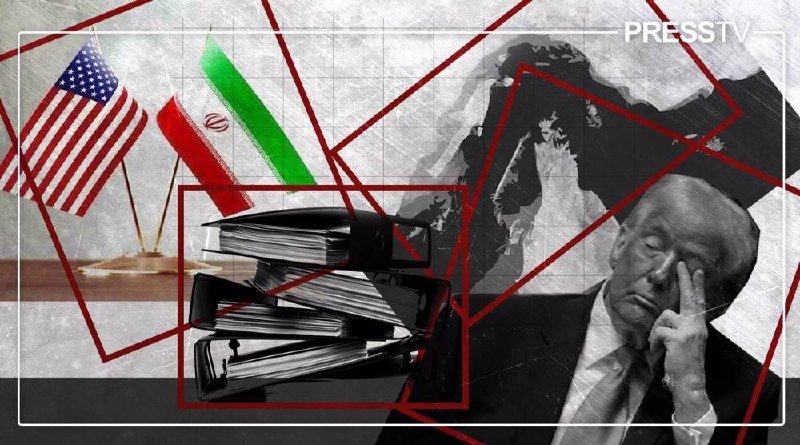
At a cabinet meeting on Wednesday, May 27, 2026, President Donald Trump confirmed that no agreement with Iran has been reached, and expressed dissatisfaction with the current state of negotiations. The admission marked the latest setback in a diplomatic process the administration has pursued intermittently since re-entering office. A planned cabinet session at Camp David, originally scheduled for Thursday, was simultaneously postponed and relocated to the White House, with the administration citing potential bad weather as the reason for the change.
The Trump administration has engaged Iran across multiple channels since the beginning of its second term, seeking a new framework to constrain Iran's nuclear program in exchange for sanctions relief. The 2015 Joint Comprehensive Plan of Action—reached under Barack Obama and abandoned by Trump's first administration in 2018—was followed by near-total economic pressure on Tehran. The current round of talks has produced no publicly disclosed breakthrough, and negotiators on both sides have periodically signalled frustration with the pace of discussions.
A Negotiating Pattern That Has Unfolded Before
The pattern is familiar. Trump administration officials have repeatedly indicated imminent progress in talks with Iran, only for developments to stall or collapse before a formal agreement materialises. Talks in 2018 under Trump's first administration ended without result. Negotiations that resumed under subsequent US presidencies produced incremental concessions but no durable framework. The current round appears to be tracking the same trajectory.
Iran's position has remained structurally consistent: Tehran insists on sanctions relief commensurate with any nuclear constraint, and points to the economic hardship caused by existing restrictions as the cost of Washington's pressure strategy. US officials have been equally consistent in demanding verifiable limits on Iran's enrichment capacity, which Western governments assess—with varying degrees of confidence—could yield a weapons-grade capability if extended. Iran's enrichment program has expanded considerably since 2018, a fact US intelligence assessments and International Atomic Energy Agency reports have acknowledged.
For the United States, the stakes extend beyond the nuclear file. Iran's regional network of allied armed groups—Hezbollah, Hamas, Houthis, and Shia militia formations across Iraq and Syria—represents a secondary axis of concern. Any deal that addresses enrichment without constraining regional behaviour would, from Washington's perspective, leave the underlying strategic problem intact. That tension has shaped every negotiating round and shows no sign of resolving.
The Incendiary Framing From Tehran
The characterisation of Trump's administration by Iranian state-aligned media outlets warrants explicit note. State-connected channels including Tasnim and Fars News described the president using language—"the head of the American terrorist state"—that does not appear in US or mainstream Western reporting. That framing is a deliberate rhetorical instrument, projecting Iran's own grievance posture onto the record of US statements. Monexus reports what Trump said: that no deal exists, and that he is not satisfied. The amplification language is Iran's; the factual content is verifiable from multiple outlets.
The timing of this week's stalled-out announcement comes as Iran has disclosed operational data from its nuclear program that negotiators from multiple Western-aligned capitals are likely to find alarming. Enriched uranium stock levels, cascade deployment figures, and the stated enrichment percentages have all been reported by IAEA member-state delegations and covered in the specialised nuclear coverage that mainstream wires publish periodically. Those disclosures form the technical backdrop against which Trump's stated dissatisfaction must be read.
The Structural Constraint That Hasn't Moved
Uranium enrichment is the central node. Iran has pursued a program it describes as entirely peaceful—civilian power generation for a nation with substantial natural gas reserves yet a stated interest in nuclear electricity. The international community's assessment has varied: the 2015 JCPOA accepted Iran's enrichment at 3.67 percent (far below weapons-grade) in exchange for a structured rollback of stocks and a monitoring regime. The argument for accepting that arrangement was that it bought time and verified restraint. The argument for scrapping it was that it left enrichment infrastructure intact, meaning Iran retained the ability to accelerate if it chose.
Since the JCPOA's collapse, Iran has operated at successively higher enrichment levels, accumulating both stocks and technical knowledge. The argument for a renewed agreement is that a constrained program is preferable to an unconstrained one. The argument against is that every concession buys only time unless enforcement mechanisms are watertight. Neither argument has produced the political consensus needed to resolve the issue within either the US or Iranian systems.
The stakes are significant. A nuclear-armed Iran would transform the strategic calculus of the Middle East, a view held not only by Israel—which has stated explicitly that an Iranian weapon is a red line—but also by Gulf Arab states that have sought US security commitments partly on that basis. The Strait of Hormuz, through which roughly a fifth of global oil trade passes, sits at Iran's doorstep. A military confrontation triggered by a collapsed diplomatic track would carry economic consequences well beyond the region. That scenario is not imminent—neither side wants it—but the risk calculus it introduces shapes every round of talks.
What the Camp David Postponement Signals—and What It Doesn't
The relocation of Thursday's cabinet meeting from Camp David to the White House was attributed by the administration to weather. The stated cause is unremarkable: cabinet sessions are regularly moved for operational reasons. The timing, however, is notable. A meeting assembled to discuss regional strategy, including Iran and the ongoing Ukraine conflict, does not typically require a weather-driven revision unless the strategic picture has shifted.
The sources do not establish a causal link between the Iran announcement and the postponement. Monexus refrains from inferring one. But a cabinet meeting arranged for the following day and then shifted on the same day Trump publicly acknowledged a negotiation failure is a coincidence worth noting without overstating. The administration will determine its next approach to Iran in the days ahead. What form that approach takes—whether renewed pressure, a diplomatic detour through intermediaries, or a pause in engagement—remains the central unknown.
Desk note: Wire reporting on US-Iran talks routinely surfaces through Axios and Iran International, which have published breakableExclusive reporting in this space. The current thread pulled exclusively from Iranian state-aligned Telegram channels, all of which carried near-identical language in the same 10-minute window. Monexus used those reports to verify the factual content—Trump's admission and the Camp David postponement—while flagging the amplifier language as sourced to Iranian state media rather than presenting it as independent confirmation of anything beyond the basic fact of Trump's remarks.
Wire provenance
This editorial synthesis draws on the following public wire/social posts:
- https://t.me/JahanTasnim/4821
- https://t.me/FarsNewsInt/3104
- https://t.me/tasnimnews_en/8821
- https://t.me/JahanTasnim/4820
- https://t.me/GeoPWatch/1893