Trump's Plutonium Gambit: Nuclear Startups, Warhead Stockpiles, and the Civilian Power Question
The Trump administration is moving to transfer weapons-grade plutonium from decommissioned warheads to nuclear startups, a policy that cuts across nonproliferation norms and energy strategy simultaneously. The plan warrants scrutiny on multiple fronts — safety, liability, and the gap between the administration's nuclear ambitions and the regulatory infrastructure that would need to support them.
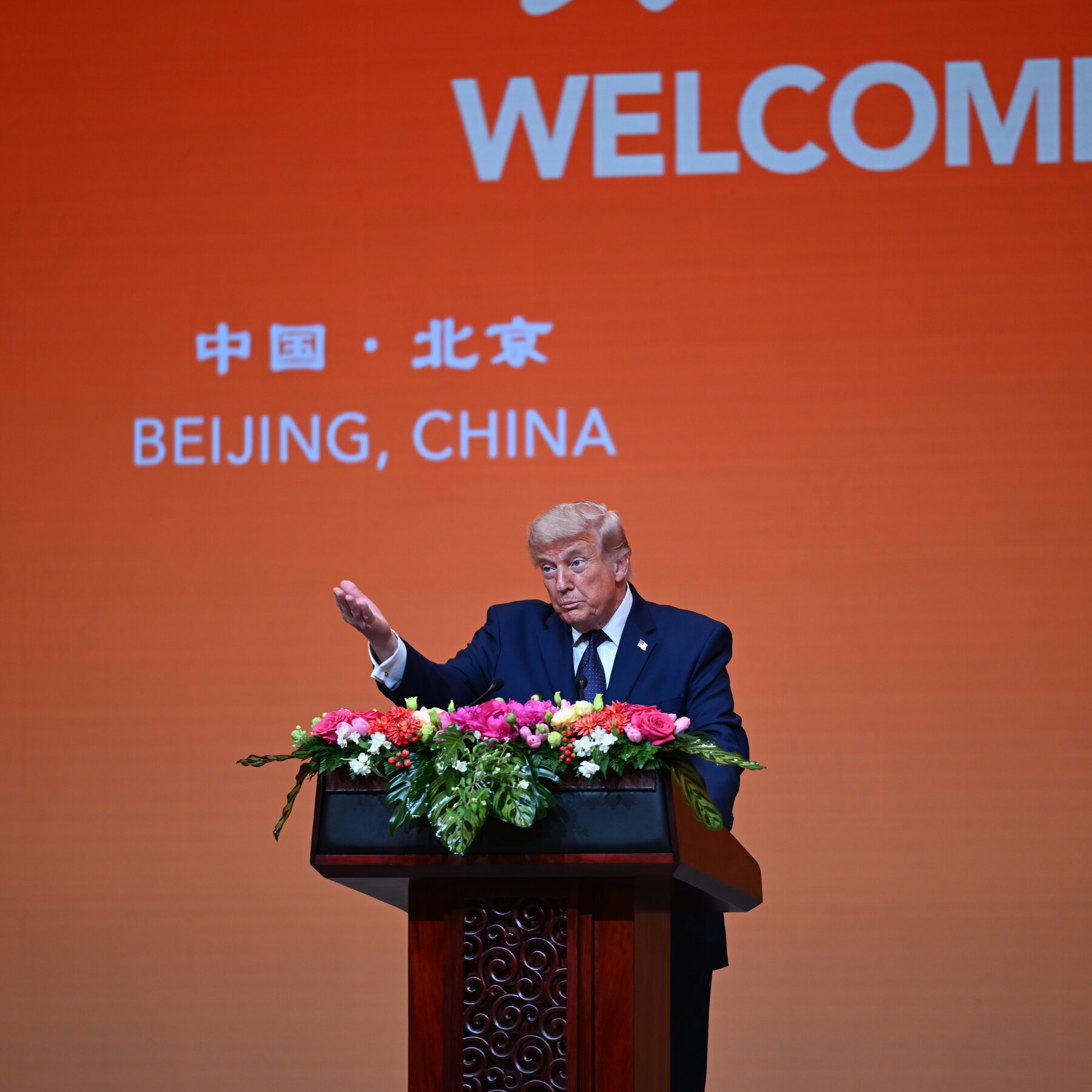
The Trump administration is advancing a plan to transfer weapons-grade plutonium from decommissioned nuclear warheads to private nuclear startups for use as reactor fuel — a policy that blurs the line between defense stockpile management and commercial energy development, and one that has drawn immediate scrutiny from nonproliferation analysts and energy economists alike.
The proposal, first reported by the New York Times and confirmed by multiple outlets on 26 May 2026, would direct the Department of Energy to make available quantities of plutonium currently held in the national weapons stockpile. The administration has framed the move as a pragmatic solution: the United States maintains what officials describe as dozens of tons of weapons-grade plutonium with no current weapons application, while the domestic nuclear sector is simultaneously seeking stable fuel supply chains. Putting the two together, in the administration's logic, serves both security and energy objectives simultaneously.
The case for the policy rests on genuine supply-chain considerations. American commercial reactors currently rely on a limited number of enrichment pathways, and domestic production capacity has not kept pace with the anticipated growth in reactor construction. The Soviet-era supply of highly enriched uranium — converted to civilian reactor fuel under a bilateral nonproliferation agreement with Russia — was a backbone of the US fuel market for decades; that arrangement has become less reliable as geopolitical tensions with Moscow have deepened. Plutonium disposition from weapons stockpiles is not a novel concept in the abstract: both the United States and Russia have previously pursued blended oxide (MOX) fuel approaches that would convert weapons-grade material into reactor-grade fuel. The US MOX program at Savannah River Site was ultimately cancelled in 2018 after cost overruns exceeding $17 billion, a history that critics of the current proposal are already citing as precedent for the kind of technical and budgetary overreach that can beset weapons-to-fuel programs.
The more immediate concerns are operational and regulatory. Nuclear startups — the intended recipients of the transferred plutonium under the administration proposal — are, almost by definition, not operators of mature commercial facilities. Many are developing advanced reactor designs that have yet to receive Nuclear Regulatory Commission construction permits, let alone operating licenses. The question of who bears liability for the handling, conversion, and eventual use of weapons-origin material in facilities that may not yet exist in their final form is not answered in the current framing. Plutonium is not a commodity like coal or natural gas; it is a controlled nuclear material with weapons applicability, subject to International Atomic Energy Agency safeguards and export controls that do not travel easily across corporate or national boundaries.
The nonproliferation dimension is real and has been acknowledged by analysts across the political spectrum. Weapons-grade plutonium is defined as any plutonium with more than 80 percent plutonium-239 — the isotope most suitable for nuclear weapons. Transferring material of this grade to private, non-governmental entities — even under the most rigorous physical protection regimes — establishes a precedent that sits uneasily alongside decades of international effort to keep weapons-origin material out of civilian commerce. The normalization of such transfers, if other states follow the American lead, could gradually erode the distinction between civilian and military nuclear fuel cycles that underpins the Nuclear Non-Proliferation Treaty framework.
The administration, for its part, has not addressed nonproliferation concerns directly in its public statements. A separate policy development announced on the same day — a proposed requirement that certain federal workers sign non-disclosure agreements as a condition of continued employment — suggests the executive branch is more focused on internal management of information than on external accountability for material transfers. The NDAA proposal, posted to Polymarket's tracking feed on 26 May, is likely to be read in conjunction with the broader reorganization of federal workforce compliance regimes underway since the beginning of the second Trump term.
The stakes are not abstract. If the plutonium transfer proceeds and the startups receiving the material fail to achieve commercial operation — as several high-profile advanced reactor programs have in recent years — the United States could find itself with weapons-origin material in the possession of private entities that lack the infrastructure to process it safely or to return it to federal custody. The Savannah River Site, which handled the MOX program, is not designed as a long-term repository for material awaiting resolution. A decade-long gap between material transfer and fuel fabrication would create a regulatory and physical security challenge that current Department of Energy planning does not appear to have addressed in detail.
The administration's health pronouncements — Trump declared himself in "perfect health" following a physical examination on 26 May, a statement reported by Reuters — have no direct bearing on the nuclear file. But the timing is not entirely without significance. An administration that frames its own physical stamina in maximalist terms may be predisposed to treat complex, multi-decade technical programs as problems that can be resolved by executive action and private-sector enthusiasm rather than by the patient, institution-bound work of regulatory compliance and infrastructure development. Whether that disposition serves the country well depends entirely on whether the plutonium-for-startups program is the kind of thing that bends to presidential will — and the historical record of federal nuclear programs suggests it is not.
This desk monitored how wire services framed the plutonium transfer: Reuters led with Trump's health announcement while burying the nuclear policy in the second paragraph; TechCrunch led with the policy detail but framed it primarily as a startup story rather than a nonproliferation or energy security story. Monexus leads with the material classification and the operational gap between weapons-origin plutonium and a startup sector that has not yet demonstrated large-scale commercial capability.
Wire provenance
This editorial synthesis draws on the following public wire/social posts:
- https://x.com/unusual_whales/status/1921967837260021968
- https://x.com/unusual_whales/status/1921970247863083019