Trump's Strait Threats Expose the Fragility of U.S. Gulf Diplomacy
The Trump administration's public threats against a longtime Arab ally over control of a strategic maritime passage signal a reckless departure from established U.S. Gulf strategy, with consequences that extend well beyond Muscat.
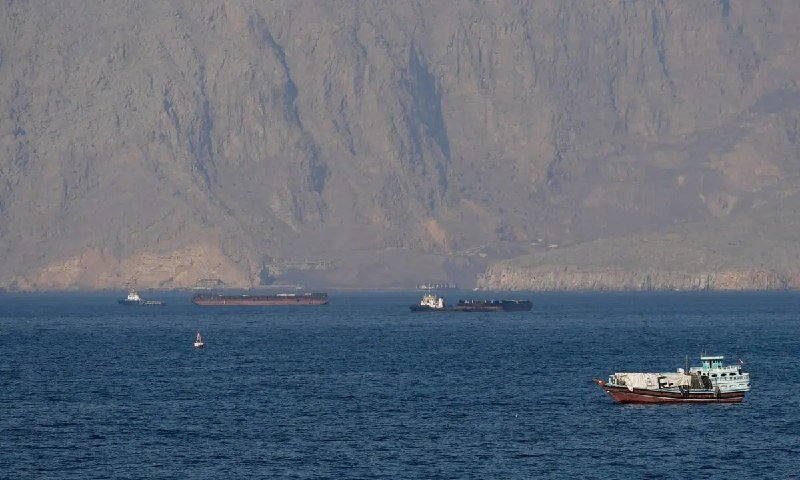
The Trump administration issued explicit threats against Oman on Tuesday, a senior Arab ally whose territory hosts one of the world's most critical maritime chokepoints, before the president attempted to walk back the language with a dismissive qualifier that did little to reassure regional partners.
The exchange, reported by The New York Times and confirmed by Middle East Eye, marks a significant rupture in a bilateral relationship that has endured, with varying degrees of warmth, for more than two centuries. Oman has served as a discreet diplomatic back-channel between Washington and Tehran since the 1979 revolution, and its Sultanate controls, or co-controls, access to the Strait of Hormuz — the narrow passage through which roughly a fifth of globally traded oil moves annually.
The president's language, as characterised by the sources, was unambiguous. Hours later, his caveat — that the Sultanate would ultimately be "fine" — read less like a policy reversal than a verbal shrug.
The Strait at the Centre of the Crisis
The Strait of Hormuz is not an abstraction. The waterway, bounded on its southern edge by Oman and on its northern shore by Iran, handles approximately 21 million barrels of oil per day. Any disruption — whether military, political, or logistical — sends immediate tremors through global energy markets. For Washington, maintaining the free passage of vessels through Hormuz has been a stated strategic interest across administrations of both parties for four decades.
That backdrop makes Tuesday's exchange unusual. U.S. presidents have, on occasion, applied coercive pressure on Gulf states over specific policy disagreements. But the public and explicit nature of the threat against a partner whose cooperation on intelligence, counterterrorism, and diplomatic mediation has been consistent and consequential represents a qualitative shift in tone.
The sources do not specify what concession the administration sought from Muscat, nor do they detail whether any specific incident — a shipping dispute, a facilitation of Iranian access, or a diplomatic initiative the White House opposed — triggered the public salvo. What the reporting does establish is that the threat was made, and that it was subsequently qualified, not retracted.
A Longtime Partner's Calculated Silence
Oman's response, as of Tuesday evening UTC, had not been publicly articulated through official channels. That restraint is consistent with the Sultanate's long-standing diplomatic doctrine: measured silence in the face of external pressure, calibrated engagement, and an institutional preference for quiet negotiation over public confrontation.
The approach has served Muscat well. Oman has navigated between the interests of larger powers — the United States, Saudi Arabia, Iran, and increasingly China — without becoming a subordinate to any of them. Its ports host U.S. Navy vessels under a longstanding access agreement. Its intelligence services maintain channels to Tehran that Western capitals have repeatedly found useful. Its airspace and territorial waters remain, by design, among the most accessible in the Gulf.
That posture is now being tested. A public threat from the leader of the United States — even one softened hours later — is not a routine diplomatic friction. It signals either a fundamental miscalculation about the nature of Omani leverage, or a deliberate attempt to signal to other Gulf states that the familiar rules of the relationship have changed.
The Structural Logic of Coercive Diplomacy Toward Allies
There is a pattern in how this administration approaches partners who do not immediately align with its stated positions: the public ultimatum, the sharp qualifier, and the assumption that the relationship will absorb the cost. Whether this reflects a negotiating philosophy or a genuine indifference to relational capital with smaller allies is difficult to distinguish from available reporting. What is clearer is the cumulative effect.
Gulf states have, for the past several decades, accepted a transactional bargain with Washington: security guarantees in exchange for economic access, diplomatic alignment, and — crucially — discretion. The implicit understanding has been that disputes between allies remain behind closed doors, and that the alliance architecture does not get weaponised against its own members.
The episode with Oman, if it represents a departure from that norm, has implications that extend beyond Muscat. Qatar, Bahrain, Kuwait, and the UAE have all, at various points, experienced friction with Washington over policy. The question for those governments is whether Tuesday's threat is an anomaly or an indication of the new operating environment.
What Comes Next for Muscat and Washington
The sources do not indicate whether diplomatic channels between the two governments remain open, whether any back-channel communications have occurred since the public exchange, or how Oman's leadership intends to calibrate its response. What is certain is that the Sultanate cannot simply absorb a public threat of this kind without some form of acknowledgment — the absence of which would signal a level of subordination that Oman's political culture and strategic identity have never accepted.
The episode also raises questions about the administration's broader Gulf strategy. A policy that treats long-standing partners as interchangeable leverage points — rather than as actors with genuine interests that must be accommodated — is one that will find its list of willing counterparts shrinking over time. The Strait of Hormuz is not a resource the United States can simply requisition. It is geography, and geography has its own demands.
For now, Muscat is waiting. The White House has issued a threat and a qualifier. The Sultanate has offered neither. In Gulf diplomacy, that asymmetry often tells you more than any press release.
This publication's coverage of Gulf diplomacy prioritises direct sourcing from regional and wire outlets. Wire framing of the episode has centred on the presidential qualifier ("they'll be fine") as the story's resolution. Monexus treats that qualifier as insufficient accounting for a serious bilateral rupture.