Trump's Oman Ultimatum and the High-Stakes Battle Over the Strait of Hormuz
The president's warning to a longtime Gulf ally marks a sharp departure from established mediation practice and raises questions about whether the threat is negotiating leverage or a genuine contingency.
On 27 May 2026, President Donald Trump told his cabinet that Oman — a formal US treaty ally hosting American military assets on its territory — would "behave just like everybody else, or we will have to blow them up." The comment, made during a discussion of stalled negotiations over Iran's nuclear programme and the future status of the Strait of Hormuz, drew immediate attention from regional capitals and energy markets alike. It was, by any measure, an extraordinary formulation: a sitting US president publicly brandishing military action against a partner state over the terms of commercial shipping access.
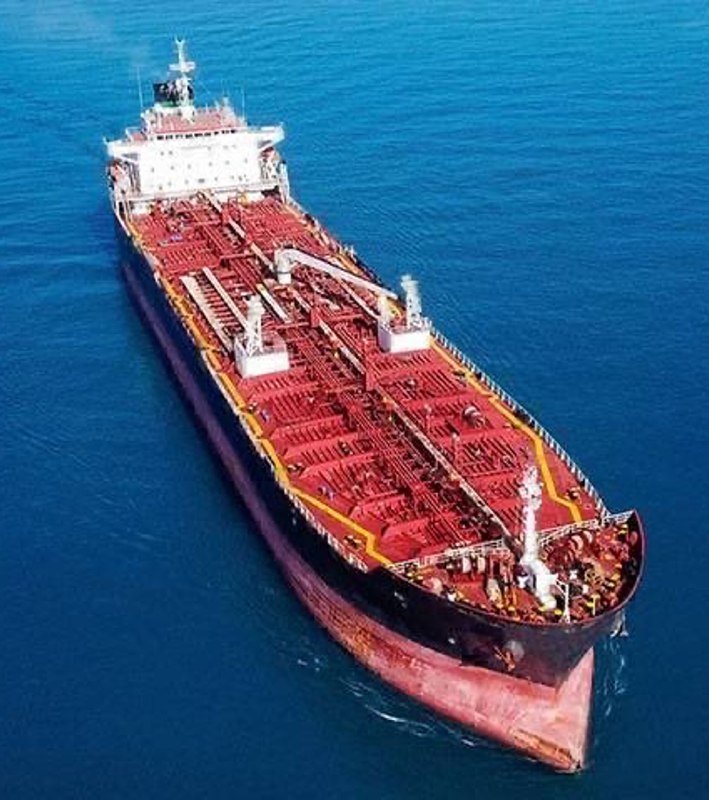
The Strait of Hormuz is one of the world's most consequential maritime chokepoints. Roughly a fifth of global oil output transits its narrow waters daily. Oman sits at the eastern mouth of the strait, controlling the Musandam Peninsula — a geography that gives Muscat a structural role in any arrangement governing traffic through the passage. The United States has maintained a listening post and military presence in Oman for decades, making the kingdom a quiet but essential node in the broader architecture of Gulf security.
The president's comments appeared to be directed at a reported Iranian initiative to negotiate a joint management arrangement for the strait — a proposal that, from Washington's perspective, would amount to a de facto veto over the free passage of American naval vessels and commercial tankers. Trump stated that the strait would be "open to everyone" and that the United States would "monitor it" — language that explicitly rejected any arrangement granting Tehran a co-governance role, according to reporting by Reuters on 27 May 2026.
A Rare Break With Decades of Practice
Oman has occupied a distinctive position in Gulf diplomacy for half a century. Muscat has historically served as a back-channel mediator between Washington and Tehran — a role it has performed quietly, without public fanfare and without aligning itself with either side in the broader regional competition between Saudi Arabia and Iran. This posture has given Oman a credibility that more partisan actors lack, making it genuinely useful when direct talks between the US and Iran are frozen or when crises threaten to escalate.
To threaten that partner with military action over the terms of a shipping corridor is, therefore, a notable departure from established practice. It also raises a fundamental question about the strategic logic behind the ultimatum: is the Hormuz threat a genuine contingency, with American military commanders already modelling the operational requirements of enforcing free passage by force? Or is it a negotiating device — a piece of coercive signalling designed to pressure Iran, and Oman's government, into accepting Washington's preferred terms before the nuclear talks collapse entirely?
Administration officials have suggested that Iran is eager for a deal but that negotiations have been unsatisfactory, per Reuters reporting on 27 May. The Hormuz ultimatum may be intended to communicate to Tehran that the cost of rejecting an agreement is not merely renewed sanctions pressure but the real risk of a military confrontation in the Gulf — one in which Oman would find itself on the front line regardless of its own preferences. The question is whether such a threat creates the conditions for a successful diplomatic settlement or whether it degrades the trust necessary to reach one.
The Structural Logic of Chokepoint Coercion
The Hormuz ultimatum sits inside a broader pattern that has defined American Gulf policy for several years: the use of economic and, increasingly, military leverage to enforce a particular vision of the regional order — one in which no actor gains a structural advantage over the free movement of energy exports and the ability of the US Navy to project power through the Gulf at will.
This logic is not new. The US has long treated Hormuz as a strategic asset to be defended, and it has the military capacity to enforce free passage against almost any challenger. What is new is the overtness of the threat against a formal ally, and the explicit framing of that threat around the concept of joint governance — the idea that any arrangement in which Iran shares a degree of control over the strait is unacceptable regardless of the diplomatic context.
For regional actors — the Gulf states, Oman, Saudi Arabia — this raises a structural tension. They depend on American security guarantees for their own defence. But they also have direct economic interests in the stability of Hormuz, and some have begun to hedge against a future in which American commitments become less reliable or more costly. The more publicly Washington treats even its allies as potential obstacles to its preferred regional order, the more rational that hedging becomes. A Gulf state that fears being abandoned by the US, or being drawn into a conflict it did not choose, has strong incentives to develop alternative security relationships — including with powers that do not require the same level of deference to American strategic preferences.
Regional Ripples and the Question of Credibility
The immediate reaction from Gulf capitals will matter. Oman has not publicly responded to the president's comments as of the time of publication. Saudi Arabia and the UAE have historically aligned with American positions on Hormuz but have also sought to avoid direct confrontation with Iran, preferring to manage tensions through bilateral channels and through the Oman-mediated back-channel dialogue that has on several occasions defused near-escalations.
The credibility of the American threat is also itself a variable. Enforcing free passage through Hormuz would require significant naval operations and would almost certainly encounter Iranian resistance — resistance that could take the form of harassment of commercial shipping, mining, or anti-ship missile deployments. The operational costs of such a scenario would be borne not just by the United States but by its Gulf partners, whose economies depend on stable oil exports.
If the Hormuz ultimatum is a negotiating device intended to force Iran back to the table on terms favourable to Washington, it may yet produce the desired effect. If it is intended as a genuine expression of contingency planning — a signal that American force remains on the table if negotiations fail — it introduces a new and destabilising element into an already volatile situation. The distinction between those two scenarios is not one that the administration has clarified.
The Road Ahead
The next phase of US-Iran nuclear negotiations will determine whether the Hormuz ultimatum functions as a pressure tactic or becomes the proximate cause of a crisis. Both outcomes remain plausible. What is clear is that the president's comments have altered the terms of the discussion: Oman, previously a neutral facilitator, has now been cast as a potential object of American coercion, while Iran faces a signal that any arrangement granting it a governance role in Hormuz will be treated as a red line by Washington.
The question for regional states — and for energy markets — is whether this represents a temporary hardening of the American negotiating position or a durable shift in how Washington treats its allies and adversaries in the Gulf. The answer will depend on what happens in the coming weeks: whether the Iran talks resume in earnest, whether Muscat accepts the American framing or pushes for a mediated alternative, and whether the president's public threats are followed by private diplomatic signals that open a path back to the table.
For now, the strait remains open. The risk that it might not is no longer a background anxiety — it has been elevated to a subject of public record by the man who holds the most powerful office in the country with the largest naval presence in the Gulf.
This publication covered the Trump ultimatum using the same Telegram and wire reports available to all desks. Our framing foregrounds the unusual nature of threatening an ally over shipping access — a point that received less emphasis in the Reuters wire version — and examines the structural incentives driving both the American hard line and the potential regional response.
Wire provenance
This editorial synthesis draws on the following public wire/social posts:
- https://x.com/reuters/status/1959711805090664448
- https://t.me/ukrpravda_news/...
- https://t.me/DDGeopolitics/...