Trump's 'Regime Change' Declaration: What the Iran Deal Standoff Actually Means
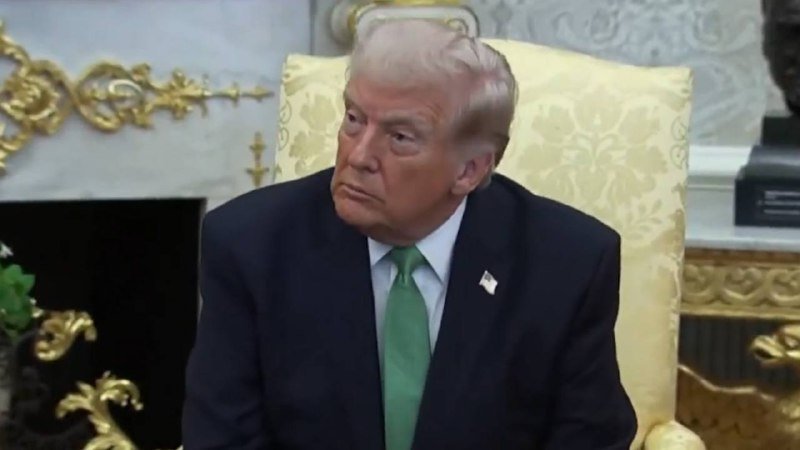
Speaking from the White House on 27 May 2026, President Donald Trump offered his starkest public assessment yet of Iran's political trajectory, declaring that the country was undergoing what he characterized as a regime-change process involving three successive governments. "This is regime change. One regime is gone, another regime is gone, and we are dealing with the pieces of a third one," Trump said, according to statements carried by ClashReport and disclosed on the same day by independent wire services.
The remarks, delivered against a backdrop of ongoing but stalled nuclear negotiations, represent a notable rhetorical escalation from the deal-making posture the administration had signalled in preceding months. They also complicate the landscape for any eventual agreement, raising questions about whether the stated US objective remains a constrained Iran or something considerably more ambitious.
The Deal That Isn't Yet a Deal
The administration had signalled, as recently as early 2026, that it was pursuing a negotiated resolution to the nuclear standoff. On 27 May, Trump told reporters that while Iran "wants to reach a deal," the United States was "not satisfied" with the current terms, per BBC News reporting. That framing — Iran as the eager party, the United States as the reluctant or unmet suitor — has been the consistent public posture since talks resumed under the current administration.
But the regime-change characterization pulls in a different direction. If the stated US position is that Tehran's political structure is inherently unstable and transient, the rationale for a negotiated handover of nuclear capability — the logic underpinning every prior US-led deal architecture — becomes harder to sustain publicly. Negotiations presuppose a durable counterparty.
The White House has not publicly articulated a coherent framework reconciling these two positions. Sources inside the administration, speaking on background to wire outlets, have suggested that the regime-change framing is intended as a pressure tactic — a signal to Iranian hardliners that waiting out the White House is not a viable strategy. Whether Tehran reads it that way, or instead interprets it as a statement of intent, remains the central interpretive question.
Counter-Narrative: Who Benefits From the Framing
Not all observers read the statement as a policy directive. Russian-aligned military commentary, cited on 27 May by the Telegram channel Two Majors, argued that the US public was being fed an inaccurate portrayal of the negotiating landscape. The channel's assessment — framed as insider observation of Western media coverage — suggested that the regime-change narrative serves domestic political purposes in Washington rather than reflecting the actual dynamics inside Tehran.
That counter-narrative warrants consideration on its structural merits, not its source. US administrations of both parties have a documented history of using regime-change rhetoric strategically, sometimes as a bargaining position and sometimes as genuine policy ambition. The invasion of Iraq in 2003 was preceded by sustained regime-change framing; the 2015 Iran nuclear deal was premised on the opposite assumption — that the Islamic Republic, whatever its conduct abroad, was a durable interlocutor whose behaviour could be shaped through incentives and penalties.
The current position appears to hold both premises simultaneously, which may reflect strategic ambiguity. It may equally reflect a genuine internal debate about US objectives that has not yet resolved itself into a coherent policy.
Structural Context: Dollar Politics and the Nuclear Question
The nuclear question is inseparable from its financial architecture. Every iteration of proposed Iran sanctions relief has confronted the same structural reality: the US dollar's role in global energy markets gives Washington leverage that no other instrument provides. Cutting off Iranian oil revenues — or threatening to — has been the primary mechanism of economic pressure since the Trump administration's original maximum-pressure campaign.
That leverage is real, but it is not unlimited. Iran has demonstrated a capacity to sustain economic pain over extended periods, and the growth of non-dollar trade channels — through bilateral arrangements, barter systems, and third-country intermediaries — has gradually eroded the absolute stranglehold that existed in 2018. The Islamic Republic's willingness to negotiate, and its red lines on what constitutes acceptable relief, sit within this altered structural context.
The regime-change framing complicates this calculus in a specific way: it raises the cost of compromise for Iranian negotiators. Any Iranian official who agrees to a deal now risks being characterized domestically as having capitulated to an adversary whose stated objective is regime removal, not merely nuclear restraint. That dynamic, if Tehran's negotiating posture hardens in response, could be self-defeating for the stated US goal of a comprehensive agreement.
Stakes and Forward View
The immediate stakes are diplomatic. The window for a deal before Iran achieves full nuclear breakout capability — a timeline that independent inspectors have placed somewhere between twelve and eighteen months, depending on the technical assumptions used — remains open, but it is narrowing.
If the regime-change framing is a negotiating tactic, its effectiveness depends entirely on whether Iranian decision-makers believe it. If they do not — if they interpret it as domestic US theatre with no bearing on actual US policy — the statement is costless. If they do, and if they conclude that no negotiated outcome is safe from US reversal, the incentive to race to a nuclear capability becomes considerably stronger.
The EU-mediated indirect talks that have characterised the current negotiating channel appear to remain active as of late May 2026. European interlocutors have publicly urged both sides to maintain dialogue, with French and German diplomatic sources suggesting that the alternative — a nuclear Iran with no diplomatic interface — serves no party's interests, including Washington's.
What the sources do not yet establish is whether the regime-change statement reflects a settled internal US position or a tactical exchange in a negotiation still in progress. That ambiguity is, for now, the operative fact.
Monexus notes that the wire framing of this story has varied significantly by outlet. BBC led with the deal-satisfaction angle; Telegram-native channels focused on the regime-change language. The structural economic context — dollar leverage, oil markets, third-country sanctions evasion — received limited play in initial wire coverage but is central to any serious assessment of the negotiating dynamic.
Wire provenance
This editorial synthesis draws on the following public wire/social posts:
- https://t.me/ClashReport/84732
- https://t.me/disclosetv/119483
- https://t.me/TwoMajors/48291