Trump's Regime Change Rhetoric Is a Diplomatic Smoke Screen With No Exit Strategy
The President's latest declaration on Iran tracks with a pattern familiar to any student of American foreign policy: maximalist posturing designed to extract concessions, followed by a pivot once the reality of leverage runs dry.
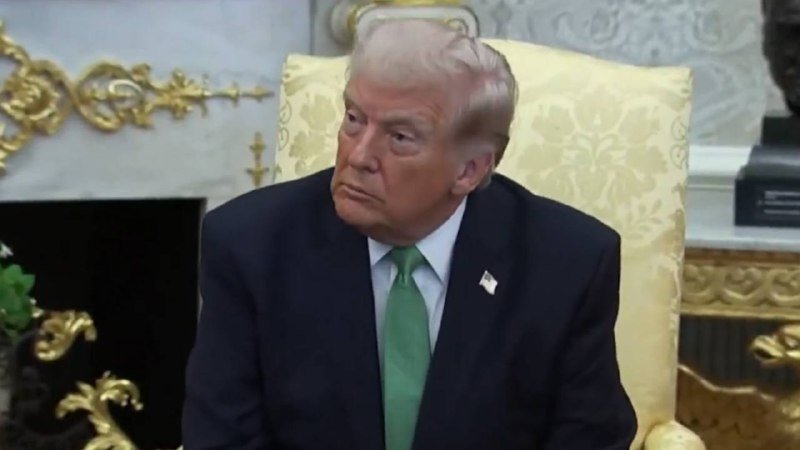
There is a particular kind of diplomatic theatre that plays out when an administration runs out of credible carrots and discovers, belatedly, that the stick has limits. The performance on 27 May 2026 looked familiar enough: President Trump declared from the White House that American policy toward Iran amounted to "regime change," a phrase he repeated with the deliberate emphasis of someone who wants it recorded for posterity. Hours earlier, he had suggested — cryptically, as is the fashion — that Barack Obama had picked "the wrong country" when his administration negotiated the Joint Comprehensive Plan of Action in 2015.
The question worth asking is not whether this rhetoric is alarming. It plainly is. The question is what function it is meant to serve — and whether the administration itself has a coherent answer to that question.
The Maximum Pressure Sequel Nobody Ordered
Trump's current posture toward Tehran is, in substance, a continuation of the maximum pressure campaign he launched during his first term. That approach culminated in the United States' unilateral withdrawal from the JCPOA in May 2018, a decision widely condemned by European allies and independent nuclear analysts as having strengthened Iran's hand rather than weakening it. The Biden administration spent four years attempting, with limited success, to resurrect some version of the agreement. Iran's enrichment programme advanced in the interim. The 2015 ceiling on centrifuge numbers and research — already breached during the collapse of the deal — is now a distant memory.
The administration now says Iran is "negotiating on fumes." This framing — repeated by Trump on the record on 27 May — implies Tehran has exhausted its room for diplomatic manoeuvre. The implication is that pressure is working. The evidence is considerably more ambiguous.
Iran's nuclear programme has continued advancing. Its regional posture, mediated through proxy networks across Iraq, Syria, Yemen, and Lebanon, has not fundamentally shifted in response to American sanctions. The argument that economic deprivation produces political capitulation has a poor empirical record in the Islamic Republic specifically — a regime that survived eight years of war with Iraq in the 1980s, using mass mobilisation and state repression to outlast a conventional military adversary, does not typically fold under external pressure alone.
The Regime Change Clause
Declaring "regime change" an explicit policy objective carries specific historical weight that the administration appears either to have ignored or to consider an asset. The phrase invokes a catalogue of American interventions — Chile in 1973, Guatemala in 1954, Iran itself in 1953 — alongside more recent adventures in Iraq and Afghanistan that consumed trillions of dollars and produced outcomes ranging from disappointing to catastrophic.
The 2003 invasion of Iraq is the operative comparison, even if administration officials would resist the analogy. The Iraq war was, at its inception, sold as a manageable military operation with clear objectives. It became a prolonged occupation that destabilised the region, empowered Iran by removing a regional rival, and cost the United States roughly two trillion dollars — a figure that does not include the human toll on American service members, contractors, and Iraqi civilians.
Iran is considerably more complex than Iraq was in 2003. It is larger geographically, more populous, more diplomatically connected to China and Russia, and possesses a conventional military that would not disintegrate in the manner the Ba'athist officer corps did. The Islamic Republic also has a documented history of surviving internal dissent — the protests of 2009 and 2019 were suppressed with considerable force — and of converting external threats into nationalist rallying points that shore up regime legitimacy rather than eroding it.
The administration has offered no credible pathway from current rhetoric to a post-regime political settlement. Who would govern Tehran if the clerical establishment collapsed? What would prevent a failed-state scenario that makes Iraq look orderly? The sources reviewed for this article do not indicate that these questions have been thought through at the planning level; they read, instead, as pressure language designed to shift the negotiating table.
The Diplomatic Function of Threat
There is a plausible alternative reading of the president's public posture, and it deserves engagement. American presidents have long used public threats as negotiating tools, delivering maximum demands in forums where they cannot be walk backs — social media, press conferences — while dispatching envoys to conduct the actual discussions. The goal is not necessarily to collapse the Islamic Republic but to create sufficient anxiety in Tehran about American intentions that Iranian negotiators become more accommodating in private settings.
This logic is not unreasonable. It is, however, dependent on the adversary believing the threat is credible. The problem for the current administration is that its threats have become predictable. The pattern of maximum escalation followed by selective de-escalation — visible across trade negotiations with China, North Korea summits, and NATO burden-sharing disputes — has taught foreign governments that American presidential rhetoric and actual policy are not the same thing.
Iranian negotiators, whatever their other limitations, are not operating without information about previous rounds of this performance. They have watched Trump declare that "maximum pressure" would bring Iran to its knees. They watched sanctions intensify. They watched the administration then seek direct talks without preconditions. The gap between the public posture and the private signal is now a known quantity in Tehran's foreign policy apparatus.
The Stakes Are Not Abstract
The consequences of sustained confrontation with Iran, should it escalate beyond the current verbal register, are concrete and far-reaching. A military conflict — even one limited in initial scope — would immediately disrupt global oil markets in a manner that the 2022 energy crisis did not fully anticipate, given that Iranian production remains under sanction rather than fully offline. The Strait of Hormiz, through which roughly a fifth of global oil shipments pass, sits within range of Iranian conventional capabilities.
American regional allies — Saudi Arabia, the UAE, and others who have pursued normalisation with Iran under Chinese mediation — would face acute pressure to choose sides. The diplomatic architecture that has kept Arab-Israeli normalisation negotiations alive would fracture. China, which has invested considerably in Gulf stabilisation as part of its Belt and Road energy security interests, would face pressure to respond in ways that complicate the broader US-China relationship.
On the Iranian side, the clerical establishment faces genuine internal pressure from a population with a median age under thirty and an economy that has not recovered from the cumulative weight of sanctions. A nationalist conflict with the United States would, at least initially, redirect that pressure outward. That does not make the regime less dangerous in a crisis — it may make it more willing to miscalculate, given that external conflict has historically been its most effective tool for managing internal dissent.
The administration may believe it can manage this dynamic through careful signalling. The record suggests otherwise. Diplomatic theatre requires willing participants who share the script. Tehran does not appear to be reading its lines.
The Gap Between Words and Policy
What this article finds most striking is not the regime change rhetoric itself — American presidents have issued worse — but the absence of a visible policy architecture to back it up. No congressional authorisation has been signalled. No coalition-building with allies has been described. No post-conflict planning has been disclosed. The statement functions as pressure, but pressure without a credible trigger is simply noise.
Iran has survived worse than American presidents' press conferences. The question is whether this particular president understands that — and is playing a longer game than the headlines suggest — or whether the administration has convinced itself that this time, the escalation ladder leads somewhere other than where it has led before.
The evidence to date does not inspire confidence in the second interpretation. But the first interpretation is not especially comforting either. Managed confrontation, without a negotiated off-ramp, tends to produce unmanaged escalation. That is a lesson Washington has learned before. It appears to be relearning it now.
This article reflects Monexus's assessment of available reporting on the record as of 27 May 2026. Further clarification from the administration on the specific policy instruments intended to support the president's stated objectives had not been provided at time of publication.
Wire provenance
This editorial synthesis draws on the following public wire/social posts:
- https://x.com/disclosetv/status/2059685713524699138
- https://t.me/ClashReport/10847
- https://x.com/polymarket/status/2059669188780687363
- https://x.com/unusual_whales/status/2059668371893788675