Trump Declares 'Regime Change' in Iran, Rules Out Sanctions Relief for Nuclear Concessions
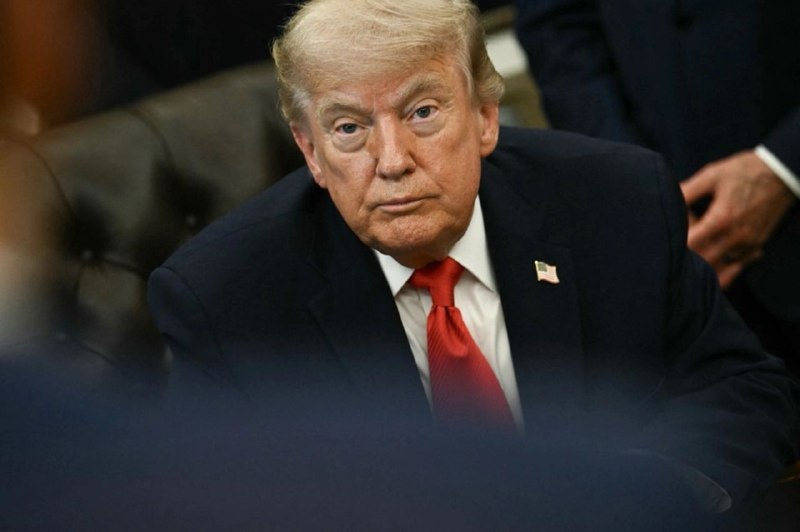
President Donald Trump told senior administration officials on 27 May 2026 that the United States is not negotiating sanctions relief with Iran, and characterised the current moment in Tehran as a succession of regime changes, with the Islamic Republic in its third iteration. The statements, delivered at a cabinet meeting and confirmed across multiple wire services, represent the sharpest articulation yet of the administration's post-nuclear deal posture toward Iran.
Speaking to assembled cabinet members, Trump was direct: "We are not talking about giving money or reducing sanctions with Iran," according to a translation and account published by Fars News International on 27 May. The president added, in remarks carried by the same outlet, that "We are not talking about any reduction of sanctions or giving money to Iran." The framing was categorical, leaving no ambiguity about the administration's opening position heading into what observers had tentatively identified as a potential diplomatic window.
The most striking element of the president's remarks was the characterisation of Iran's political trajectory. "This is regime change," Trump said, according to an account published by ClashReport and corroborated by DiscloseTV on social media platform X. "One regime is gone, another regime is gone, and we are dealing with the pieces of a third one." The language implies that whatever government currently operates in Tehran is viewed by Washington as fundamentally distinct from — and in Washington's eyes, inferior to — its predecessors. Whether that assessment reflects intelligence assessments of internal Iranian instability or is rhetorical positioning ahead of a pressure campaign remains an open question the sources do not resolve.
The White House position on the nuclear file was reiterated to PBS separately. In that exchange, the president stated directly that Iran would not receive sanctions relief in exchange for giving up its highly enriched uranium. "No, no, not at all. Not sanctions relief, no," Trump told the broadcaster, per the GeoPWatch account of the interview. That formulation sets a high bar for any future negotiation: Iran would need to make verifiable concessions on its enrichment programme without the reciprocal lifting of sanctions that previous administrations — including during the Joint Comprehensive Plan of Action period — had offered as a structural incentive.
What the sources do not specify is what verifiable progress, if any, the administration has made in establishing direct channels with Tehran, or what specific conditions would need to be met before the US would consider any sanctions modification. The public record for 27 May 2026 contains the president's stated position but not the detailed parameters of any behind-the-scenes process, if one exists at all.
The Sanctions Architecture and Its Limits
The Trump administration's position is not, in structural terms, novel. Maximum pressure on Iran through sweeping economic sanctions has been a consistent feature of American Iran policy since the withdrawal from the JCPOA in 2018. What has shifted is the language. Describing the current Iranian government as the "pieces of a third" regime moves beyond sanctions policy into a characterological assessment of state legitimacy — a significant rhetorical escalation that may complicate any future diplomatic off-ramp.
The practical effect of continued sanctions on Iran has been documented across multiple international economic assessments. Iranian crude exports have faced formal and informal ceiling mechanisms. The rial has experienced significant volatility against hard currencies. Iran's access to international banking rails — including SWIFT-adjacent correspondent networks — remains severely restricted. Whether that pressure has produced the political concessions sought by Washington is a question the current statement implicitly answers in the negative.
The structural constraint the administration faces is familiar: sanctions erode living standards inside Iran, which can produce either capitulation or nationalist hardening. The historical record suggests the latter is more common. When external pressure is perceived as existential, governments in Tehran have historically chosen consolidation over accommodation. The current statement's framing — "regime change" language, the categorical denial of sanctions relief — may be calibrated to accelerate internal rupture. Whether that calculation is accurate is something the sources for this article do not allow this publication to assess with confidence.
The Dollar Dimension
Underlying any Iran sanctions regime is the question of dollar infrastructure. The US president's statement — "we are in control of the money they claim is theirs" — points to a specific mechanism of leverage. Access to dollar-denominated transactions requires correspondent banking relationships that pass through US-regulated clearing houses. Even when sanctions are not formally imposed, secondary sanctions risk creates a chilling effect on financial institutions globally that might otherwise facilitate legitimate Iranian trade.
This architecture gives Washington a form of structural power that extends beyond its formal sanctions list. A company in Shanghai or Dubai that processes Iranian transactions risks losing access to the American financial system — a commercial calculation that, for most international firms, is straightforward. The result is a de facto dollar embargo that operates through private-sector compliance rather than explicit government action in every jurisdiction.
The Trump administration appears to be relying on this mechanism as its primary tool. By ruling out sanctions relief — rather than offering a phased reduction in exchange for phased concessions — Washington is essentially asking Iran to make irreversible, verifiable moves on its nuclear programme with no guaranteed reciprocal benefit. That is a difficult position for any government to accept, particularly one that has spent decades developing enrichment capacity as a strategic asset.
What Remains Unresolved
The sources for this article do not specify whether any back-channel communications are currently underway between Washington and Tehran, nor do they indicate what specific red lines the administration considers non-negotiable beyond the enrichment question. The statement "we are dealing with the pieces of a third one" suggests a judgment that the current Iranian government is politically weakened — potentially vulnerable to pressure that a more consolidated administration might resist. Whether that assessment is accurate is not something the available evidence permits this publication to independently verify.
Equally unclear is how the administration intends to handle the international dimension of its Iran policy. The JCPOA involved not just the US and Iran but also the European signatories, Russia, China, and the International Atomic Energy Agency as verification guarantor. The current statement makes no reference to whether Washington is seeking multilateral buy-in for its posture or operating on a purely bilateral track. The sources are silent on this point.
Stakes and Forward View
If the administration's position holds, the implications are significant across multiple dimensions. For Iran, the continued exclusion from international capital markets and banking infrastructure means economic stagnation with no clear off-ramp through diplomatic engagement. For the broader Middle East, a US posture that explicitly rules out sanctions relief in exchange for nuclear concessions removes a structural incentive for Tehran to moderate its enrichment programme — potentially accelerating a nuclear threshold dynamic that has concerned regional actors for more than a decade.
For Washington, the cost is measured in leverage. A sanctions regime that offers no prospect of relief operates on a different logic than one that functions as a pressure-and-negotiate mechanism. It is, in effect, a statement that the current US objective is not managed coexistence with a nuclear-capable Iran but something closer to systemic confrontation. Whether that posture is achievable without significant regional escalation is a question the coming months will test.
This publication will continue to track the US-Iran posture as further reporting becomes available.
Wire provenance
This editorial synthesis draws on the following public wire/social posts:
- https://t.me/FarsNewsInt/
- https://t.me/ClashReport
- https://t.me/disclosetv
- https://t.me/GeoPWatch