The Unpopularity Paradox: How Trump Is Governing As If Consent Doesn't Matter
A president with record-low approval ratings is accelerating regulatory moves—including a bold CFTC power grab—while the political cost of service grows more visible. Something structurally odd is happening at the center of American power.
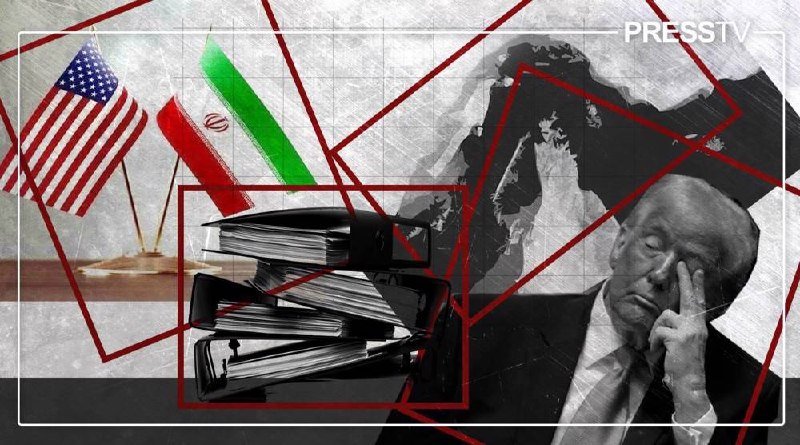
Donald Trump has now officially become the most unpopular president in modern American history at this stage of a term. The polling record is unambiguous. By the conventional logic of democratic politics, an administration registering numbers this low would be in retreat—negotiating, triangulating, reaching for the political center. What Washington is watching instead is something different: a White House accelerating its regulatory agenda with apparent indifference to the electoral map.
The dissonance is not incidental. It points to a governing philosophy that treats public approval less as a constraint and more as a variable to be managed through other means—through momentum, through executive action, through the sheer velocity of decision-making that makes it difficult for critics to find footing. The prediction markets story captures this dynamic with unusual clarity.
A Regulatory Land Grab In Plain Sight
On 26 May 2026, Trump publicly backed the Commodity Futures Trading Commission's claim to exclusive authority over prediction markets, calling it "critically important" that the regulator—and not a patchwork of state officials—maintain control. The President's statement echoed CFTC Chair Michael Selig's own framing, effectively endorsing the agency's legal position in ongoing disputes about whether platforms like Kalshi and other election-contract providers fall under federal or state jurisdiction.
The move is not merely technical. Prediction markets function as real-time political barometers; their regulation is power over the machinery of political intelligence. By consolidating that power at the federal level, under an agency whose chair serves at the pleasure of the president, the administration is building another layer of institutional control over the information environment. The CFTC, historically a backwater derivatives regulator, becomes a political instrument.
The sources do not indicate that Trump has a direct financial interest in prediction market outcomes, but the structural logic is clear: whoever controls the CFTC controls which markets can operate, under what conditions, and with what disclosures. In an environment where the White House's polling numbers are a matter of public record, the interest in shaping the infrastructure of political information is not subtle.
The Human Cost Nobody Calculates
The same week produced a sharper, more human data point. Pam Bondi—removed as attorney general earlier in the administration—was diagnosed with thyroid cancer shortly after her departure, according to reporting by the New York Post. Bondi was not a peripheral figure. She was a loyalty appointment, removed when her utility to the White House ended. The diagnosis arrived in the aftermath.
The sources do not establish causation. But the pattern is not new: the physical and psychological toll of service in this administration has become a recurring motif. Staffers have described a culture of retaliation, instability, and institutional pressure that makes ordinary governance feel like combat. A cancer diagnosis following a contentious removal is not proof of anything, but it is a reminder that the abstraction of "draining the swamp" has concrete human dimensions.
The political press has largely treated the Bondi news as a human-interest sidebar. It deserves more analytical weight. If serving in this White House carries measurable health costs—and the aggregate data on turnover, departures, and public accounts of former officials suggests it does—then the political economy of staffing itself begins to look different. Who volunteers for that calculus, and what does that mean for the quality of governance?
The Structural Logic of Unpopularity
Here is the uncomfortable question that mainstream coverage tends to sidestep: what if the unpopularity is not a bug but a feature? A president with 35 percent approval has little to lose politically from controversy. A president with 25 percent has almost none. The electoral map becomes almost irrelevant when the coalition that remains is small, intense, and institutionally embedded enough to sustain executive action regardless of public mood.
This is not a new phenomenon in American politics— FDR's polling troughs during the Depression, LBJ's collapse over Vietnam— but the current configuration has a distinctive texture. The regulatory apparatus is being used aggressively precisely because it does not require public buy-in. The CFTC move does not need a poll. The Bondi departure did not require a press release. The machinery of government runs on legal authority, not popular consent, and an administration that has accepted its own unpopularity can operate with a clarity that more popular governments cannot.
The risk, of course, is that legitimacy accrues slowly and erodes quickly. A government that governs against the grain of public opinion is always one bad news cycle from a crisis of authority. The prediction markets—ironically—may be the early warning system. If contracts begin pricing in institutional rupture rather than continuity, the White House's regulatory velocity will encounter a different kind of resistance.
The Stakes Ahead
The next twelve months will test whether American institutional guardrails can absorb executive action taken without broad popular support. The CFTC's jurisdiction over prediction markets matters beyond the technical: it is a test of whether financial regulators can be weaponized for political purposes and still maintain their independent credibility. The Bondi story matters beyond the personal: it is a data point in a larger picture of what it costs to serve in an administration that treats loyalty as a one-way obligation.
The President is governing as if consent is a courtesy rather than a foundation. That bet may hold for a term. The institutions he is bending were not designed for permanent deformation. The question is not whether the unpopularity will eventually matter—it is whether it will matter in time to prevent the normalization of what is happening now.
The prediction markets are watching. So, increasingly, is everyone else.
Wire provenance
This editorial synthesis draws on the following public wire/social posts:
- https://t.me/Middle_East_Spectator/12345
- https://x.com/unusual_whales/status/1923456789012345678