Velayati Declares Strait of Hormuz 'Objective Guarantor' of Agreement Survival
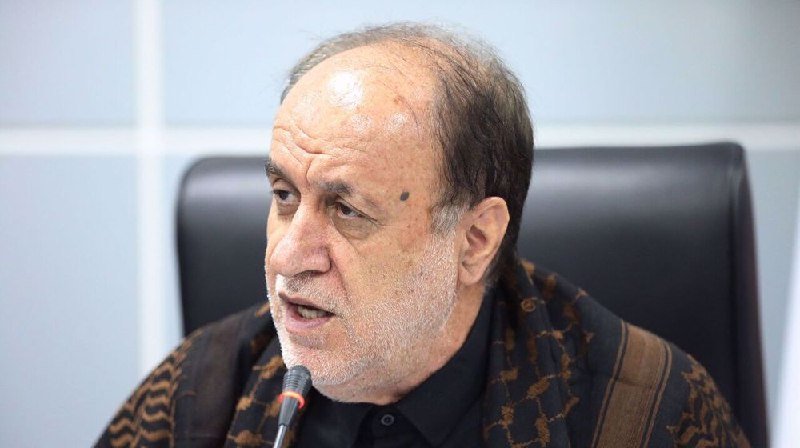
Ali Akbar Velayati, senior adviser to Iran's Supreme Leader on international affairs, declared on 27 May 2026 that the Strait of Hormuz constitutes the "objective guarantor of the survival of the agreement," adding that historical precedent demonstrates that every foreign power which has attempted to project force into the Persian Gulf has ultimately failed. The statement, reported across Iranian state-aligned news outlets, arrives at a sensitive juncture in diplomatic contacts between Tehran and several Western capitals over the future of nuclear constraints and sanctions relief.
The framing is deliberate. By anchoring any prospective accord to geography rather than goodwill or institutional verification, Velayati is restating a structural reality that successive Iranian governments have leveraged since the 1979 revolution: roughly one-fifth of the world's oil and a comparable share of liquefied natural gas transit the 34-kilometre wide passage between Oman and Iran each year. No bilateral understanding between Tehran and its interlocutors survives that fact. It is the foundation on which Iranian negotiators have historically built their leverage, and it is the reason that Western analysts treat any escalation in Gulf waters with a urgency rarely matched by other theatres.
The Strategic Logic of the Passage
The Strait of Hormuz is among the most consequential waterways on earth. Approximately 21 million barrels of oil pass through it daily — a volume that, if disrupted, would force buyers in Asia and Europe to draw on already-taut strategic reserves within weeks. The chokepoint geography is stark: the narrowest navigable channel is less than three kilometres wide, easily monitored and, in extremis, controlled by coastal batteries and fast-attack vessels. This is not new to strategists. The Nixon administration treated freedom of navigation through the strait as a non-negotiable element of US Gulf policy as early as the 1970s, and that calculus has not fundamentally shifted despite four decades of subsequent upheaval.
Iranian officials understand this asymmetry intimately. Every diplomatic exchange since the collapse of the original JCPOA framework has been conducted against the background of that waterway's significance, whether the subject under discussion was nuclear enrichment thresholds, missile programmes, or regional proxy behaviour. Velayati's statement on 27 May makes no explicit reference to the ongoing nuclear discussions, but the timing and forum are themselves communicative: he is addressing an audience that includes both regional counterparts and the international negotiators who have been circling the question of what a renewed accord would look like, and what guarantees each side requires.
What the Statement Does and Does Not Say
The Iranian adviser's formulation — "objective guarantor" — is a precise diplomatic choice. It suggests that the agreement's durability does not rest on inspection regimes, escrow mechanisms, or the continued goodwill of whichever administration occupies Washington or a European capital next. It rests on the physical fact of the strait. The implication is that any signatory to a deal with Iran is, in effect, making a calculation about the stability of Gulf transit, and that Tehran understands itself to be the essential party in maintaining that stability.
The sources do not identify which specific agreement Velayati was referencing. The phrasing — "the agreement" — could point to an existing arrangement, a framework under negotiation, or a generic proposition about diplomatic stability in the region. This ambiguity is itself informative. Iranian official communications frequently deploy generalised formulations that are broad enough to cover multiple negotiating tracks simultaneously, allowing the same statement to speak to domestic constituencies, regional audiences, and Western interlocutors without foreclosing options.
The Leverage Architecture in Practice
Western capitals have spent considerable diplomatic energy attempting to construct verification mechanisms robust enough to provide political cover without requiring Tehran to accept intrusive inspections that it has historically rejected. The central tension in these negotiations has always been the gap between what the international community can verify and what Iran will consent to. Velayati's statement sidesteps that entire debate by pointing to a factor that no verification regime can alter: the geography of the strait.
The pattern has historical echoes. During the tanker-war phase of the Iran-Iraq conflict in the late 1980s, both Baghdad and Tehran targeted neutral shipping in the Gulf, understanding that the economic consequences of disrupted transit would generate pressure on the other party to negotiate. The United States and its allies responded by deploying naval forces to escort vessels — Operation Earnest Will was the largest US naval operation since the Second World War. The episode established, indelibly, that the strait's significance was not merely theoretical and that its control was a legitimate object of great-power military planning.
The contemporary configuration differs in degree rather than kind. US military presence in the Gulf remains substantial, and joint exercises with Gulf Cooperation Council partners are frequent. But Iranian capabilities — anti-ship missiles, drone swarms, small-boat tactics — have proliferated in ways that complicate any straightforward application of sea-control doctrine. Velayati's reference to the historical failure of "invaders" is, among other things, a reminder that Iran possesses means to impose costs that simple deterrence calculus may underestimate.
Risks and Forward View
The statement carries an inherent tension. On one reading, it is a reassurance: the strait's centrality means that all parties have an interest in keeping the waterway open, and that structural incentive is itself a form of guarantee. On another reading, it is a warning: if the agreement collapses, or if Iranian interests are not adequately recognised in its terms, the strait's centrality becomes a weapon rather than a reassurance. Both interpretations are plausible, and the ambiguity is almost certainly deliberate.
What remains unclear is whether recent diplomatic contacts have produced sufficient common ground to make the "reassurance" reading operative. The sources do not indicate that a new framework is imminent, and Iranian officials have been consistent in demanding sanctions relief proportionate to any nuclear constraint — a demand that Western negotiating teams have found difficult to satisfy domestically. Velayati's formulation does not advance that specific negotiation, but it restates the terms on which Tehran will ultimately assess any outcome.
The 27 May statement is, at its core, a position paper in diplomatic shorthand. It tells the international community that Iran's consent to any arrangement is conditional on recognition of its centrality to the region's economic infrastructure — a centrality that is geographic, permanent, and not subject to negotiation. Whether that framing produces a pathway toward compromise or hardens positions on both sides will depend on the next round of talks, and on whether the parties involved can construct an agreement that both sides can represent, domestically, as something other than capitulation.
Wire provenance
This editorial synthesis draws on the following public wire/social posts:
- https://t.me/mehrnews
- https://t.me/alalamfa
- https://t.me/tasnimnews_en
- https://t.me/JahanTasnim