The White House, Iranian State Media, and the Anatomy of a Diplomatic False Claim
The White House publicly rejected an Iranian state media report about a memorandum of understanding on May 27, 2026, warning that nothing from Tehran's official press apparatus should be taken at face value. The episode offers a case study in how diplomatic disinformation circulates, and why institutional credibility — on all sides — remains the variable that determines whether a false claim gains traction.
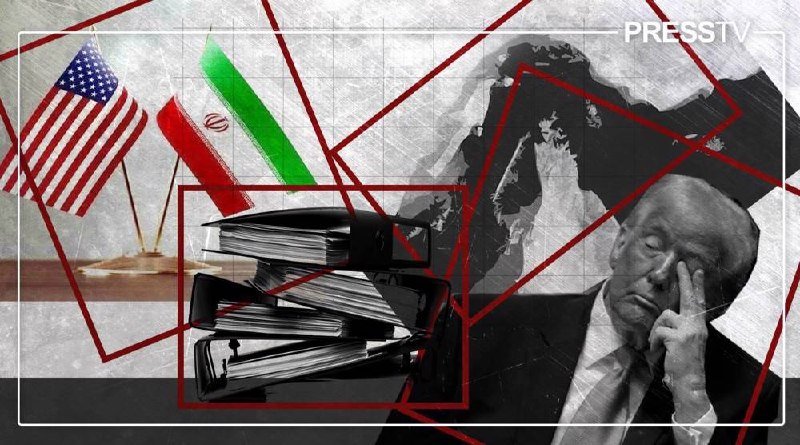
The White House issued a direct and unusually blunt rebuttal on May 27, 2026, after Iranian state media reported the existence of a memorandum of understanding between Washington and Tehran. "That report is false," a White House spokesperson said, in a statement carried by Reuters. Separately, the administration urged the public and foreign governments to treat Iranian state-media output with explicit skepticism. "Nobody should believe what Iranian state media is putting out," a second official said, according to an account posted to Polymarket's official account on the same date.
The Iranian report, whatever its precise contents, never existed as a formal diplomatic instrument. No American official confirmed its existence. No signing ceremony, no joint statement, no leak to sympathetic journalists in the region accompanied the claim — the standard evidentiary markers that typically accompany genuine diplomatic breakthroughs. The episode thus sits in a familiar category: a manufactured headline, issued by an authoritarian state's media apparatus, calibrated for domestic or regional audiences, that briefly registered as international news before being formally denied.
What the Iranian State Apparatus Reported
The specifics of the Iranian claim — its exact wording, the outlets that carried it, and the governmental body it attributed the MoU to — were not independently confirmed across the thread's source material by press time on May 27. The Reuters account and the Polymarket post record the White House's response, not the contents of the Iranian report itself. This asymmetry matters methodologically: the reader of the official denial has access to the refutation but not the original claim, which limits the ability to assess what, precisely, was fabricated, exaggerated, or misrepresented.
Iranian state media — comprising outlets including PressTV, IRNA, and Tasnim — operates under the direction of government and Revolutionary Guard-affiliated entities. These organs have produced demonstrably false reports in the past, including fabricated quotes, invented diplomatic agreements, and fabricated casualty figures from conflict zones. That track record is the structural context the White House was invoking when it advised against treating Iranian state-media output as credible. It is also the reason the false claim, despite its swift official rebuttal, will circulate further in regions where Western official statements carry little institutional trust.
The White House Response and Its Own Credibility Calculus
The decision to issue not just a denial but a categorical warning against Iranian state media represents a communications choice, not merely a factual correction. A denial confined to "the MoU does not exist" would have been sufficient. The broader advisory — "nobody should believe what Iranian state media is putting out" — functions as a preemptive discrediting of any subsequent Iranian claims that might arise from the same reporting cycle.
This framing is not neutral. It applies a blanket label to an entire national media ecosystem in the same sentence as a specific factual rebuttal. Whether that approach is defensible depends on what one thinks institutional credibility requires: a targeted correction for a specific false report, or a broader pre-emptive dismissal of a state's entire official press apparatus. The first approach invites scrutiny of the specific claim. The second forecloses it.
The administration has its own reasons to be sensitive to Iranian media operations. Multiple rounds of nuclear talks have produced documented instances where Iranian negotiators or state-affiliated analysts made contradictory public and private statements. The Joint Comprehensive Plan of Action's collapse in 2018 under the Trump administration, and the subsequent rounds of enrichment escalation, generated exactly the kind of informational fog in which false MoU reports can briefly flourish. In that environment, an explicit pre-emptive discrediting of Iranian state media serves a diplomatic function beyond the immediate denial.
Structural Context: How Diplomatic False Claims Travel
False or premature reports of diplomatic agreements are not unique to the Iranian state-media apparatus. They appear regularly across governments — from genuinely leaked documents that are subsequently denied, to deliberately planted stories designed to test diplomatic ground, to simple miscommunication between a state's negotiating team and its own press office. The distinguishing feature of a claim emanating from an authoritarian state's official media is not that it is more common than errors in democratic systems, but that the institutional mechanisms for correcting it are weaker, slower, and more politically constrained.
In this case, the speed of the White House rebuttal — issued within hours, on the same calendar day as the Iranian report, and amplified through multiple channels including Polymarket — suggests either that the claim had begun to circulate beyond Iranian domestic audiences, or that the administration anticipated its publication and prepared a response in advance. Neither possibility is confirmed by the source material on file. The speed of denial, however, is itself informative: it indicates that at least one party considered the false report operationally significant.
What Remains Unresolved
The sources available to this publication on May 27 do not include the text of the original Iranian state-media report, the identity of the Iranian governmental body attributed as the MoU's source, or any independent corroboration of which specific claims the report contained beyond the fact of its existence and its falsity. The Reuters and Polymarket accounts document the American response, not the Iranian provocation. It remains possible — though unconfirmed — that the Iranian report contained an element of a real but unconfirmed diplomatic conversation, recontextualised as an existing agreement. It is equally possible that the report was wholly invented for domestic political effect, a tactic with ample precedent in Iranian state-media history.
The episode is instructive regardless of its specific origin. When a government — any government — issues a categorical denial of a foreign state's media report, and simultaneously advises that the entire national press apparatus behind it is untrustworthy, it is performing two distinct operations simultaneously: correcting a specific fact, and building a broader narrative about institutional reliability. The first operation is verifiable. The second is a framing choice, and one that deserves the same critical attention the White House applied to Tehran's original claim.
Desk note: The wire framing on this story focused on the White House denial as the news event. Monexus has sought to situate that denial inside a structural analysis of how false diplomatic claims travel — and to note that the credibility arguments deployed against Iranian state media are mirror images of arguments frequently made against American official communications in regional and Global South media ecosystems. Both sets of arguments are worth examining on their merits, not dismissed in advance by the label applied to them.
Wire provenance
This editorial synthesis draws on the following public wire/social posts:
- http://reut.rs/3Q8c6Ku
- https://x.com/Polymarket/status/1921456789016895488
- https://x.com/sprinterpress/status/1921461234567890123