The Anatomy of a Strike on Tyre
An Israeli airstrike destroyed a building in Tyre overnight. What the footage reveals and what remains unspoken about the standards that govern urban warfare matters more than the political rhetoric that follows.
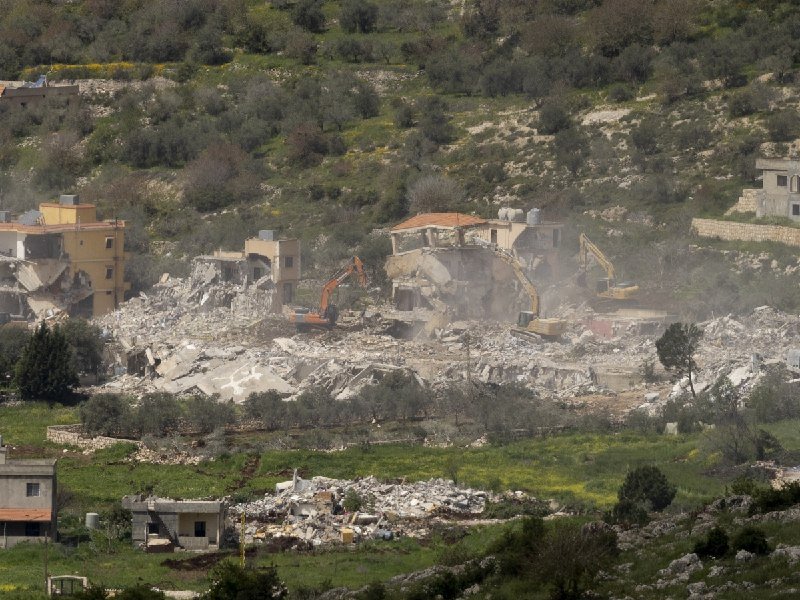
At some point in the hours before dawn on 27 May 2026, an Israeli airstrike brought down a building in the Al-Rifai district of the coastal city of Tyre in southern Lebanon. By morning, footage of the collapsed structure circulated on Lebanese and regional wire feeds, showing fire crews picking through rubble in a residential area near the city's historic quarter. The IDF spokesperson confirmed an strike had been conducted. What followed was the usual choreography: a brief statement from Jerusalem, unconfirmed casualty figures circulating through Lebanese health channels, and a wave of commentary that reduced the episode to a data point in a larger geopolitical argument.
That choreography obscures more than it reveals. The strike on Tyre is worth examining not because it is exceptional — strikes in southern Lebanon have been recurring for months — but because the pattern it sits within raises structural questions about how urban warfare is conducted, who counts as a legitimate target, and what standards the international community actually enforces when those standards are violated.
What the footage shows
The available footage from The Cradle Media and wire witnesses shows a multi-floor structure reduced to a mass of concrete and twisted rebar. Fire crews are visible at the site. The building's footprint and its position within a dense residential neighbourhood are apparent from the images. The strikes occurred overnight, placing civilian occupants at home.
Initial casualty reports were inconsistent. Lebanese health officials provided figures that have not been independently verified as of this publication. The IDF statement described the strike as targeting infrastructure, without specifying what that infrastructure was. No independent confirmation exists regarding what activity, if any, the building hosted that would qualify as a military objective under the laws of armed conflict.
Tyre is no stranger to this kind of destruction. The city's southern districts have been subject to repeated Israeli strikes throughout the current phase of hostilities. Residential buildings, civilian infrastructure, and at least one prominent hospital complex have been hit. Each strike arrives with a standard formulation: the target was military in nature, precautions were taken, the target was legitimate. The documentation supporting those claims is not made public.
The pattern problem
International humanitarian law requires that attacks distinguish between combatants and civilians, and that any attack be proportionate to the military advantage anticipated. Those are not aspirational guidelines — they are binding obligations. In practice, the application of those principles to strikes in dense urban environments requires intelligence on what a building contains, assessment of what civilian harm is likely, and a judgment that the anticipated military benefit outweighs that harm.
When strikes repeatedly hit residential buildings in the same city, the question of whether each individual strike met those criteria becomes a question about process. If the intelligence was good in each case, the targets were legitimate in each case. If the intelligence was poor, or the assessments were cursory, the pattern suggests a systematic failure to apply the required standards — not a series of isolated decisions that happened to produce the same result.
Israeli military doctrine, as articulated by its officials, relies heavily on the concept of proportionality as applied by commanders in the field. Critics, including international legal organisations, have argued that the threshold applied in practice is too permissive — that anticipated military advantage is weighed against civilian harm in ways that do not meet the standards set out in Additional Protocol I to the Geneva Conventions, which Israel has signed but not ratified. The United States, which supplies the ordnance used in many of these strikes, has its own domestic law obligations regarding civilian harm that its officials have acknowledged are not always met.
None of this requires accepting that every strike is unlawful. It does require acknowledging that the framework for making that determination is not self-enforcing, and that the organisations with authority to investigate — the International Criminal Court, relevant UN bodies — have limited access and limited enforcement capacity when major powers decline to cooperate.
The political context is not irrelevant
It is worth noting, though not determinative, that the strike occurred against a backdrop of renewed discussions about a ceasefire arrangement that would affect the rules of engagement in southern Lebanon. Artillery exchanges and aerial activity have been ongoing for months. The frequency and location of strikes are not random; they reflect targeting decisions made at a level above the individual operators who deliver the ordnance.
Strikes during periods of diplomatic activity serve multiple functions. They demonstrate resolve, maintain pressure on adversaries, and signal the costs of particular positions. Those considerations do not override the laws of armed conflict — a political motive does not authorise an attack that would otherwise be disproportionate or indiscriminate — but they do explain the timing and location choices that might otherwise appear arbitrary.
Whether the strike on the Al-Rifai building was planned before the latest round of ceasefire discussions or timed in response to them is not known from available sources. The IDF has not detailed its targeting rationale for this specific incident. The absence of that detail is itself significant: it means the legal justification exists only in the abstract, not as a documented assessment that outside parties can evaluate.
The stakes beyond this single episode
Civilians in southern Lebanon have been displaced in significant numbers. Those who remain in areas subject to regular strikes face a cumulative risk that the law does not adequately address through individual targeting reviews. The standard framework — evaluate each strike, determine if it was lawful — misses the cumulative effect of a strategy that repeatedly hits residential areas and calls each instance a proportionate response.
The regional trajectory matters. An escalation involving Hezbollah or Iranian-linked groups would transform the current pattern of strikes into something far more destructive. The buffer that has held — so far — depends on calculations in Jerusalem, Beirut, and Tehran about whether continued strikes serve strategic purposes or create intolerable pressure that provokes a broader response. Each strike that damages civilian infrastructure without clear military justification adds to the instability of those calculations.
The footage from Tyre shows rubble and fire crews. It does not show the intelligence assessment that preceded the strike, the proportionality calculation that was supposedly applied, or the command authority that approved it. Those things are not on camera. They exist only as assertions from one side of a conflict where the other side has no meaningful access to verify them. That gap — between what is claimed and what can be demonstrated — is where the real story lives, and it deserves more than a four-sentence IDF statement and a political argument about who bears responsibility for the next cycle of violence.
This article draws on footage and wire reports from the morning of 28 May 2026. Monexus is monitoring for updated IDF statements and independent casualty verification from international organisations.
Wire provenance
This editorial synthesis draws on the following public wire/social posts:
- https://t.me/TheCradleMedia/28476
- https://t.me/wfwitness/18941
- https://x.com/sprinterpress/status/1924507891234567891