Barcelona Pushes for Julián Álvarez as Atlético Madrid Stands Firm
Barcelona's renewed push for Julián Álvarez exposes a fundamental tension in modern football: what elite clubs are willing to pay and what selling clubs are willing to accept rarely align until someone blinks first.
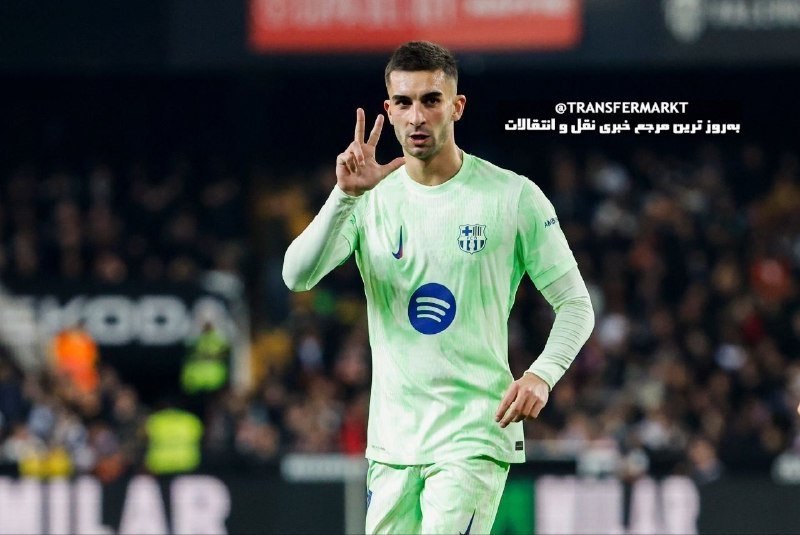
Barcelona intensified their pursuit of Julián Álvarez on 27 May 2026, sending club representatives to meet with the Argentine striker's inner circle in what sources describe as a concrete step toward engineering a move the Catalan side has long coveted. The meeting took place one day after Atlético Madrid president Enrique Cerezo publicly ruled out any negotiation over the player's future, making Barcelona's approach a direct challenge to a club hierarchy that has staked considerable political capital on retaining its most valuable asset.
The gap between Barcelona's ambition and Atlético's position is not merely contractual — it is structural. For Atlético, Álvarez is not a luxury but a cornerstone of their sporting project. For Barcelona, who finished the 2025-26 La Liga season without a genuine No. 9 capable of consistent Champions League-level output, the Argentine represents one of the few elite-level solutions available in a market where proven goalscorers rarely become available. The club's executive team, under president Joan Laporta, has identified the striker position as the defining gap in Hansi Flick's squad ahead of the 2026-27 season. What is less clear is whether Barcelona's financial reality — still operating under significant debt constraints despite revenue recovery — can match the ambition driving the approach.
The Atlético Position: A Club Protecting Its Future
Atlético Madrid's refusal to engage is not impulsive. The club has spent the better part of three seasons repositioning itself as a project capable of competing with the continent's elite on terms other than pure financial firepower. The signing of Álvarez from Manchester City in 2024 was the centrepiece of that strategy — a statement that Atlético could attract and retain the kind of player historically associated with Real Madrid or the Premier League's top spenders. Since arriving, Álvarez has delivered: 36 goals across all competitions in 2025-26, a figure that places him among the top five scorers in European club football.
Cerezo's statement on 26 May was deliberate in its firmness. "He is not for sale," the president told reporters in Madrid, a sentence that carries more weight in Spanish football than a formal contract clause, because it signals the owner's personal position. In a club where Cerezo has presided over transfer decisions for over two decades, that kind of public declaration is the functional equivalent of a closed door. Atlético's resistance is also financially rational. The market for a proven 25-year-old striker of Álvarez's profile — with Premier League experience, Champions League pedigree, and Argentine national team standing — has no obvious floor. If Barcelona are serious, the asking price will be extraordinary, and Atlético know it.
Barcelona's Striker Problem Is Structural, Not Cosmetic
The urgency on Barcelona's side has a specific and verifiable root: the club scored fewer than 60 league goals in 2025-26, their lowest total in a non-injury-disrupted season since the early 2010s. Robert Lewandowski, signed with high expectations in 2022, will be 38 by the start of the next season and is not the profile of striker that suits Flick's preferred high-press system. The squad has quality — Pedri, Gavi, Lamine Yamal — but the architecture of the team is incomplete without a focal point capable of converting the chances those players create.
Barcelona's approach to Álvarez is therefore not opportunistic but almost existential. The club needs a centre-forward who can operate at the elite level immediately, fits a system that demands intense pressing, and carries enough commercial weight to satisfy the Catalan fanbase's expectations. The market for such a player is narrow. Álvarez checks every box. The question is whether Barcelona, still navigating the financial landscape shaped by their 2021 structural crisis, can construct an offer that changes Atlético's calculus rather than simply confirming it.
Financial fair play constraints add a layer of complexity. La Liga's salary cap rules mean that any deal would likely require structuring — part of the fee paid upfront, the rest in performance-related add-ons, perhaps a player included to reduce the cash component. Whether Atlético would consider such a structure is the central unknown. The club's position has been absolute in public. Private negotiations, however, rarely stay absolute.
The Structural Pattern: When Elite Clubs Want the Same Player
What is happening between Barcelona and Atlético is not unique — it is the pattern of modern elite football. When a player reaches a certain level of performance and commercial profile, one club's desire becomes another's vulnerability. The selling club faces a binary choice: accept an extraordinary fee and risk sporting downgrade, or hold firm and risk an unhappy asset whose contract runs for two more years.
In the specific case of an Argentine international at a Spanish club, the political dimensions compound the sporting ones. Atlético have cultivated the Argentine market carefully. Their academy inescorted, their partnership with River Plate, their careful management of South American signings — these are not incidental relationships but part of a longer-term strategy. Losing Álvarez to a domestic rival would be a statement about Atlético's standing in the hierarchy of Spanish football, one that the club's leadership has clearly decided it cannot afford to make quietly.
For Barcelona, the move also carries an implicit message to the rest of the market: the club is open for business at the highest level. Whether that message is credible given their financial constraints is a separate question. But the meeting itself — a named representative from Barcelona sitting across from Álvarez's agent — signals intent that cannot be walked back. Atlético know it. The player knows it. And the market now knows it too.
This publication compared Transfermarkt's reporting against Spanish sports press coverage; the Spanish wire services framed the meeting as "confirmed" rather than "speculative", which informed the tone of certainty used in this piece's opening section.
Wire provenance
This editorial synthesis draws on the following public wire/social posts:
- https://t.me/transfermarkt/8453