Bessent Claims Regime Renormalization as US-Iran Ceasefire Extends and Markets Rally
Treasury Secretary Scott Bessent said the United States succeeded in changing Iran without replacing it, as an agreed ceasefire extension drove equity indices to fresh highs and bitcoin recovered from a six-week trough.
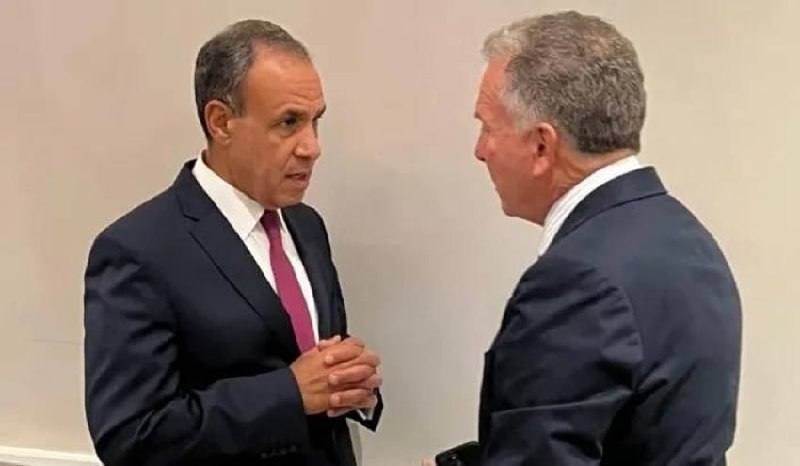
On the same day that US equity markets closed at record highs, Treasury Secretary Scott Bessent offered a candid summary of the administration's Iran posture: the United States had not achieved regime change — but it had, in his words, "changed the regime." The comment, made on May 28, 2026 and reported via the ClashReport Telegram channel, arrived as Washington and Tehran formally agreed to extend a ceasefire that had halted direct strikes and stabilized a critical fault line in Middle Eastern geopolitics. The S&P 500 and Nasdaq reached fresh peaks, and bitcoin, which had sunk to a six-week low earlier in the session following US-Iran strikes, clawed back gains as the ceasefire extension eased risk-off pressure across digital asset markets.
The twin developments — a geopolitical ceasefire and a market rally — created a moment the administration clearly intended to frame as strategic vindication. After years of maximum-pressure sanctions that failed to compel concessions, the White House secured an outcome that preserves the Islamic Republic in power while extracting behavior modifications Tehran had previously rejected. Whether that constitutes renormalization or capitulation depends on whom you ask; the markets, for now, have rendered their verdict.
The Economic Picture Bessent Described
Speaking on the same day as the ceasefire extension, Bessent said the US economy faced genuine challenges — but that the headline indicators remained resilient. Unemployment was still low, tax refunds had been robust, and consumer spending was "still quite high," per the ClashReport Telegram post. The picture was one of a consumer base absorbing tariff shock better than many analysts expected, with labor market tightness insulating household income even as goods prices remained elevated.
That framing matters politically. The Trump administration has staked considerable credibility on a tariffs-as-leverage theory: that punitive trade measures would extract concessions from trading partners without triggering recession. The Iran ceasefire removes at least one tail risk from that equation — a Middle Eastern oil supply disruption that would have compounded inflation pressure and complicated the Federal Reserve's rate-path calculations. Bessent's economic reassurance was designed to reassure markets that the administration could manage multiple flashpoints simultaneously without losing control of the domestic narrative.
The risk is that consumer confidence surveys have been volatile. Retail spending, while holding up in aggregate, has shown bifurcation: higher-income households continue spending, while lower-income cohorts have pulled back as savings buffers diminish. Bessent's optimism is defensible in the near term; the longer term depends on whether tariff passthrough stabilizes or continues eating into real purchasing power.
The Regime-Change Claim — and What It Actually Means
"We did not have regime change, but we changed the regime" is a carefully constructed phrase. It concedes the original goal — forced political transition in Tehran — while asserting that coercive pressure produced behavioral modification sufficient to declare a win. The administration is essentially arguing that isolating Iran financially, constraining its oil revenue, and sustaining military pressure forced its government to moderate its nuclear posture and regional conduct without requiring the regime to fall.
The claim is neither fully verifiable nor fully dismissible. Tehran's nuclear program remains under international scrutiny. Iran's regional proxy network — Hezbollah, Yemen's Houthis, affiliated militia in Iraq — has been throttled by sanctions and sustained military pressure, reducing the government's ability to project power beyond its borders. Whether that represents a genuine strategic realignment or a tactical repositioning remains the central open question in assessing whether the ceasefire has structural durability or is merely a pause in hostilities.
The phrase also carries domestic political weight. "We changed the regime" is the kind of declarative victory framing that fits an administration navigating midterm pressure and an audience that rewards strong-man optics over nuanced foreign-policy accounting. The ceasefire extension is being packaged as proof that coercive diplomacy works — a narrative that, if it holds for another six months, becomes the central exhibit in the administration's foreign-policy record.
Markets and Crypto React — Differently, but Together
The S&P 500 and Nasdaq reaching highs on May 28 as the ceasefire extended is a straightforward risk-on signal. Ceasefire extensions in contested regions typically reduce the premium embedded in oil prices, ease supply-chain uncertainty, and restore animal spirits in technology and industrials simultaneously. That the rally coincided with a Treasury Secretary confirming economic resilience suggests investors read the geopolitical news as genuinely positive rather than a temporary reprieve.
Bitcoin's trajectory over the same 24-hour period was more complicated. Earlier on May 28, according to CoinDesk's day-ahead analysis, US-Iran strikes had knocked the largest cryptocurrency to a six-week low. The subsequent ceasefire extension allowed bitcoin to recover — a pattern consistent with digital assets' behavior during geopolitical stress events: they fall sharply on bad news, then regain ground when uncertainty recedes. That bitcoin recovered rather than merely stabilized suggests the market retains a risk-on bias and treats regional ceasefire news as a sufficient catalyst to rebuild exposure.
The dynamic is notable because it suggests crypto markets are still processing geopolitical risk as a first-order variable — not yet pricing in the structural implications of a renormalized US-Iran relationship. If sanctions relief proceeds, Iranian participation in digital asset markets may expand, adding a new supply variable to an asset class already navigating regulatory complexity in multiple jurisdictions.
What Comes Next
The ceasefire extension is a necessary but insufficient condition for durable normalization. The nuclear file — Iran's enrichment program, the status of the 2015 Joint Comprehensive Plan of Action — remains unresolved. A deal that stabilizes the ceasefire without addressing the nuclear question leaves the most explosive issue on the table. Iranian domestic politics, meanwhile, are not static: hardliners within the Islamic Republic have opposed any accommodation with Washington, and an extension of the ceasefire without visible concessions from the US may strengthen their hand ahead of any domestic political transition.
For the broader Middle East, the stakes are significant. A sustained US-Iran détente, if it materializes, removes a source of friction that has constrained regional integration and investment flows for more than a decade. Oil markets would likely recalibrate to a lower risk premium — bearish for crude in the medium term, but constructive for industrial growth across the Gulf. The Trump administration is presenting this as its signature Middle East outcome, and the political calendar — midterms in 2026 — makes durability urgent rather than academic.
Markets have priced in the optimistic scenario. The harder work — a ceasefire that holds, sanctions that lift, a nuclear agreement that satisfies both sides' non-negotiable red lines — lies ahead.
Wire provenance
This editorial synthesis draws on the following public wire/social posts:
- http://reut.rs/4uEMAMb
- https://t.me/ClashReport/29431
- https://t.me/ClashReport/29430