Bessent's Iran Terms Expose the Distance Between Deal Talk and Deal Reality
US Treasury Secretary Scott Bessent set out explicit preconditions for sanctions relief on May 28, 2026, contradicting optimistic media framing that a US-Iran agreement is within reach.
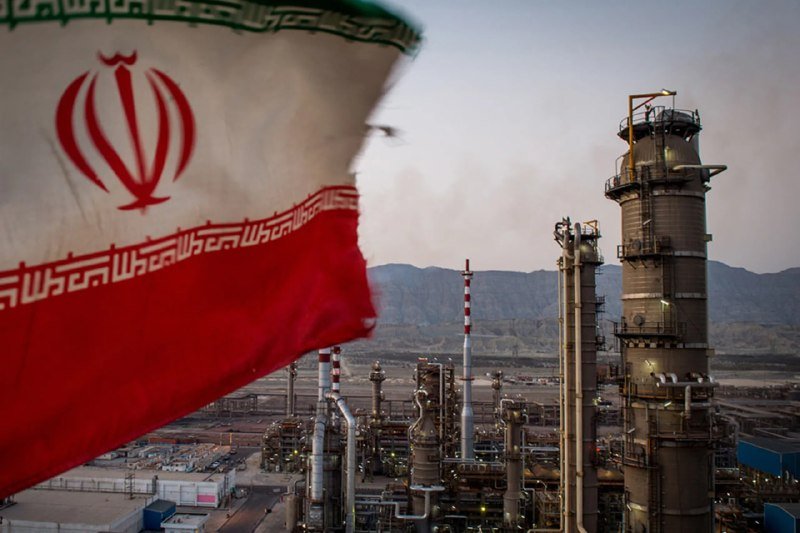
The gap between what officials are saying privately and what the media is reporting publicly has, once again, made an appearance. On May 28, 2026, US Treasury Secretary Scott Bessent was asked directly whether sanctions relief was on the table in on-going negotiations with Iran. His answer, captured in exchanges reported across wire services and translated Telegram channels, was unambiguous: nothing would be placed on the table until two conditions were met — the Strait of Hormuz had to be opened, and the Iranian government had to agree to hand over its enriched uranium material.
The specificity of those conditions matters. Preconditions of that order are not the language of a deal close to signing. They are the language of a maximalist opening position designed, in part, to demonstrate to domestic constituencies and regional partners that this administration will not settle for incremental concessions. Whether that is the administration's actual floor or negotiating theater remains an open question. What is not open to interpretation is what Bessent said, and the fact that it sits in direct tension with the more hopeful coverage circulating in the same news cycle.
The Official Position and Its Logic
The Treasury Secretary's framing — that Iran must first open the world's most contested naval chokepoint before sanctions relief becomes a discussable item — is structurally coherent within a particular view of leverage. The Strait of Hormuz is the conduit through which roughly a fifth of the world's seaborne oil passes. Tehran has used the threat of interdiction, or at least the specter of interference with traffic, as a bargaining chip for decades. The Islamic Republic's geographic position gives it a form of structural leverage that no other tool in its arsenal can replicate.
For Washington, demanding the strait's normalization as a prerequisite rather than a deliverable signals that the US is not willing to purchase a temporary de-escalation with modest concession-making. The enriched uranium condition operates on the same logic: it targets the foundational element of any Iranian nuclear program, not its current pace or declared civilian purpose. That is a demand calibrated to require fundamental Iranian capitulation, not a cosmetic reduction in enrichment levels.
The question is whether the administration genuinely expects those terms to be accepted or whether they are meant to anchor a negotiation that will ultimately settle somewhere less demanding. Historical precedent from the original Joint Comprehensive Plan of Action negotiations — during whichIran agreed to significant curbs on enrichment in exchange for sanctions relief — suggests that deals become possible when both sides arrive at the table with overlapping but not identical demands. The conditions Bessent named on May 28 do not describe an overlapping position. They describe a starting point so demanding that it either redefines what a successful agreement looks like, or signals that the deal being discussed in the media is not the deal this administration intends to sign.
Where the Optimistic Framing Comes From
The media narrative of an impending US-Iran deal has not materialized from nothing. Partial agreements, informal back-channel discussions, and carefully worded statements from both sides have been accumulating in public record for months. Each data point, when read in isolation, can be made to support the inference that the two governments are quietly converging. Multiple outlets have carried reporting — some attributed to Axios, some to regional wires — suggesting that framework discussions are underway and that the scope of sanctions relief being contemplated is broader than the publicly stated US position would imply.
That coverage is not without basis. Diplomacy conducted under conditions of maximum pressure tends to produce precisely the kind of indirect communication that feeds ambiguity. Both governments have reasons to allow speculation about talks without confirming them: Tehran gains negotiating legitimacy and domestic cover for any eventual accommodation; Washington signals strength and resolve to Gulf partners while preserving flexibility. The result is a public discourse in which deal fever can persist and intensify even as the official positions on both sides remain as far apart as they were at the outset.
Bessent's explicit statement on May 28 cuts against that grain. By naming specific, non-negotiable conditions in response to a direct question — not in a background briefing, not in a carefully worded written statement, but in a setting where the cameras were present — the Treasury Secretary was calibrating the signal. It is the harder signal, not the one that feeds the optimistic narrative.
The Strategic Environment Both Sides Are Navigating
To understand why the gap between official statements and media framing persists, it helps to map the different audiences each actor is addressing. Tehran's calculus includes domestic hardliners who view any accommodation with Washington as a concession that must be extracted at the highest possible price, a Gulf regional order it sees as hostile, and an economic base that has learned to survive under maximum sanctions pressure. Washington's calculus involves Gulf partners — Saudi Arabia, the UAE, Israel — for whom any normalization without substantial Iranian concessions represents a strategic betrayal, a domestic political audience that has been told repeatedly that maximum pressure works, and a bureaucratic apparatus in the Treasury Department that has spent years building the sanctions architecture this negotiation would ultimately partially dismantle.
The result is a negotiation in which both governments are conducting multiple simultaneous conversations with multiple audiences simultaneously. The public statements that feed media coverage represent one layer of that communication. The background discussions that wire services occasionally surface represent another. The actual terms under which agreement might be reached represent a third — and that third layer remains, on the evidence of May 28, 2026, very far from what is being reported.
What Comes Next
Bessent's statement does not foreclose a deal. Diplomacy routinely involves maximalist openings that evolve into structured agreements both sides can sell to their respective constituencies. The original JCPOA was itself built on a foundation that, at many points in the negotiation, appeared to both sides as a capitulation they could not accept. What it forecloses is the optimistic reading of the current moment — the reading that treats the existence of talks as evidence that a deal is near.
The most durable insight from the exchange on May 28 is structural: a sanctions relief package that does not address the Strait of Hormuz and the nuclear material question is not the package this administration views as compatible with its interests. The gap between what the media has reported and what Bessent described is not a gap of tone or emphasis. It is a gap of substance. Whether that substance is a negotiating position or a final offer will become clearer as talks continue — or as the statement made plain on May 28 becomes the de facto baseline against which all subsequent movement is measured.
This article was filed from wire reports and translated channels on May 28, 2026. Monexus published several items noting the proximity of a deal in the days prior to Bessent's remarks; this piece reframes the baseline conditions set out by the Treasury Secretary against that prior coverage.
Wire provenance
This editorial synthesis draws on the following public wire/social posts:
- https://t.me/tasnimplus/72944
- https://t.me/englishabuali/72351