Bessent Warns Oman of Sanctions Over Hormuz Tolling Proposal
Washington escalated pressure on Muscat on May 28, threatening to target Oman with Treasury sanctions if it assists Iran in implementing a tolling system in the Strait of Hormuz, the maritime corridor carrying roughly one-fifth of global oil shipments.
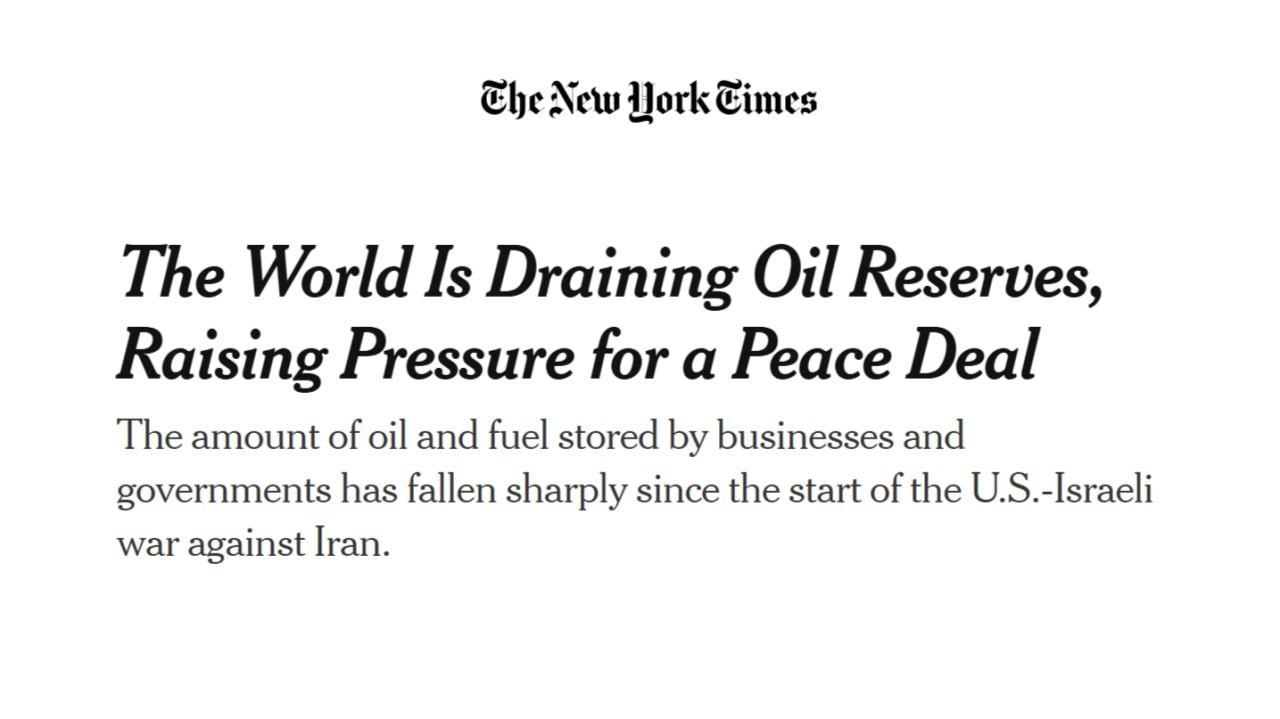
The United States government on May 28 issued a direct threat against Oman, warning that Washington would aggressively sanction Muscat if it assisted Iran in imposing any tolling system in the Strait of Hormuz — the world's most consequential oilshipping chokepoint. Treasury Secretary Scott Bessent delivered the warning in public remarks, days after President Donald Trump had reportedly told Oman that such a move would provoke a military response.
The twin threats from the White House and the Treasury Department mark a significant escalation in Washington's campaign to isolate Iran economically, but risk placing the United States at odds with a Gulf ally whose neutrality has long been a cornerstone of regional stability. Oman has historically occupied a diplomatic middle ground between Tehran and Western governments, and has hosted backchannel negotiations between the two sides.
What the Threats Say
Bessent's comments, circulated across multiple intelligence and regional monitoring feeds on May 28, left little room for ambiguity. "The United States Government will not tolerate any effort to impose a tolling system in the Strait of Hormuz," he stated. "Oman, in particular, should know that the U.S. Treasury will aggressively target any nation that helps Iran impose tolls on the Strait of Hormuz." The framing was direct: any nation — and Oman by name — would face consequences if the tolling arrangement proceeded.
The statement followed remarks by President Trump at a cabinet meeting at the White House on May 27, in which he threatened to take action against what appeared to be a broader list of countries over the Hormuz dispute. The president's broader Threat list reportedly named 13 countries, according to one regional feed citing the presidential remarks.
A secondary thread reinforced the administration's rationale. A Treasury Department statement described the ongoing "Economicury campaign against the Iranian regime," adding that Iranian military payroll had been disrupted, police attendance was declining, and Kharg Island — a key Iranian naval and economic hub — had been effectively shuttered. The framing positioned Oman's possible role in a Hormuz tolling scheme as a direct aid to a regime under maximum pressure.
Oman's Delicate Position
Muscat has not publicly confirmed any willingness to facilitate Iranian tolling arrangements, and the available sourcing does not confirm Oman has agreed to any specific proposal. Oman's foreign policy tradition — and its geography — have long positioned the sultanate as a balancer in Gulf security architecture. Oman hosts the U.S. Navy's base at Dhofar, maintains cordial relations with Iran, and has historically resisted being drawn into competing regional blocs.
The sources do not specify what form a tolling proposal might take, or whether any agreement has been reached between Iran and Oman on the matter. Whether the feared tolling system represents an Iranian scheme that Oman would merely facilitate, or a joint venture in which both nations share revenue and enforcement, remains unclear from the available record.
What is clear is that any formal toll or fee levied on vessels transiting Hormuz would represent a fundamental challenge to the principle of free maritime passage that underpins the global energy market. Roughly 21 million barrels of oil pass through the strait daily, according to U.S. Energy Information Administration figures referenced in regional reporting — a volume that makes even temporary disruption economically significant.
The Framework Behind the Pressure
The stakes extend well beyond the immediate diplomatic row. Free transit through Hormuz is not merely a commercial convenience — it is the mechanism by which the United States maintains Gulf Arab confidence in their alliance with Washington, and by which sanctions against Iran function as intended. Strip away the free-passage norm, and the architecture of U.S. pressure on Tehran collapses: Iranian oil revenues survive even under sanctions if maritime insurance and routing can be coordinated through third parties willing to extract a fee rather than halt shipments entirely.
An Iranian tolling system, even a modest one enforced by a willing partner like Oman, would create an economic lifeline the sanctions regime cannot easily close. Tehran gains revenue; the collection mechanism is offshore and deniable; and any U.S. response — whether sanctions on Muscat or a naval confrontation — carries escalation costs the White House has shown interest in avoiding.
Bessent's threat is therefore as much about signaling to third parties as it is about Oman. The message: assist Iranian maritime leverage at your own financial peril. Whether that message lands as deterrence or provocation depends on whether Gulf states read it as resolve or overreach.
What Comes Next
The next phase will test whether Washington's pressure produces compliance or consolidation of opposition. Oman faces a genuine dilemma: accepting U.S. warnings preserves the country's longstanding security relationship with Washington, but signals to Iran that Muscat is not a reliable partner for any post-sanctions economic transition. Refusing to distance itself from Iranian proposals, meanwhile, risks becoming the primary target of a U.S. Treasury sanctions listing — a costly outcome for a small economy that depends on external investment.
The available record does not indicate how Muscat has responded to the twin threats issued this week. Oman's foreign ministry had not issued a public statement as of the sourcing window on May 28. Regional observers note that previous rounds of U.S. pressure on Oman — over its role in Yemen peace processes, and over its hosting of Iranian-linked commercial networks — have produced measured adjustments rather than public confrontations.
What is certain is that the Hormuz chokepoint has become the operational center of gravity in the broader U.S.-Iran contest. Whoever controls the strait's traffic controls the flow of Asian energy imports, the price of global crude, and the durability of sanctions enforcement. For Washington, the calculus is straightforward: any erosion of free-passage norms is an Iranian win by other means.
This desk's approach differs from international wire framing in one material respect: most coverage treats the Hormuz dispute as a bilateral U.S.-Iran security question. The record suggests the more structurally accurate frame is economic — specifically, what tolling represents as a mechanism for monetizing geographic position in defiance of dollar-denominated sanctions architecture. Monexus has framed the story accordingly.
Wire provenance
This editorial synthesis draws on the following public wire/social posts:
- https://t.me/rnintel/12438
- https://t.me/thecradlemedia/18921
- https://t.me/ClashReport/28934
- https://t.me/megatron_ron/15603
- https://t.me/JahanTasnim/21409